
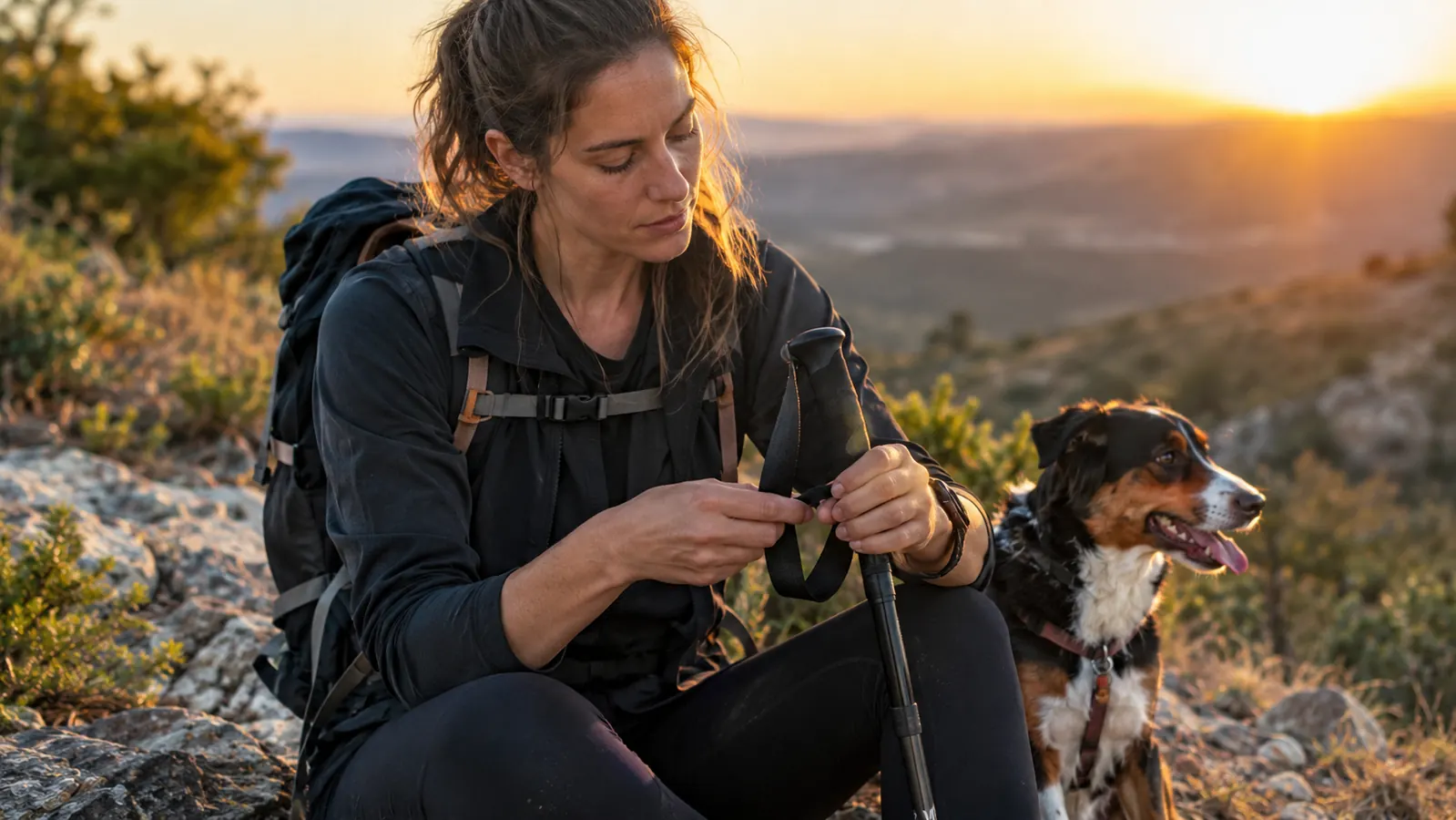
I bought my Cascade Mountain Tech poles about a year ago, after a steep descent at Lost Maples left me grabbing tree trunks and muttering words my kids pretended not to hear. Before that I hiked with nothing but my own two knees and a stubborn streak. A year later, with about 40 trail miles on them, I have opinions. Some of them are not what I expected to write.
The Quick Verdict
For the price, these are honest, capable poles. The locks need attention, the wrist straps are mediocre, but they took a year of family trail abuse and kept working.
Amazon Check Today's Price →The budget poles that survived a year of family hikes
I have put these through Texas heat, mountain gravel, and two teenagers who treat gear like it owes them money. They still lock, still hold, and still cost less than the fancy ones.
Amazon Check Today's Price on Amazon →How I've Used Them
I am not a thru-hiker. I am a 44-year-old mom from Corpus Christi who packs the snacks, the dog water, and the first-aid kit, and then tries to keep up with two teenage boys and two flat-faced dogs who overheat if I am not paying attention. My poles get used on weekend trips to Texas state parks: Lost Maples, Garner, Padre Island. They also came along on our one longer mountain trip this year, and that is where they really got tested.
The dogs do not use poles, obviously. Biscuit and Pepper ride in a pack or get carried when they are done, which means my hands are often full. The poles get shoved in the car, dropped on gravel, leaned against picnic tables, and occasionally used to poke Wyatt when he stops to complain about his feet. They have survived all of it.
One day that stands out was a Saturday in March at Garner State Park. Caleb was up the trail before I had the dogs' water out of the SUV, and Wyatt was already complaining about his shoes. I locked the poles to about 52 inches for me and we started up. The trail gains maybe 400 feet in the first half mile, nothing dramatic, but it is loose rock the whole way. Without the poles I would have been sliding on every other step. With them I planted, stepped, planted, stepped, and kept a rhythm that got me to the top without stopping.
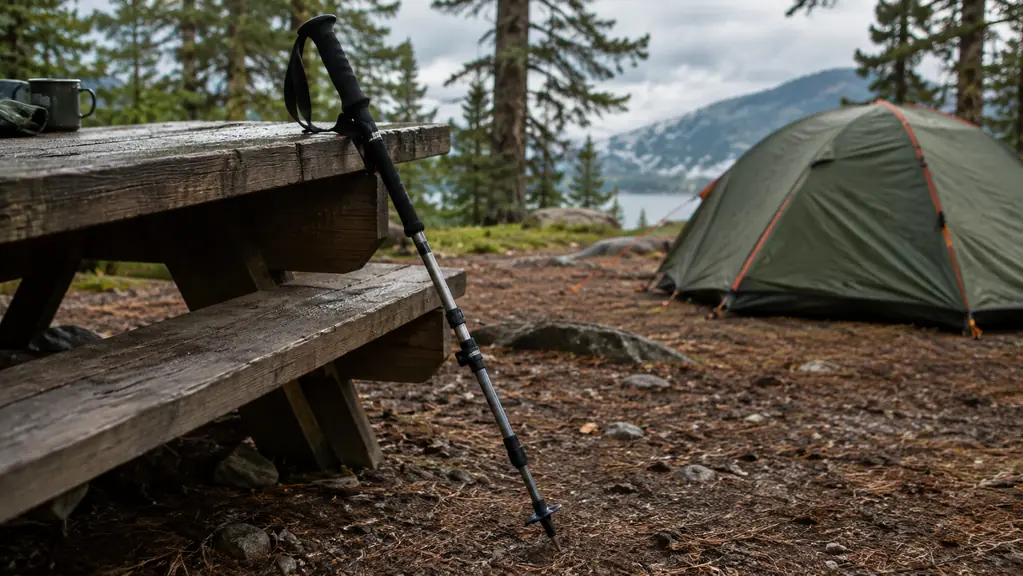
Another thing I did not expect: how often the poles get used for things that are not hiking. At camp they hold up the tarp when the wind picks up. They hang the dog leashes. They become a clothesline pole for wet socks. Ray uses one to poke at the campfire when the logs settle. A trekking pole, it turns out, is the most useful stick you can own, and the Cascade Mountain Tech pair has been the family stick for a year.
Padre Island is a different kind of test. Sand gets into everything, including the locks. I rinsed the poles with fresh water after that trip and they were fine, but it is worth knowing that beach sand will find its way into the joints. A quick rinse and a re-tighten and they were good as new.
What Nobody Tells You About the Locks
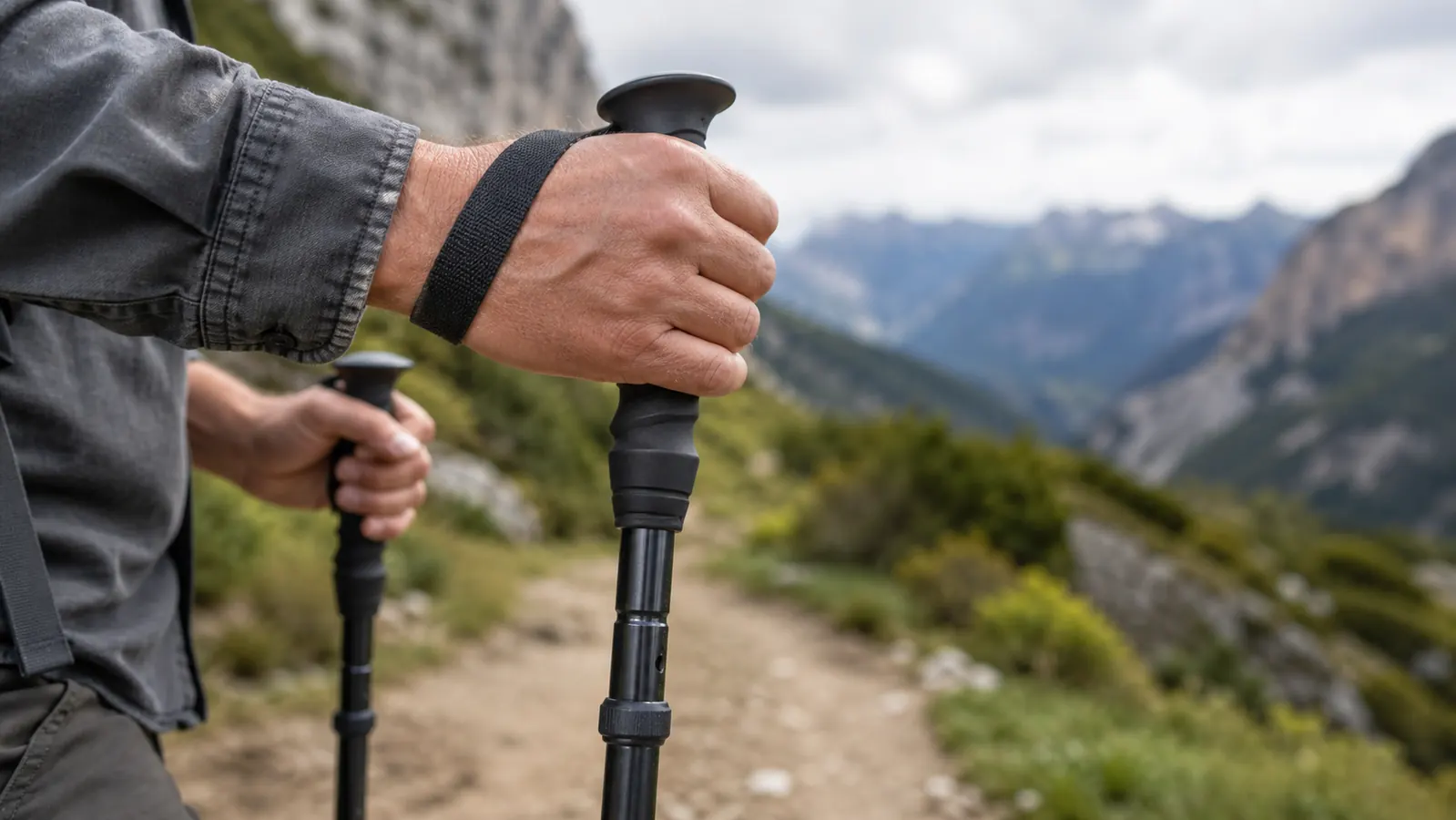
The flip locks on the Cascade Mountain Tech poles work. That is the good news. The less shiny news is that they need to be re-tightened. Not once, not twice. I would say every third or fourth hike, one of the two locks on each pole will start to slip, and I have to stop and give the screw a quarter turn with the little tool that lives in the handle. It takes thirty seconds. It is also something nobody mentioned in any review I read before buying.
Here is the thing: I would rather have a lock I can tighten with a screwdriver than a lock I cannot fix on the trail. My brother-in-law has a pair of poles that cost four times as much, and when his locks started to slip, he had to send them back to the company. I fixed mine with a tiny wrench at a picnic table at Garner State Park while Ray held the dogs.
The locking mechanism is a simple cam lever. When it is tight, it is really tight. I have leaned my full weight on these poles going downhill and they did not collapse. That matters to me more than the occasional quarter turn. But if you buy these, know that the locks are not a set-it-and-forget-it system. They are a check-them-before-you-leave-the-trailhead system.
Here is what I tried first when a lock started slipping: I just twisted it tighter by hand. That does not work. The cam lever has a screw on the side, and you have to loosen the lever, turn the screw a quarter turn clockwise, and close the lever again. My first time doing this, I turned it too far and the lever would not close at all. I had to back it off and try again. Now I carry the little tool in the handle and I can do the whole thing in under a minute.
The worst moment came on the Colorado trip. We were about two miles down a switchback descent, and I felt the lower section of the left pole give a little. Not collapse, just a small slip, maybe half an inch. I stopped, tightened the screw, and finished the descent. It did not happen again that day. If that had been a pole I could not fix on the trail, the rest of that hike would have been miserable, and I probably would have been walking with a stick I found on the ground.
The other thing I have learned is to check the locks before we leave the trailhead. I make the boys do it too, mostly because Caleb thinks it is funny to see how far he can make the pole collapse before I catch him. It takes ten seconds per pole and it has saved us from at least one mid-hike repair.
I have leaned my full weight on these poles going downhill and they did not collapse. That matters more than the occasional quarter turn.
The Extended Grip Is the Feature I Did Not Expect to Love
The extended grip runs below the main handle, so you can choke up when the trail goes uphill without stopping to adjust the length. I thought this was a gimmick. It is not. On the steeper climbs at Lost Maples, I slid my hand down the grip, shortened my stride, and kept moving while the boys sprinted ahead. It feels natural in a way that surprised me.
The grip material is cork-style, which sounds fancy but is really just a soft, grippy foam. It does what it needs to do: it does not get slippery when my hands sweat, and it does not feel like cold plastic in the winter. After a year, the grips show some wear at the top where my thumb sits, but nothing has peeled or crumbled. For poles in this price range, that is better than I expected.
The straps are the weakest part. They are thin nylon with a basic buckle, and they slip loose on me more often than I would like. I have learned to re-tighten them at the start of every hike, and I do not rely on them to hold my weight. If I were buying these again, I would replace the straps with something sturdier. It is a small fix, but it is the kind of detail that separates a good budget pole from a great one.
To be more specific about how I use the extended grip: on a steady uphill, I slide my right hand down to the lower part of the grip and my left hand stays at the top, then I alternate. It shortens the effective length of the pole by maybe four inches without me stopping to change the lock. On a long climb like the switchback section at Lost Maples, that saves a dozen stops. I timed it once out of curiosity: adjusting both locks takes about 45 seconds. Doing that four or five times on one climb is four minutes of stopping. The extended grip turns that into zero stops.
One thing to know: the extended grip is not a second handle. It is just more of the same soft material below the main grip, so you can hold it lower. There is no curve or contour to it. Your hand figures it out fast, but it is worth knowing what you are getting. It is not the fancy molded grip on the expensive carbon poles. It is a longer piece of foam, and it works.
I have also used it on the descent, holding the pole lower to get more reach when I am stepping down a big rock. That is not what the grip is designed for, but it works in a pinch. The lower you hold a pole, the less leverage you have, so I do not rely on it for steep drops. For that I slide my hand back up to the main grip and use the strap.
How They Performed on Real Trails
I keep a rough tally of where I have used these poles. About 30 of those miles are Texas: rocky, rooty, and often muddy. The other 10 are Colorado mountain trails, where the descents are long, the switchbacks are endless, and the altitude made me grateful for every bit of help I could get. The poles did not complain in either place.
On the way down, they saved my knees. That is not an exaggeration. I have always had weak knees, and the steep drop at Lost Maples is what pushed me to buy poles in the first place. With the poles, I can take the stairs at home without wincing the next day. That alone was worth the price to me.
Let me give you a concrete example. The weekend after Lost Maples, I was doing the stairs at home and I noticed my knees did not have that sharp twinge they usually had after a steep hike. That was the moment I stopped wondering if the poles were worth it. They paid for themselves on that one descent.
The Colorado trip was the real test. We did a loop near Estes Park, about seven miles with 1,800 feet of elevation gain. The trail was a mix of packed dirt, granite slabs, and one stretch of loose scree that had me grateful for every plant of the pole. My knees were sore that night, but not the way they used to be after a big descent. The difference is real.
Wyatt borrowed them for the last mile of that hike, when his feet were done. He is 14 and he is convinced he knows everything, so his version of using poles is to swing them like he is in a parade. Even so, he stopped complaining about his feet for a full hour. I will take the win.
One more note on the tip kit. The rubber feet that come with the poles are for pavement and they work fine. I use them when we walk the dogs around the neighborhood, because the carbide tips would tear up the sidewalk. They go on with a twist and they stay put. The little baskets, the ones that keep the tips from sinking into mud, have stayed tight on both poles. Nothing has rattled loose except the locks, and I have already told you about those.
What I Liked
- Extended grip is genuinely useful on climbs and saves a dozen stops per hike
- Aluminum shafts have survived a year of two teenagers, two dogs, and beach sand
- Locks can be tightened on the trail with the included tool, no sending them back
- Comes with a tip kit including rubber feet for pavement
- Costs a fraction of the premium brands and does most of the job
Where It Falls Short
- Locks need re-tightening every few hikes, not a set-and-forget system
- Wrist straps are thin and slip loose, so I re-tighten them every hike
- Not the lightest poles, and you feel the weight on a full day
- Too long for a 14-year-old even at the shortest setting
Who This Is For
These poles are for the person who wants to know if trekking poles will help them before they spend a lot of money. They are for the parent who is tired of sore knees after every family hike, the weekend camper who wants a little more stability on rocky descents, the person who will use poles a few times a month, not a few times a week.
They are also for the person who is hard on gear. My teenagers have dropped these, thrown them in the car, and used them to poke at things on the trail. The aluminum shafts have a few scratches, but nothing is bent and nothing has broken. That is the kind of durability I care about as a mom who is not replacing gear every season.
Who Should Skip It
If you are a serious thru-hiker logging thousands of miles a year, buy something lighter and spend more money. The Cascade Mountain Tech poles are not the lightest, and after a full day of carrying them, you will feel the difference. They are also not for someone who wants a set-it-and-forget-it lock system. If you never want to touch a screwdriver on the trail, these will annoy you.
And if you are buying poles for a child, skip these and look for a smaller pair. The extended grip is great for an adult, but my 14-year-old found the poles a little long even at the shortest setting. He managed, but a properly sized pair would have been better for him.
The Honest Bottom Line
A year in, I still reach for these poles every time we hike. They are not perfect. The locks need attention, the straps are mediocre, and they are not the lightest poles on the market. But they have taken me down mountains without knee pain, survived two teenagers and two dogs, and cost a fraction of what the fancy brands charge.
If I lost them tomorrow, I would buy the same pair again. That is the highest compliment I can give a piece of gear. For a budget pole, that is a lot more than I expected to say.
The same pair I would buy again tomorrow
After a year of Texas heat and mountain gravel, these poles are still locking, still holding, and still the first thing I grab by the door.
Amazon Check Today's Price on Amazon →