
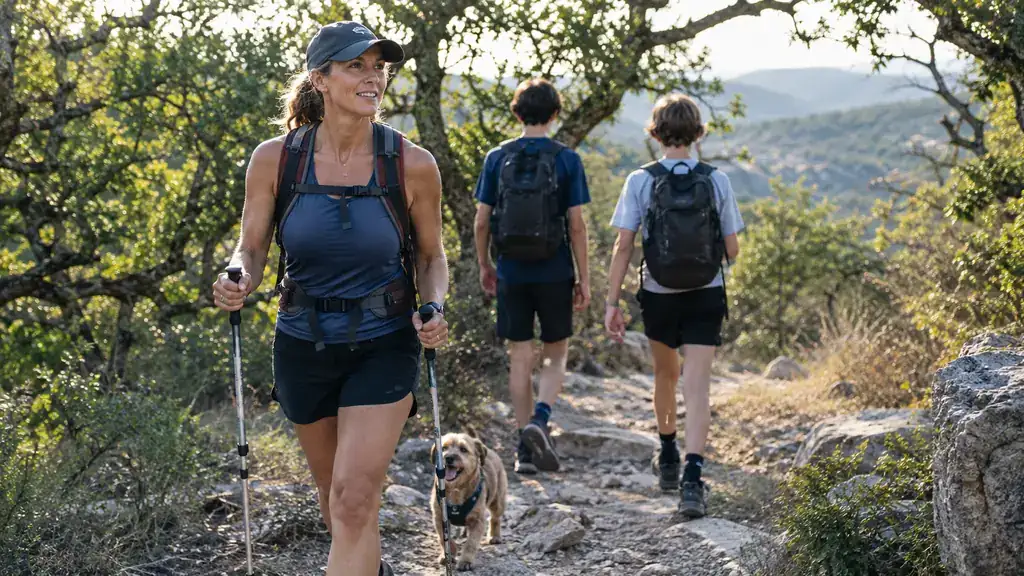
The day I decided I needed trekking poles was a Saturday in March at Lost Maples State Park, about a two-hour drive from our house near Corpus Christi. We had parked at the East Trailhead, done the loop up to the overlook, and I spent the whole descent gripping Caleb's shoulder with one hand and a tree with the other. Wyatt was ahead of us complaining about his feet, Biscuit was already asking to be carried, and my knees were making a very clear announcement that they were done with downhills. I was 43, not 73, and I had no good excuse. So I ordered a pair of Cascade Mountain Tech aluminum trekking poles and told myself I would return them if I did not actually use them.
A year later, those same poles have done the Lost Maples loop three more times, climbed the switchbacks at Garner State Park, crossed the sand at Padre Island, and spent a full week on the trails around Gatlinburg in the Smokies. They have been dropped on pavement, jammed into the back of our SUV, and used to help lift a very tired French bulldog out of a creek. They have also been borrowed by a fourteen-year-old who swore he did not need them, and by a sixteen-year-old who sprinted ahead and handed them back without a word. This is the long-term review I was looking for when I bought them, written by a regular mom, not a gear tester.
The Quick Verdict
A year in, the Cascade Mountain Tech poles still lock tight, the extended grips still feel good at mile six, and my knees no longer decide which trails we hike. The twist locks need a firm hand and the baskets are easy to lose, but I would buy them again without hesitation.
Amazon Check Today's Price →The poles that saved my knees at Lost Maples
A year in, mine still lock tight and the grips still feel good at mile six. If your knees are starting to talk to you on the downhills, check today's price on Amazon and see if these poles are the fix you have been putting off.
Amazon Check Today's Price on Amazon →How I've Used It
I bought these poles about a year ago, right after that first Lost Maples descent. Before that I had never used poles. I figured they were for serious mountain hikers, not for a mom who mostly hikes Texas state parks on weekends. Then my knees started complaining on every downhill, and I got tired of grabbing trees. Ray suggested I just take it slower on the descents. I told him the poles were cheaper than a knee brace and a lot more fun to buy. My knees made the decision for me, and I have never regretted it.
Since then, the poles have been with me on maybe twenty-five hikes. Most are short, four to six miles at Lost Maples, Garner, and a few other Hill Country parks. Some are longer. In the fall we did our big family trip, a week in the Smokies, and the poles came along for every trail, including the steep climb up to Alum Cave Bluffs and the wet rocks along the way. I keep them in the back of the SUV, so they are always there when we decide on a whim to stop at a trailhead.
I am the only one in the family who uses them, most of the time. Caleb sprints ahead and would not carry a pole if you paid him. Wyatt tried them once on a downhill at Garner and stopped complaining about his feet for about ten minutes, which is a family record. The dogs, Biscuit and Pepper, do not care about poles as long as the water bowl comes out at the top. On the days one of them gets tired, the poles free up a hand to carry a French bulldog, and that alone has been worth the space they take up in the car.
One thing I did not expect is how often the length adjustment gets used. Wyatt is already taller than me, and Ray is taller than both of us. When Wyatt borrows the poles, we extend them a few inches. When I take them back, we shorten them again. The twist locks make that easy, and the markings on the shafts help us get both poles to the same length without arguing about it. We have done this swap at a trailhead more times than I can count.
The Extended Grip and the Aluminum Shaft
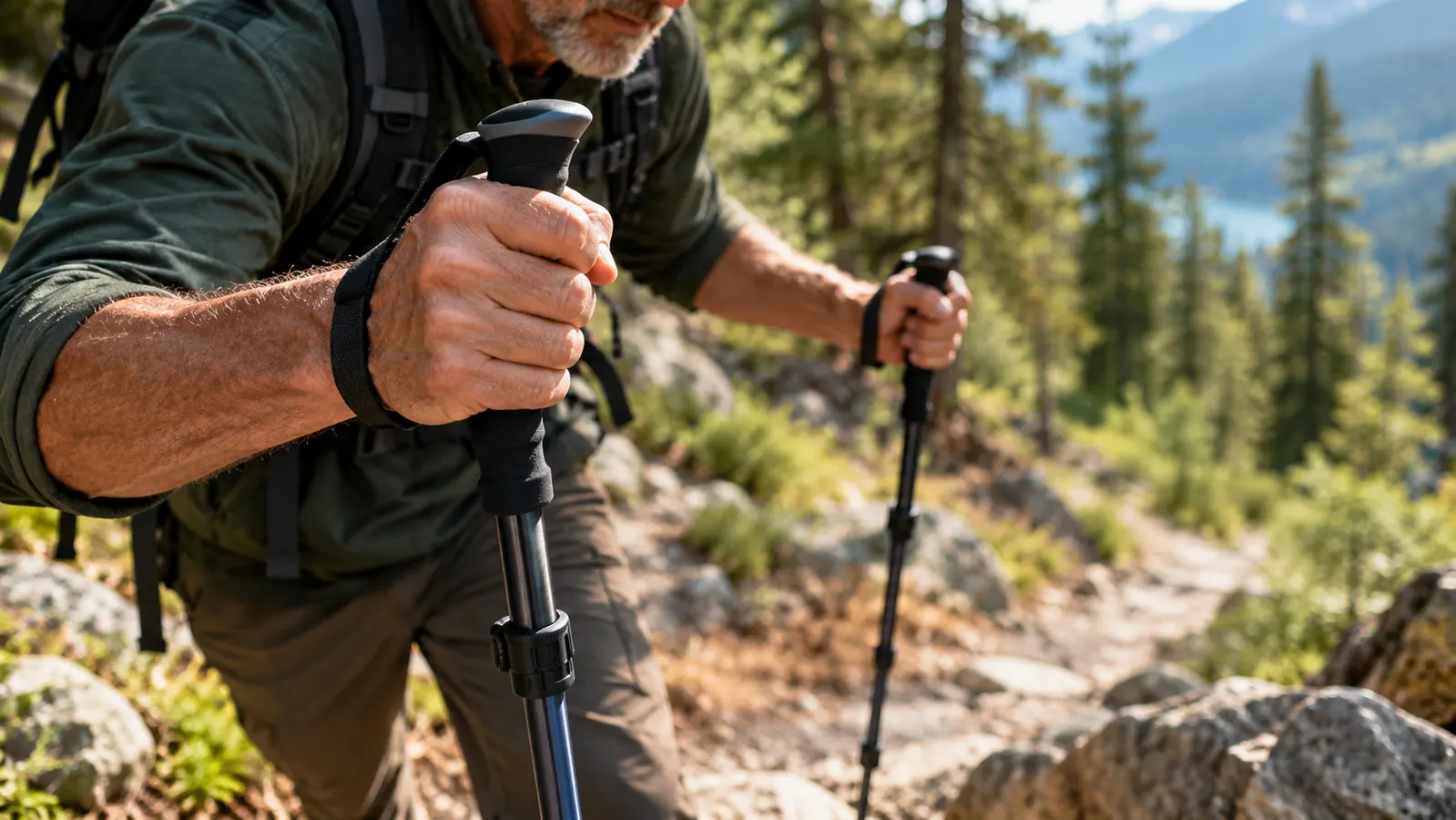
The thing that sold me on these poles, before I ever held them, was the extended grip. The grip runs farther down the shaft than on most poles I have tried, which means you can choke up on a steep descent without sliding your hand onto bare metal. That little detail matters more than it sounds. On the switchbacks at Garner, I drop my hands low on the grips and the poles feel like they were built for that position. On the way up, I slide my hands back up and the same grip works for pushing.
The shafts are aircraft-grade aluminum, which is a fancy way of saying they are tough. Mine have been banged against rocks, dragged through sand, and once used to fish a hat out of a creek at Padre Island. They are scratched and dinged now, and they still lock up tight. The twist locks are simple. You turn the collar, the pole extends, you turn it back. A year in, all three sections on both poles still hold firm, and I have only had to retighten one after a hard drop on a rocky trail.
The wrist straps took some getting used to. I am not a person who naturally uses straps, and for the first few hikes I let them dangle and slap against the shafts. Then I learned to put my hand through from underneath, the way a friend showed me, and now I use them on every descent. They let me relax my grip without dropping the pole, which helps on the long rocky sections. The straps are padded enough that they do not dig in, even when I am leaning a lot of weight on them.
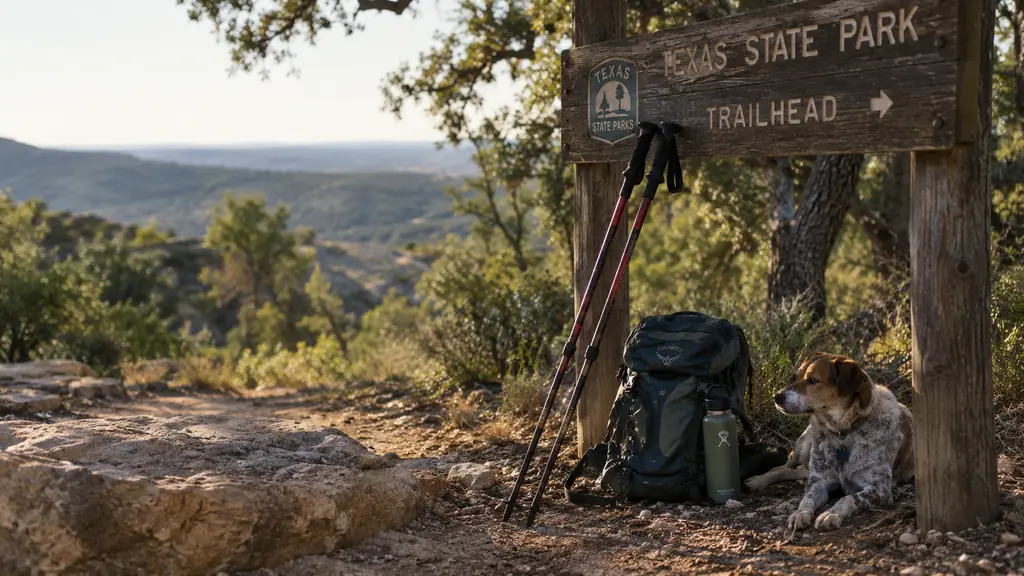
The poles came with a tip kit: spare tips and baskets. I have replaced one tip after a lot of pavement walking at the state parks, and I swapped the baskets when we hit the sand at Padre. The extras are still in the trunk of the SUV, which tells you they last longer than you expect. The rubber tips that came in the kit are nice for walking on hard surfaces, though I mostly leave them off and use the standard tips on dirt.
A Year of Trails: Downhills, Switchbacks, Sand and Wet Rock
The real test was my knees. Before the poles, a steep downhill meant a day of soreness afterward. At Lost Maples, the descent from the overlook is rocky and relentless, and the first time I did it with poles I felt the difference immediately. My knees still worked the next day. That has not changed in a year. The poles take the load off my knees and put it into my arms, and my arms recover faster. I have done that same descent three more times since, and it is now my favorite part of the loop instead of the part I dread.
Uphill, the poles are less essential but still useful. At Garner, the switchbacks can be steep and loose, and planting a pole on the high side of the trail gives me something to push against. On the sand at Padre Island, the baskets kept the poles from sinking in, which made a two-mile beach walk feel like a walk instead of a workout. I have also used them to test the depth of a creek crossing before I committed, which is not something I planned for when I bought them.
The Smokies were the wet test. We hiked in mist, crossed slick rock, and came down trails where the leaves hid the roots. I will not claim the poles kept me from falling, because I did go down once on a muddy patch. But I caught myself with a pole, and I got up with dignity intact, and I finished the hike. That is the honest version. The poles also gave me something to lean on when Pepper decided she was done and needed to be carried for the last mile.
The first time I did the Lost Maples descent with poles, my knees still worked the next day. That has not changed in a year.
What Wore Down and What I'd Change
Nothing is perfect, and these poles have three honest flaws. The first is the twist locks. They work, but they need to be cranked tight. If you are lazy about it, the pole will collapse at the worst moment. It happened to me once at Garner, on a downhill, and I nearly ate dirt. Now I check the locks at every trailhead, and I have not had a problem since. It is a habit, not a burden, but it is worth knowing before you buy.
The second flaw is the baskets. They pop off easier than I would like. I lost one in the car and found it under the seat three weeks later. They are not hard to put back on, but if you are the kind of person who loses things, get in the habit of checking them at the end of every hike. I now keep the spares from the tip kit in the same pocket as my keys, so I always know where they are.
The third is cosmetic. Aluminum dings and scratches, and mine look like they have been through a war. They have. The scuffs do not affect how they work, but if you want gear that stays pretty, these are not that. I would rather have poles that work than poles that look new, so this one does not bother me. The poles also click a little when they knock together on a carry, which is a small thing that only matters if you are trying to be quiet.
Aluminum Versus Carbon: What I Almost Bought
Before I settled on the Cascade Mountain Tech aluminum poles, I almost bought carbon fiber instead. Carbon is lighter, and lighter is nice when you are carrying poles in one hand and a tired dog in the other. But carbon costs more, and I worried about snapping a carbon shaft on the rocky trails we hike. Aluminum is heavier and tougher, and for the way our family hikes, tough wins. I have seen carbon poles do wonderful things for people who hike miles every week. We hike hard on weekends and then park the car for a few days, and aluminum fits that pattern better.
I have also tried poles with flip locks, and they are easier to adjust on the fly. But the twist locks on these have held up fine for a year, and the extended grip matters more to me than the locking style. For anyone deciding between aluminum and carbon, the tradeoff is simple: lighter and pricier versus heavier and tougher. For our family, the choice came down to not wanting to worry about a snapped shaft on a rocky trail. The short version is that for weekend trail hikes with kids and dogs, aluminum gets my vote.
What I Liked
- Extended grip lets you choke up on steep descents without sliding onto the shaft
- Aluminum shafts have survived a year of rocks, sand, drops and one creek rescue
- Twist locks still hold firm after roughly twenty-five hikes
- Tip kit with spare tips and baskets is included
- Wrist straps are comfortable once you learn to use them
Where It Falls Short
- Twist locks need to be cranked tight or the pole can collapse mid-step
- Baskets pop off easily and are easy to lose
- Aluminum dings and scratches, so the poles will not stay pretty
Who This Is For
These poles are for the hiker who is tired of grabbing trees on the way down. They are for the parent whose knees complain after every family hike, the person who wants a little more confidence on loose rock and wet roots, and anyone who hikes a mix of terrain and wants one pair of poles that can do all of it. They are also for the practical buyer who would rather spend less and get a pole that takes a beating. If you are the kind of hiker who checks the forecast, packs the snacks, and still ends up carrying someone else's water, these poles will fit right into your routine.
If you hike with kids or dogs, the extended grip and the tough shafts make these a good fit. Wyatt borrowed them, Caleb has dropped them, and Biscuit has been carried while I held one. They have held up to all of it. I have watched my own boys on long days, and the difference shows most on the way down. Wyatt stopped complaining about his feet for ten whole minutes on one descent, and I am counting that as a win.
Who Should Skip It
Skip these if you are a serious ultralight hiker counting every ounce, or if you want the absolute lightest pole money can buy. Aluminum is not ultralight, and if weight is your whole game, carbon is the better call. Skip them if you hate twist locks. They work, but they take a firm hand, and if you want to adjust your poles constantly, a flip-lock pole will frustrate you less. There is no shame in either preference. It just means a different pole is the right one for you.
And if you only hike flat, smooth trails a couple of times a year, you may not need poles at all. My knees only started demanding them on the downhills. On flat ground, they mostly stay strapped to my pack, and that is fine too. The poles are a tool for the hard parts, not a requirement for every walk. Buy them because you have a specific problem to solve, like I did, not because every hiker on the internet says you need them.
A year in, I would buy them again
The Cascade Mountain Tech poles have earned their spot in the back of our SUV, right next to the dog water bowl and the spare tips. If your knees are starting to talk to you on the downhills, today's price on Amazon is worth checking before your next trailhead.
Amazon Check Today's Price on Amazon →