
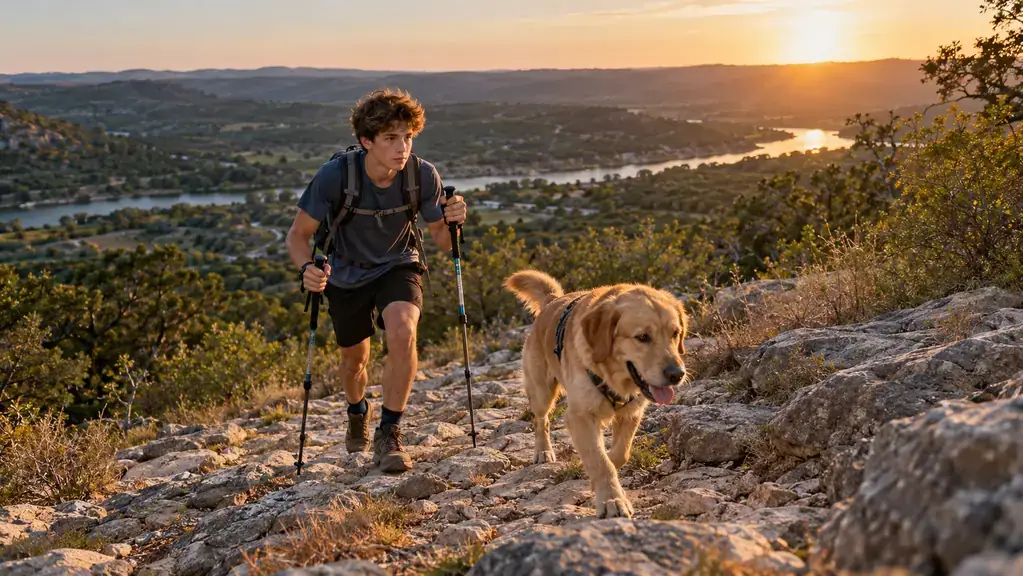
Two teenage boys, two French bulldogs, one family SUV, and a trail that goes up before it goes down. That is the math most of our hikes start with, and for a long time the boys treated trekking poles like something only old people used. Then Caleb borrowed my Cascade Mountain Tech poles on a steep descent at Lost Maples last fall, stopped complaining about his knees for a full hour, and the argument was over.
I bought that pair about a year ago, after the same descent left my own knees sore for two days. Now the boys argue over who gets to borrow them on the way down, before I even have my pack on. Here are the ten reasons trekking poles help teen hikers, from a mom who has watched two reluctant teenagers come around one trail at a time.
The poles that ended the eye-rolling
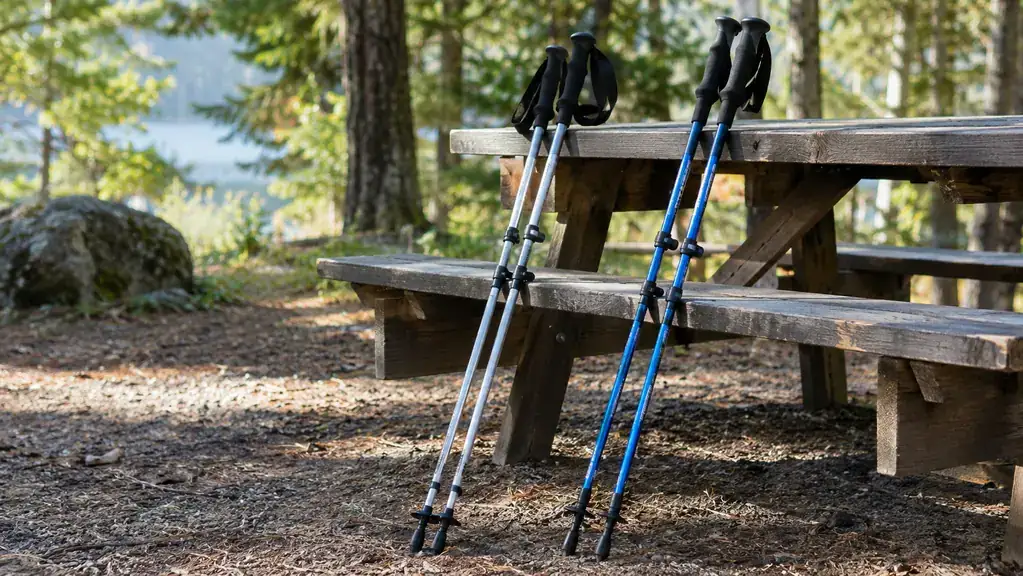
Cascade Mountain Tech aluminum trekking poles are the pair we reach for first. Light enough for a 14-year-old to swing, tough enough for a 16-year-old who treats gear like it owes him money.
Amazon Check Today's Price on Amazon →They turn teenage arms into a second set of legs
Teens have strong legs and arms that mostly hang there. Poles put those arms to work, so the climb splits between four limbs instead of two. Caleb noticed it on the switchbacks at Lost Maples: we were climbing the East Trail, about 300 feet of elevation gain in under a mile, and he went from stopping every few minutes to keeping a steady pace the whole way up. The only thing that changed was the poles. He did not say anything about it at the time. He just stopped stopping, and I stopped hearing him breathe like a steam engine.
Downhill becomes the easy part
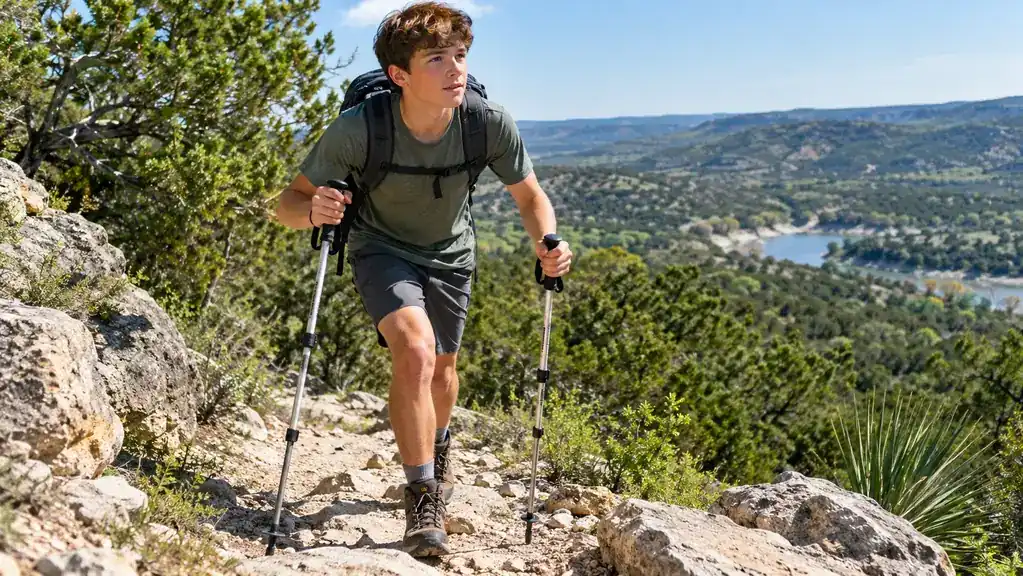
Going down is where knees take the beating, and it is where Wyatt used to slow the whole group. On the way down from the ridge at Garner State Park, he would stop every hundred yards to announce that his feet hurt or his toes were jammed. With poles out front, he plants, steps, and lets his arms absorb what his knees used to take. The descent that used to end in a foot complaint now ends in him asking what is for lunch. The first time it happened, I checked my watch. He had cut a twenty-minute descent down to twelve.
They give restless teens a job
A bored teenager is a complaining teenager. Poles give them a rhythm, a place to put their hands, and a small task on every step. Wyatt fiddles with his straps, taps rocks, and generally stops narrating every ache. The job is small, but it keeps his brain busy while his feet do the work. On the long flat stretch out to the river at Garner, he counted his pole taps for half a mile before he realized he was doing it. That is half a mile without a single complaint about his feet.
Balance on rocky terrain gets a lot more forgiving
Texas trails love to hide a loose rock under a perfect-looking step. Two extra points of contact mean a wobble stays a wobble instead of becoming a twisted ankle. Caleb, who sprints ahead and never looks at his feet, used to have one near-miss per hike. At Lost Maples last spring he stepped on a rock that rolled, and only the pole he had planted downhill kept him upright. He did not even slow down. He just said 'whoa' and kept going, and I kept my heart rate where it belonged. Since he started carrying poles, that near-miss count has gone to zero.
They make creek crossings feel boring, in the best way
Every creek crossing used to be a production: who goes first, who is getting wet, who is complaining about wet socks. With poles, the boys plant two points downstream and cross like it is a sidewalk. The dogs still charge through, but at least the humans stay dry. The first time Wyatt crossed a creek without stopping to take his shoes off, he looked back at me like he had discovered something. I just nodded. The poles were doing the talking.
Poles keep packs from pulling teens backward
Teens carry packs that are heavier than they should be, because they refuse to leave anything behind. Wyatt packed a full change of clothes, three water bottles, and a paperback book for a four-mile hike once. On steep climbs, that weight wants to tip him backward. Poles lean him forward, give him something to push against, and let him carry the load without fighting it. He still packs too much, but he no longer walks like a wind-up toy that is about to topple over.
They double as dog-leash anchors
Biscuit and Pepper are French bulldogs, so they hike in short bursts and then ride in the pack. When the dogs are done, the poles become a handy anchor: clip the leash around the grip, plant the basket in the dirt, and both flat-faced dogs stay put while we sort out water and snacks. This alone earned the poles permanent status in the SUV.
They make teens look at the trail, not their phones
A teen with poles has both hands busy. No thumb-scrolling, no one-handed phone grip, no sudden stop because someone was reading a message instead of watching the trail. The poles do not cure phone addiction, but they do put a physical barrier between Wyatt and his pocket.
They build confidence on exposed sections
The first time Caleb walked the narrow ridge above the Frio River at Garner, with a drop on one side, he went slow and quiet. The second time, with poles in hand, he walked it like he owned it. Poles do not remove the drop, but they remove the feeling of having nothing to grab. He plants, he steps, he has two extra points of contact with the ground, and that is enough. That confidence carries over to the next ridge, and the next. Watching him cross that same ridge last month, I realized I was not holding my breath anymore.
They teach a skill the boys will use for decades
Adjusting the height, planting before the step, letting the wrist strap do the work. These are small skills, but they are the same ones Ray and I use on every mountain trip. The boys are learning to hike smarter, not harder, and that lesson does not stop at the trailhead. When we did the Rockies last summer, Caleb set his own pole height the first morning without being asked. That is the whole point.
What I'd Skip
I would skip buying the most expensive carbon poles for a teenager. Teens lose things, lean on poles like they are playground equipment, and occasionally use them as swords. Wyatt has already bent a tip on a rock and snapped a basket off in the car door. The Cascade Mountain Tech aluminum pair costs a fraction of what a carbon pair costs, takes the abuse, and gets the same job done. I would also skip the poles with twist locks if your teen is impatient. The flip locks on our pair are faster to adjust, and they do not come loose halfway through a hike the way the twist style did on a borrowed pair. And if your teen refuses to try poles at all, skip the lecture. Leave a pair by the car door and let the trail make the case.
Caleb borrowed my Cascade Mountain Tech poles on one steep descent and stopped complaining about his knees for a full hour. Now he asks to borrow them at every steep trailhead.
Pack a pair for every teen who hikes with you
One pair of Cascade Mountain Tech aluminum trekking poles turned our family hikes from a negotiation into a habit. They are light, adjustable, and tough enough for the way teenagers actually use gear.
Amazon Check Today's Price on Amazon →