
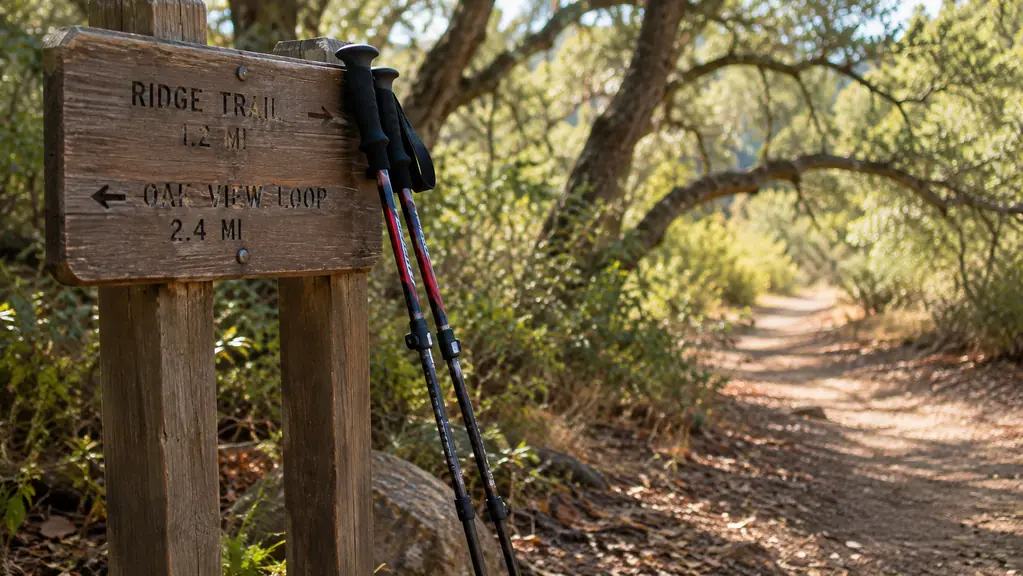
I bought my Cascade Mountain Tech aluminum trekking poles about a year ago, after a steep descent at Lost Maples State Natural Area left my knees talking to me for two days. Before that hike, I had never used poles. I figured they were for serious mountaineers, not for a mom packing snacks, dog water, and a first-aid kit for a family day hike. Then I watched Wyatt, my fourteen-year-old, bounce down a rocky switchback while I gripped a tree and wished I had a third leg. That was the moment I started researching trekking poles, and the first question everyone asked me was the same one: aluminum or carbon?
Here is my short answer. For the kind of hiking our family does, the Cascade Mountain Tech aluminum poles are the ones I reach for every single weekend. Carbon is lighter and it soaks up vibration better, but it costs more and it can snap where aluminum bends. For weekend state park loops, rocky descents, and two teenage boys who treat gear like it owes them money, aluminum is the sensible pick. If you are a thru-hiker counting grams, carbon might be worth it to you. For everyone else, and especially for families, aluminum is the better buy. Here is how I came to that conclusion.
| Cascade Mountain Tech Aluminum | Carbon Trekking Poles | |
|---|---|---|
| Price | The budget-friendly pick for a first pair | Costs a good deal more for the weight savings |
| Weight | Heavier, you notice it on long climbs | Lighter, easier to swing all day |
| Durability | Bends under pressure instead of snapping; a bent section can often be straightened | Can crack or splinter on a hard impact |
| Trail feel | Transmits more vibration on hard-packed ground | Soaks up vibration, softer feel on rocky trail |
| Repair | A bent aluminum shaft can sometimes be bent back | A cracked carbon shaft usually means a new pole |
| Best for | Family day hikes, rocky descents, gear that gets shared | Fast hikers, ultralight backpackers, gram counters |
| Peace of mind | No panic when a teenager or a dog knocks them over | One hard sideways hit and you are checking for cracks |
How I Compared Them
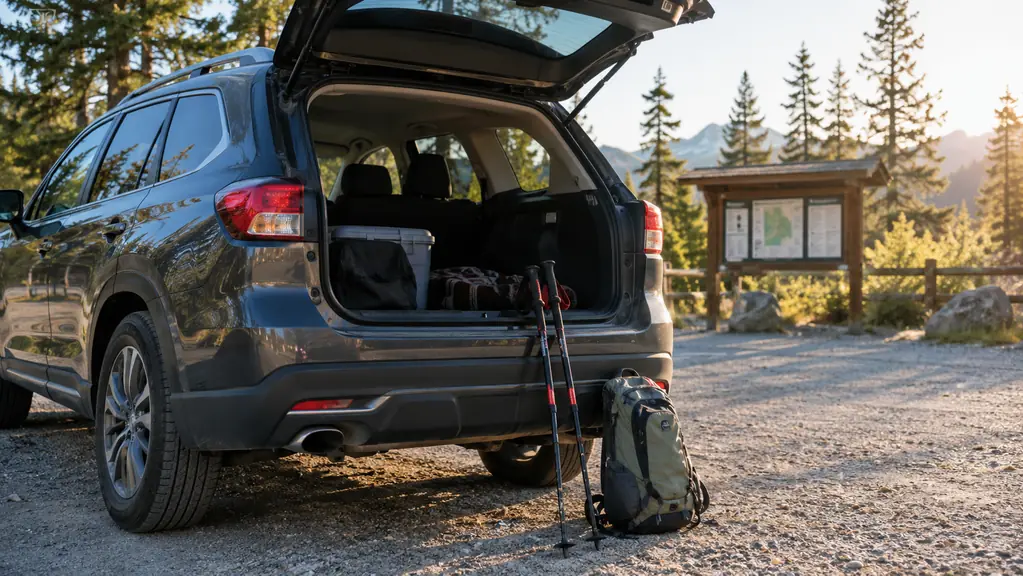
Over the past year these poles have been to Lost Maples twice, Garner State Park, Padre Island, and a week in the Smokies. I also borrowed a pair of carbon poles from a friend who thru-hiked the Colorado Trail, so I could compare them side by side on the same trails. Same shoes, same pack, same two French bulldogs, Biscuit and Pepper, taking turns riding in the carrier when their flat faces told me they had enough sun. I compared how each pair felt in my hands on a long climb, how each pair handled a rocky descent, and how each pair survived being tossed into the back of our family SUV at the end of the day.
I kept the same backpack loaded the same way for each comparison hike, because I wanted the test to be fair. I also swapped the poles between my hands on the trail, which sounds silly but tells you a lot. When you switch from carbon back to aluminum mid-hike, you notice the extra weight in the first few steps, and then you stop noticing it. That is the honest truth about the weight difference for a hiker like me.
Why I Chose Aluminum in the First Place
Before I bought anything, I spent a few evenings reading through reviews and forum threads, and the pattern was consistent. People who hiked fast and far loved carbon. People who hiked with kids, dogs, and picnic supplies loved aluminum. The reason came down to how the two materials fail. Carbon is strong until it is not, and when it fails, it fails suddenly. A hard sideways hit against a rock can crack a carbon shaft, and a cracked carbon pole is done for the trip. Aluminum bends. That sounded like the right trade for a family that hikes on weekends and treats gear like it is meant to be used.
There was also the budget question, and I will not pretend it did not matter. A family of four does not buy one pair of trekking poles. Caleb is sixteen and growing like a weed, Wyatt is fourteen, and Ray will grab whichever pair is closest when the trail gets steep. If we all end up using poles, the cost difference between aluminum and carbon multiplies fast. Starting with aluminum meant we could afford a good pair of hiking shoes for Wyatt, who had been complaining about his feet on every single hike. That trade was easy to make.
Where Cascade Mountain Tech Wins
The biggest reason I chose aluminum is how it fails. My Cascade Mountain Tech poles have taken a beating from a year of family hikes. Wyatt has leaned on them, Caleb has used one to poke at things on the trail, and both dogs have walked over them while they lay in the dirt. One pole has a slight bend near the tip from the time I used it to brace myself on a slick rock crossing. It still works fine. If that had been a carbon pole, I would have spent the rest of the trip wondering whether the shaft was about to give out.
The other thing that matters to me is what happens when gear gets treated like gear. On a family trip, poles get dropped on gravel, shoved in the back of the SUV, and handed to whoever needs them. Carbon poles make me nervous in that setting, and a nervous hiker is not a happy hiker. With these aluminum poles, I do not think twice. If one of the boys plants a pole between rocks and puts his full weight on it, I know the shaft will bend rather than shatter. That peace of mind is worth more to me than the weight I would save with carbon.
Where Carbon Wins
I will not pretend aluminum is the better material in every way, because it is not. The carbon poles I borrowed were noticeably lighter in my hands. On a long climb, swinging a lighter pole all day means your arms and shoulders feel fresher at the top. If you are covering twenty miles a day on a thru-hike, that difference adds up. The Cascade Mountain Tech aluminum poles are not heavy, but they are heavier, and on the right kind of trip you feel it. My friend who lent me the carbon poles has no interest in switching back, and I completely understand why.
Carbon also feels different on the trail. It absorbs vibration in a way aluminum does not, so on hard-packed or rocky ground, less of the impact travels up through the shaft into your hands. My hands get a little more buzz with the aluminum poles on a long rocky descent. It has never bothered me enough to switch, but I understand why hikers who spend all day on talus and rock fields choose carbon. If your trails are mostly rock, the smoother feel is a real benefit, not a marketing story. For our trails, which are a mix of dirt, gravel, and limestone, it is a minor difference.
Aluminum bends where carbon snaps. For weekend family hikes, that one difference settles it for me.
The aluminum pair that survived a year of family hikes
If you are shopping for your first pair of trekking poles, or replacing a pair for weekend trips, the Cascade Mountain Tech aluminum poles are the ones I keep reaching for. They have handled steep descents, two teenagers, and two French bulldogs, and they still collapse down and ride in the back of the SUV without complaint.
Amazon Check Today's Price on Amazon →How the Poles Handle the Trails We Actually Hike
Most of our hiking is in Texas state parks, which means a lot of limestone, exposed roots, and stretches of trail that are more rock than dirt. At Lost Maples, the descent into the canyon is steep enough that my knees used to ache for a full day afterward. With poles, that same descent is a completely different experience. I plant the pole downhill from me, step, and repeat. My knees still feel the hike, but they do not punish me for it the next morning. That alone was worth the purchase.
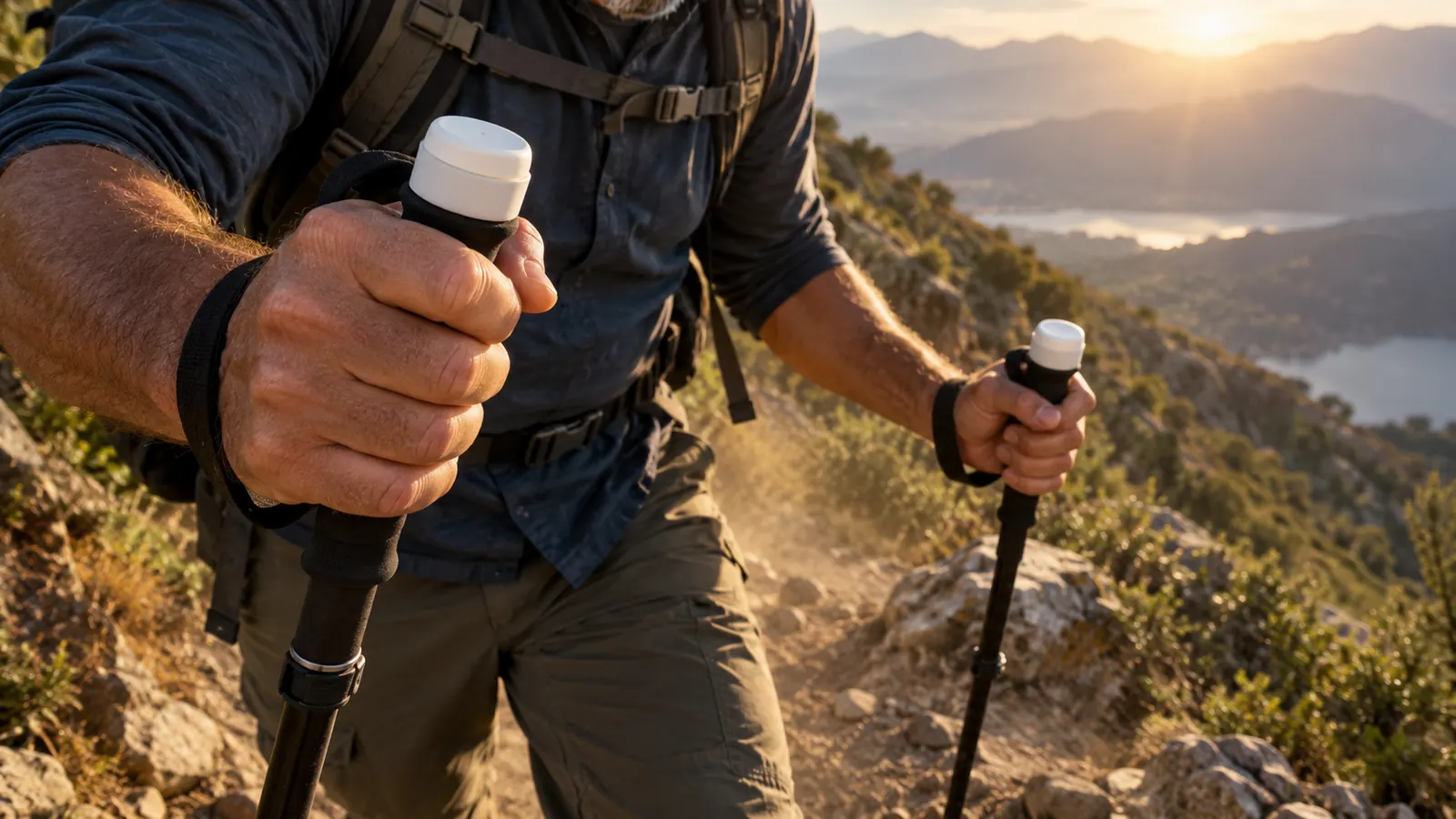
At Garner State Park, we did the climb up to the top of Mount Baldy on a hot afternoon. The extended foam grip on the Cascade Mountain Tech poles meant I could choke up on the shaft when the trail got steep, and my hands never slid down to the bare metal. At Padre Island, we walked the paved loop with the rubber tips from the included tip kit, then swapped back to the carbide tips for the next weekend at a rocky trail. The whole swap takes about thirty seconds. These are the small details that make a pair of poles feel like they were designed for the way a family actually hikes.
What About the Extras?
The Cascade Mountain Tech poles come with a tip kit that includes rubber feet for pavement and carbide tips for dirt, plus a set of baskets for soft ground. I use the rubber feet more than I expected, because so many of our trails start with a paved section before they turn to dirt. The extended foam grip is the feature I would not give up. On a steep climb I choke up on the shaft, and the foam runs far enough down that my hands stay comfortable the whole way. Those details matter more to me than a few ounces of shaft weight.
What a Year of Use Taught Me
I have learned that the features matter more than the material. The grip is comfortable in the Texas heat, the wrist straps are easy to adjust even with sunscreen on my hands, and the twist-lock sections collapse small enough to fit in the back of the SUV between the daypack and the dog carrier. I have also learned that I use the poles far more than I expected. I grab them for short walks, for the paved nature trail near our house, and for the sandy stretches at the beach. They are not just for big mountain trips.
What I'd Change
If I am being honest, there are two small things I would change. The twist-lock mechanism works fine, but I have to check it now and then on a long day, because if you do not tighten it fully the pole can slowly collapse under load. It has never collapsed on me completely, but I have felt it give a little and had to stop and re-tighten. The other thing is the vibration on rocky ground, which I already mentioned. Neither issue has ever made me want to switch, but they are worth knowing about before you buy.
Who Should Buy Which
Here is the honest breakdown. Buy the Cascade Mountain Tech aluminum poles if you hike on weekends, if you are buying your first pair, if your kids will use them, or if you would rather spend your money on good hiking shoes. Buy carbon poles if you are a fast hiker who counts grams, if you are training for a thru-hike, or if you spend most of your time on rocky terrain and the smoother feel is worth the extra cost to you. For our family, the answer has been clear for a year now.
One more thing: if you are buying for a teenager, start with aluminum. Caleb sprints ahead on the trail and plants my poles like he is trying to start a fire when he borrows them. Wyatt drags them behind him on his turn when he is tired and complains about his feet. Neither of them is gentle with gear, and neither of them should be holding a pair of carbon poles that cost three times as much. Aluminum handles that kind of use without drama, and when the boys are older and hiking their own long trails, they can decide for themselves whether carbon is worth it.
Still deciding? Start with aluminum.
A year in, I have zero regrets about choosing the Cascade Mountain Tech aluminum poles. They are the pair I hand to a teenager without a second thought, and the pair I grab when the trail gets steep. If carbon is calling your name, at least start here and see how much you actually use them.
Amazon Check Today's Price on Amazon →