
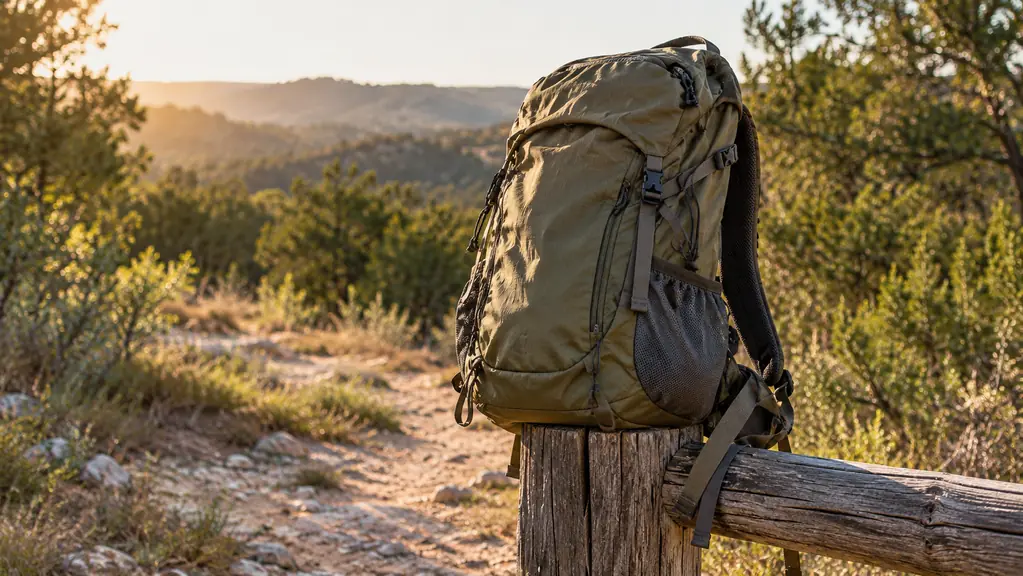
The 4Monster daypack has been on my back for about 18 months now, and it has done things I never expected a packable backpack to survive. It has carried two liters of water, a first-aid kit, dog bowls, a collapsible water dish for Biscuit and Pepper, sunscreen, snacks for two teenage boys, and more granola bar wrappers than I care to count. It has been to Lost Maples, Garner, Padre Island, and a handful of smaller Texas parks in between. It has been rained on, dropped on rocks, stuffed into the bottom of the family SUV, and shoved under a Coleman Sundome tent when the dogs decided they wanted the floor space. It still zips, the straps still hold, and I still reach for it before every single hike.
Before the 4Monster, I carried Caleb's old school backpack. It dug into my shoulders within the first mile, the padding was basically a joke, and by the time we reached the top of anything I was already thinking about the descent. I bought the 4Monster for day hikes, then bought a second one for Wyatt about a year ago because he kept grabbing mine. That second purchase is probably the most honest review I can give: I liked it well enough to buy it again.
The Quick Verdict
A packable daypack that actually carries a full day of family hiking gear, survives Texas heat and the occasional rain shower, and still looks right after 18 months. Not the last word in suspension or padding, but the best value I have found for what it does.
Amazon Check Today's Price →The daypack I grab before every family hike
After 18 months of Texas trail use with two teens and two French bulldogs, the 4Monster daypack is still the first thing I pack. Light enough to forget it is there, tough enough to keep up with our crew.
Amazon Check Today's Price on Amazon →How I've Used It
I am not a gear reviewer. I am the mom who packs the snacks, the first-aid kit, the dog water, and everyone's sunscreen. My testing method is not a lab. It is real trails, real Texas heat, and real teenagers who would rather complain than carry anything themselves. That means the 4Monster has been the family workhorse, not a carefully rotated piece of gear.
A typical day starts with me loading the pack: two 500 ml bottles in the side pockets, the Sawyer Squeeze filter in the main compartment, dog bowls and a collapsible dish for Biscuit and Pepper, a small first-aid kit, sunscreen, a snack layer, and whatever jacket or rain shell the forecast says we might need. Caleb sprints ahead on the trail. Wyatt walks next to me and tells me his feet hurt. The dogs trot along until they decide they are done, and then they ride in the pack or get carried. The 4Monster has held all of it.
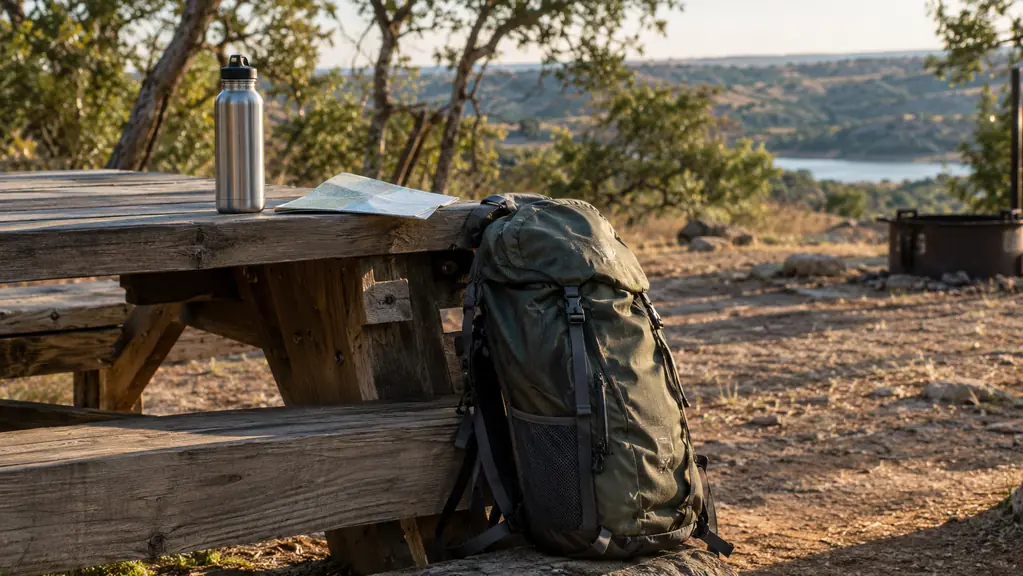
I have also used it as a camp bag, a beach bag at Padre Island, a car organizer on the drive to Colorado, and an overnight bag for a quick trip to my brother-in-law's place. It packs down small enough to live in the glove box area of the SUV, which is where it stays between trips. That is the real test for a packable pack: it has to earn its place when it is empty, and this one does.
The clearest example of what this pack can do came on a Saturday in late March at Garner State Park. We parked near the base of Mount Baldy and I loaded up with two liters of water, the Sawyer Squeeze, a bag of apples, the dog bowls, and a light jacket for Wyatt, who had convinced himself it might snow. Caleb took off up the switchbacks. Biscuit made it about a third of the way before he planted his front feet and refused to move, so he rode in the pack for the rest of the climb. The 4Monster carried a 25-pound French bulldog plus everything else without a single complaint. The straps held, the zippers held, and the pack stayed level on my back the whole way up. That is the day I stopped thinking of it as a compromise and started thinking of it as the right tool for the job.
What the 4Monster Gets Right
The first thing I noticed was the weight. Or rather, the lack of it. The 4Monster is genuinely light, light enough that I sometimes have to check that it is still on my back. That matters more than most people think, because a packable daypack that feels heavy when empty defeats the whole purpose. This one does not.
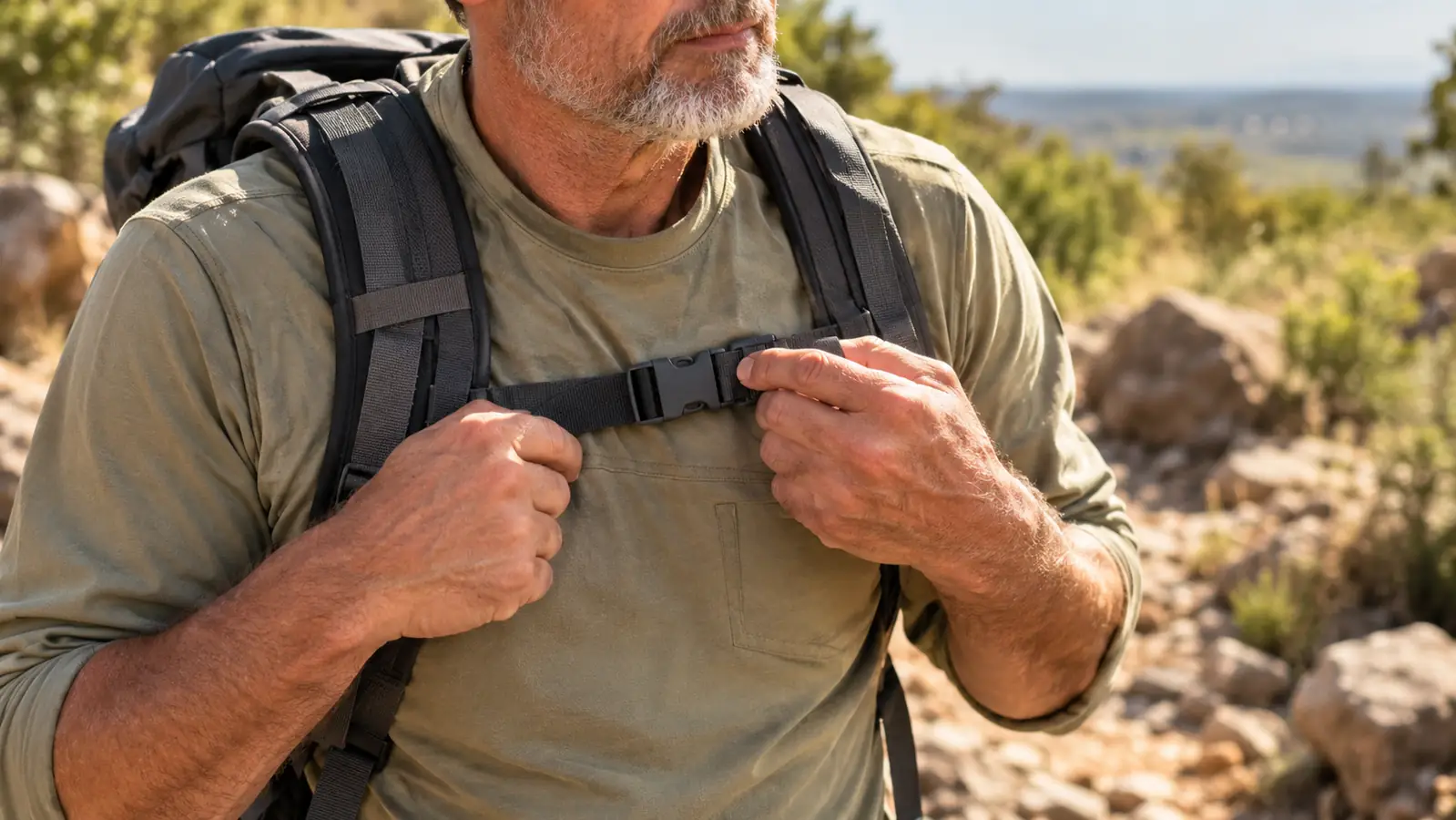
The straps are the second thing. I have worn cheap packable packs that felt like two pieces of ribbon cutting into my shoulders. The 4Monster has actual padding on the shoulder straps and a sternum strap that helps distribute the load. It is not a premium suspension system, and I am not going to pretend it is. But for a 24-liter pack carrying maybe 10 to 12 pounds of family gear, it is comfortable for a full day. I have done six-mile days at Lost Maples and come home with sore legs, not sore shoulders.
The water bottle pockets are another win. They are deep enough that a standard 500 ml bottle does not fall out when I bend over to pick up a dog, and they are placed so I can reach them without taking the pack off. That sounds like a small thing, but when you are the designated water carrier for a family of four plus two flat-faced dogs, it is the difference between a good hike and a constant stop-and-go.
One detail I did not expect to care about is the front pocket. It is not huge, but it is exactly the right size for a phone, a car key, and a tube of sunscreen, which means I do not have to open the main compartment every time Wyatt asks for lip balm. The main compartment also opens wide enough that I can see everything inside at once, so nothing gets lost at the bottom. On a February hike at Padre Island, Biscuit started panting hard and I needed the collapsible bowl in a hurry. I had it out in about five seconds without emptying the pack. That kind of organization matters more to me than fancy fabric or a brand name.
How It Has Held Up Over 18 Months
I want to be honest about the long-term picture, because that is the part most reviews skip. After 18 months of regular use, the zippers still work smoothly. The stitching on the shoulder straps is intact. The fabric has no tears, even after being dropped on limestone at Lost Maples and dragged across a gravel parking lot at Garner. The water resistance has held up for light rain and the occasional splash from a dog shaking off after a swim. I would not trust it in a downpour, and I would not put a camera or a phone in the main compartment without a dry bag. But for the kind of weather we actually hike in, it has been enough.
The one thing that has worn is the lining inside the main compartment. The little divider pocket has started to fray at the top edge, and the interior fabric is showing some fuzz after months of sunscreen bottles and dog bowls rubbing against it. It is not a structural problem. The pack still works exactly as well as it did on day one. It just tells me that this is a well-made budget pack, not an expedition pack built to survive a decade of abuse.
The rain test came on a Sunday afternoon in May at a small park outside Kerrville. A front moved through faster than the forecast promised, and we got caught about a mile from the car. The pack took twenty minutes of steady rain, and everything inside stayed dry except the outside pocket, where I had left a phone charger. The charger survived, which tells me the water resistance is real, just not absolute. I dried the pack on the porch that evening and it was ready for the next trip by morning.
I have also washed it once, after Pepper decided to roll in something unidentifiable near the river at Garner and then sit in the pack for the walk back to the car. I ran it through a gentle cycle with cold water and a small amount of mild detergent, then let it air dry on the porch for two days. It came out clean, kept its shape, and the zippers still moved like new. I would not make a habit of it, because the fabric is not built for repeated washing, but it is nice to know it can handle the occasional emergency.
I bought the 4Monster for myself, then bought a second one for Wyatt about a year ago because he kept grabbing mine. That is the most honest review I can give: I liked it well enough to buy it again.
Where It Falls Short
The padding is the first thing I would mention. The back panel is thin, and if you pack something with a hard edge, like a hydration bladder or a paperback book, you will feel it after a few miles. I have learned to put soft things, like a jacket or a towel, against my back and hard things on the outside. That works, but it is a workaround, not a feature.
The hip belt is also minimal. It is more of a stabilizer than a load-bearing belt, which means the weight sits on your shoulders. For a light daypack that is fine. For a heavier load, like the day I carried three liters of water plus the dogs' gear, you will notice the difference. I would not want to carry more than about 12 pounds in this pack for a full day.
The heaviest load I have carried in it was the day we did the full loop at Lost Maples in early November, when the leaves were at their peak. I had three liters of water because the forecast said near 80 degrees, plus the dogs' collapsible bowls, a full first-aid kit, and a pair of binoculars Caleb refused to carry. I put the binoculars against my back by mistake, and I felt every edge of them for the first two miles. The pack handled the weight fine, but my shoulders knew about it by the time we got back to the car. That day taught me the packing rule I still use: soft things against my back, hard things on the outside, and never more than about 12 pounds unless I want a sore neck the next morning.
And the packable pouch, the little bag it stuffs into, is a bit fiddly. The first few times I tried to repack it, I had to wrestle with it. After a few tries it got easier, but it is not the kind of thing you want to do in a hurry at a trailhead. I usually just stuff the pack into the SUV without bothering with the pouch.
What I Liked
- Genuinely light and packable, easy to keep in the car between trips
- Comfortable padded shoulder straps with a useful sternum strap
- Deep water bottle pockets that hold bottles securely on rough trails
- Survived 18 months of regular family use with no structural failures
- Machine washable, which matters when you hike with French bulldogs
- Sized right for a full day of family gear at 24 liters
Where It Falls Short
- Thin back panel, you will feel hard objects through it
- Minimal hip belt, weight sits on your shoulders
- Packable pouch is fiddly to repack
- Not meant for heavy loads or serious downpours
How It Compares to the Alternatives I Tried
I have tried a few other packable daypacks over the years, mostly borrowed from friends or picked up on sale. The cheap ones, the kind that fold into a tiny pouch, have all had the same problem: no structure, no padding, and straps that dig in after an hour. They are fine for a theme park or a cruise port, but not for a real trail with elevation.
The bigger, more technical daypacks, like the ones my brother-in-law uses, are more comfortable under heavy loads. But they are also heavier, bulkier, and harder to keep in the car. For our family, the 4Monster sits in a sweet spot. It is not the most technical pack I have used, and I would not take it on a week-long backpacking trip. For day hikes, camp days, and beach days, it does everything I need and nothing I do not.
Who This Is For
The 4Monster daypack is for the parent who carries everything. It is for the person who needs one bag that can handle a day hike, a beach trip, a long car day, and a camp afternoon without demanding to be the center of the gear closet. It is for families who want a light, affordable pack that does not punish them for choosing the packable option.
It is also for anyone who wants a spare pack they can keep in the car or in a suitcase. Because it packs down small, it is the kind of thing you can bring on a trip without committing to a second full-size backpack. I have used mine as a carry-on bag, a beach bag, and a grocery bag on vacation, and it has handled all of those jobs without complaint.
Who Should Skip It
If you are planning a multi-day backpacking trip with a heavy load, this is not the pack for you. The thin back panel, minimal hip belt, and shoulder-oriented carry are not designed for 20-plus pounds over many miles. You will be more comfortable with a framed pack and a real suspension system.
If you hike in serious rain, you will also want something with a rain cover or a fully waterproof construction. The 4Monster is water resistant, not waterproof, and I keep my electronics in a dry bag inside the pack when storms are possible. For a fair-weather day hiker or a family that mostly hikes in Texas sunshine, that is an easy trade to make.
Still the first pack I grab after 18 months
The 4Monster has carried our water, our snacks, and more than a few tired French bulldogs. It has held up through a year and a half of Texas trails, and I bought a second one for Wyatt with no regrets.
Amazon Check Today's Price on Amazon →