
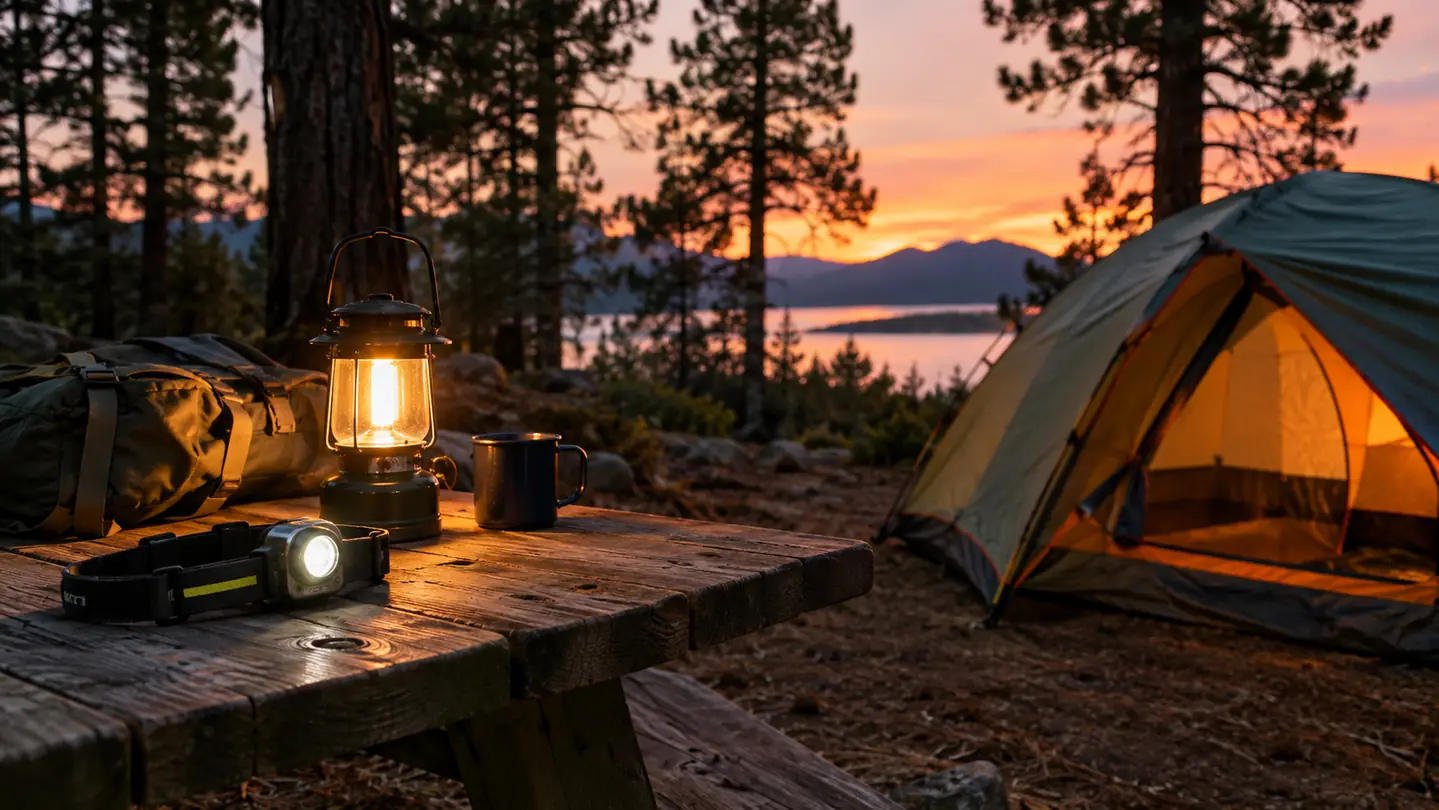
Camp gets dark fast. One minute you are rinsing dinner plates at the picnic table, and the next you cannot find the tent zipper, the dog leash, or your own feet. I learned this on our first family trip to Garner State Park, when I tried to cook a can of soup with my phone flashlight wedged between my ear and my shoulder. The soup boiled over, the phone died, and the boys thought it was hilarious. Ray thought it was a sign that we needed real gear. He was right, and I told him so exactly once.
That trip is why I bought the Black Diamond Spot 400 headlamp about a year ago. It is the piece of gear I reach for more than any other at camp, and the one I would replace first if it broke. This is how I light our campsite with it, step by step, from the last tent stake to the 2 a.m. dog walk.
The headlamp that lives on my wrist from dusk to dark
The Black Diamond Spot 400 is dimmable, waterproof, and runs on AAA batteries I can find at any gas station. It has lit every meal, every bathroom walk, and every dog check at our campsite for the past year. Check today's price on Amazon.
Amazon Check Today's Price on Amazon →Step 1: Set Up in Daylight, Keep the Lamp Close
The best way to light a campsite at night is to not need much light at all. We aim to have the tent up, the sleeping pads inflated, and the stove on the table before the sun goes down. That does not mean we make it. Someone always forgets the tent poles, or the dogs find a puddle, or Wyatt decides his shoes are too tight at the exact moment we need to move faster. The headlamp is our backup plan for all of it.
So the rule is simple: the headlamp stays on my wrist or in my jacket pocket from the moment we park. Not buried in the bottom of the 4Monster daypack. Not in the console of the SUV. On me. That way, when the last tent stake is going in after dark, I can see what I am doing without holding anything. I can also find it in five seconds instead of digging through a bag of marshmallows, wet socks, and the deck of cards the boys insist on bringing.
The Spot 400 is light enough that I forget it is there. I wear it around my wrist while I haul firewood and water, and it takes two seconds to slide onto my head. The strap stays adjusted from the last trip, so it does not fight me when I need it fast. I have also dropped it on gravel, left it in the rain on the picnic table, and stepped on it once in the tent. It still turns on first try. That matters more to me than any spec sheet.
Step 2: Match the Beam to the Job
A headlamp is not one light. It is several lights in one housing, and the trick is knowing which one to use for the job in front of you. When I walk to the bathhouse or check the tent after the boys are asleep, I want the spot beam, the focused one that reaches ahead and shows me roots and rocks before I step on them. The Spot 400 throws plenty of light for that, which is what the name promises: spotting things at a distance.
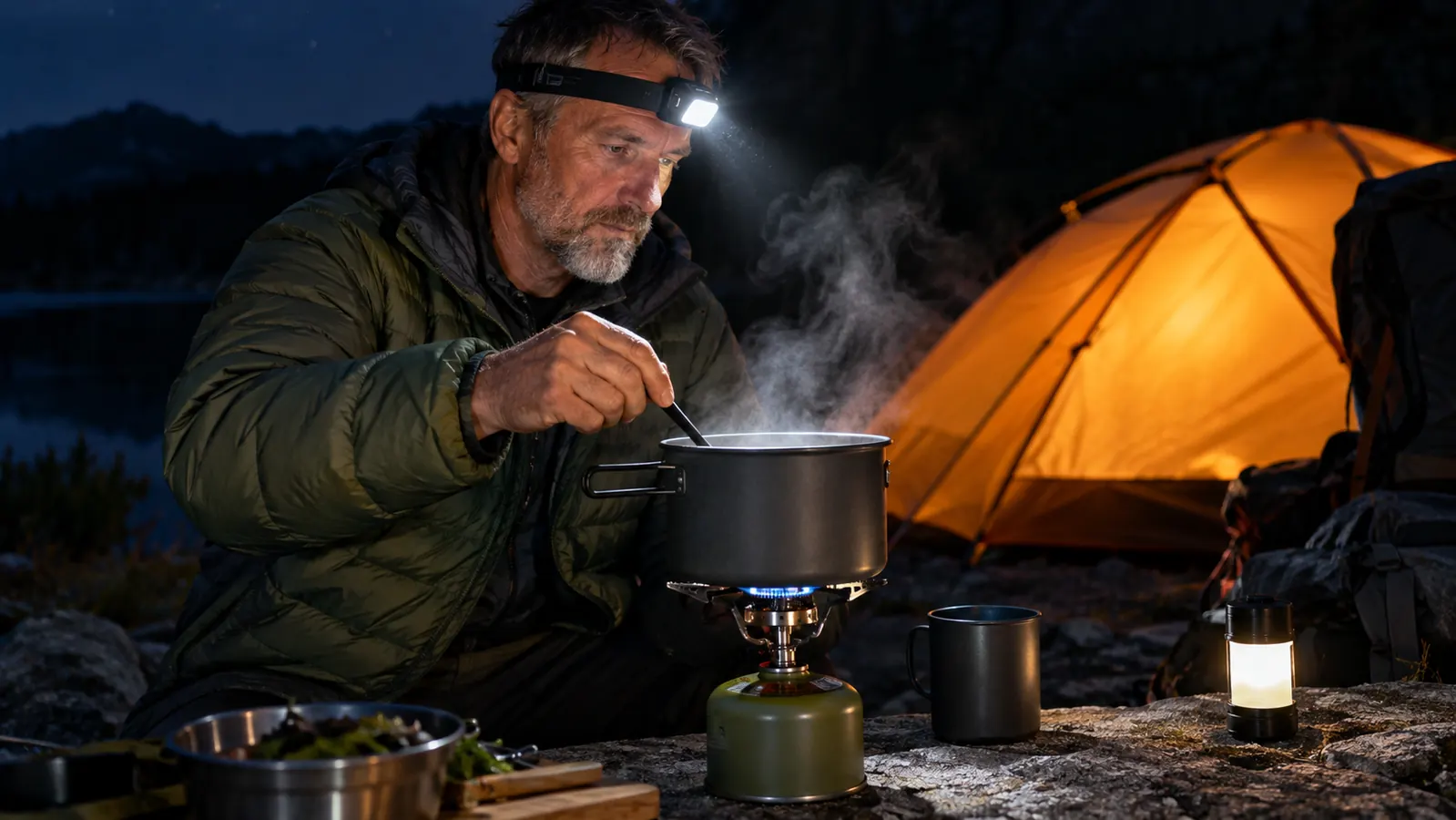
When I am cooking, washing dishes, or trying to find the mustard in the cooler, I want the wide flood beam, and I want it dimmed. The Spot 400 is dimmable, which sounds like a small thing until someone is trying to sleep three feet away from your dinner prep. Crank it down and you can still see the pot and the plate, but you are not lighting up the whole campsite or waking the kids. Dimmable is the feature I did not know I needed until I had it.
I also point the lamp where I am actually looking. It sounds obvious, but the first few trips I kept my head up and lit the trees instead of the cutting board. Tilt your head down, aim the beam at the task, and suddenly everything is easier. The beam follows your eyes, which is the whole point of a headlamp over a flashlight. You look at the cooler, and the cooler is lit. You look at the stove, and the stove is lit. You look at Wyatt's feet, and Wyatt's feet are lit. He still complains, but at least he is not stepping on roots.
Step 3: Light the Cooking Zone Without Blinding Everyone
Cooking at night is the reason I bought a headlamp in the first place. Holding a flashlight while you stir, flip, and plate is a two-hand job with one hand missing. The headlamp gives me both hands for the spatula and the plate, and it stays aimed at the stove no matter how I move. I can stir the pasta, grab the salt, and check on the dogs all without losing my light. Dinner gets done faster, and nobody eats cold soup.
The trick is keeping the beam low. Wyatt calls my headlamp the lighthouse, because I used to swing my head around and catch him right in the eyes every time I turned to grab something. Now I angle the lamp down at the table and keep the brightness low. The food gets cooked, and nobody has to squint. Ray has stopped asking me to turn it off when he is trying to eat, which is the closest thing to a compliment I have ever gotten from him about gear.
I also use the headlamp to light the cooler, the water jug, and the dish tub. One pass with the beam and I can find the butter, the dog bowl, and the spoon I dropped without digging through everything twice. At the end of the night, I hang the headlamp on the tent loop and use the dimmed beam to read for ten minutes before my eyes close. It is the quietest part of the whole trip.
Step 4: Light the Path to the Bathroom and Back
The walk to the bathhouse is the real test of a headlamp. At Lost Maples, it is a good 200 yards of roots, rocks, and one patch of mud that never dries. With the Spot 400 on the spot beam, I can see the whole path laid out ahead of me, and I can keep my hands free to hold the toilet paper and the key. I do not have to stop and pull out a phone, and I do not have to ask Ray to come with me. That alone makes the whole thing worth it.
I also mark the way back to the tent. Our Coleman tent looks exactly like every other tent in the dark, so I hang a small glow stick on the zipper pull before I leave. The headlamp finds the glow stick, the glow stick finds the tent, and I do not end up crawling into a stranger's vestibule at midnight. It has happened to me once, and once was enough. Now the glow stick is part of the camp kit, right next to the batteries.
The same trick works for the kids. Caleb sprints ahead with his own light, and Wyatt shuffles along with the dog leash. I keep my beam on the ground in front of them so they can see the same roots I can see. When they were smaller, I used to hold their hands and carry the flashlight in my teeth. The headlamp is better in every way, and it does not drool. It also leaves both of my hands free to grab a jacket or a water bottle.
Step 5: Walk the Dogs and Do the Midnight Check
Biscuit and Pepper do not care about our sleep schedule. At 2 a.m., one of them needs to go out, which means I need to go out. The headlamp goes on, the leash gets clipped, and we shuffle to the edge of the site. Pepper is brindle, which means she disappears into the dark the second she is ten feet away. The beam keeps her in view, and it keeps me from stepping on the fire ring, the cooler, or the pile of shoes by the tent door.
The dogs also ride in the car with us, so the headlamp is part of the dog kit now. It lives in the center console with the leash and the collapsible bowl. When Pepper decides a bush is urgent, I can see her, the bush, and the pile of firewood between us all at once. Biscuit, who is fawn colored, shows up better in the beam, but he is also the one who wanders, so he gets watched just as closely. Two flat-faced dogs at night are a two-beam problem.
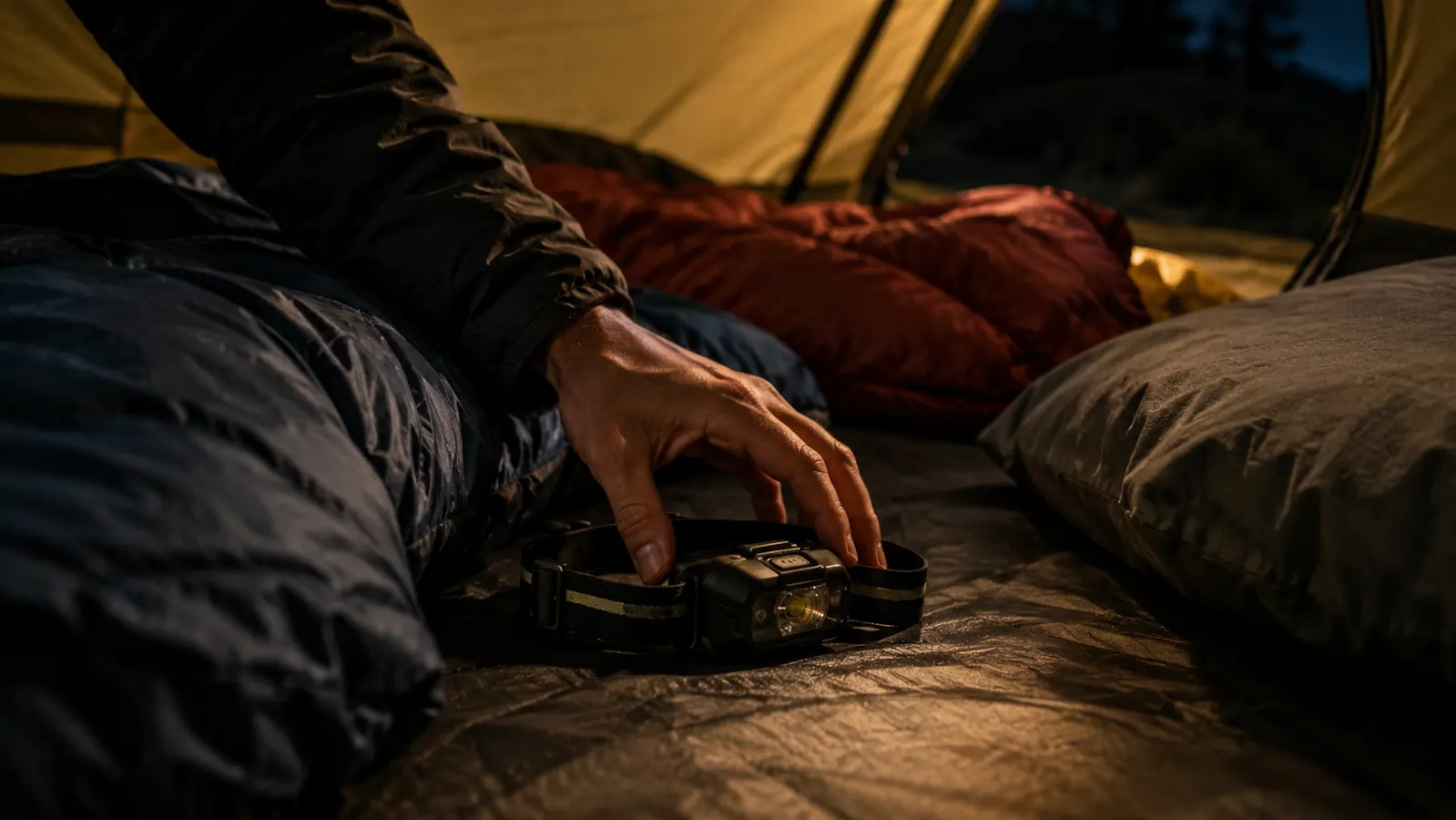
On the way back in, I use the dimmed flood beam to find the tent zipper, the water bowl, and my pillow without waking Ray. Then the lamp comes off and goes on the floor of the tent, right where I can grab it if one of the boys calls out. In the morning, it goes back on my wrist while I make coffee, because the sun is not always up when the coffee needs to be made. The headlamp is the last thing I touch at night and the first thing I reach for in the morning.
What Else Helps
The headlamp does the heavy lifting, but a few cheap extras make camp life easier. A small lantern on the picnic table gives the whole site a soft glow so nobody trips over a chair on the way to the cooler. Glow sticks on the tent zippers and the guy lines keep the tripping hazards visible. And a spare set of AAA batteries in the glove box means the Spot 400 never dies on a three-night trip. None of these cost much, and they all save you from the worst part of camping: fumbling around in the dark.
I also turn the lamp off when I am not using it. It sounds simple, but the first few trips I left it on while I talked, and I paid for it with a dead lamp on night two. The Spot 400 runs on AAA batteries, which I like because I can find them anywhere, but I still carry spares. Waterproofing matters too, because dew and drizzle are part of camping. I have left the lamp on the picnic table in a light rain and it did not care. I have also dropped it in the dish tub once. It did not care about that either.
The walk to the bathhouse at Lost Maples is 200 yards of roots and rocks. With the Spot 400 on the spot beam, I can see every single one before I step on it.
Here is the honest bottom line. A headlamp will not make you a better camper, but it will make the dark parts of camping a lot less annoying. The Black Diamond Spot 400 has been on my head for every night walk, every late dinner, and every dog check for the past year, and it has not let me down once. If you camp with kids or dogs, or if you just like to see what you are eating after sunset, it is worth a spot in your bag.
Light your whole camp night without tying up your hands
The Black Diamond Spot 400 is dimmable, waterproof, and runs on AAA batteries you can find anywhere. It has handled a year of family camping trips without a complaint. Check today's price on Amazon and see if it belongs in your camp kit.
Amazon Check Today's Price on Amazon →