
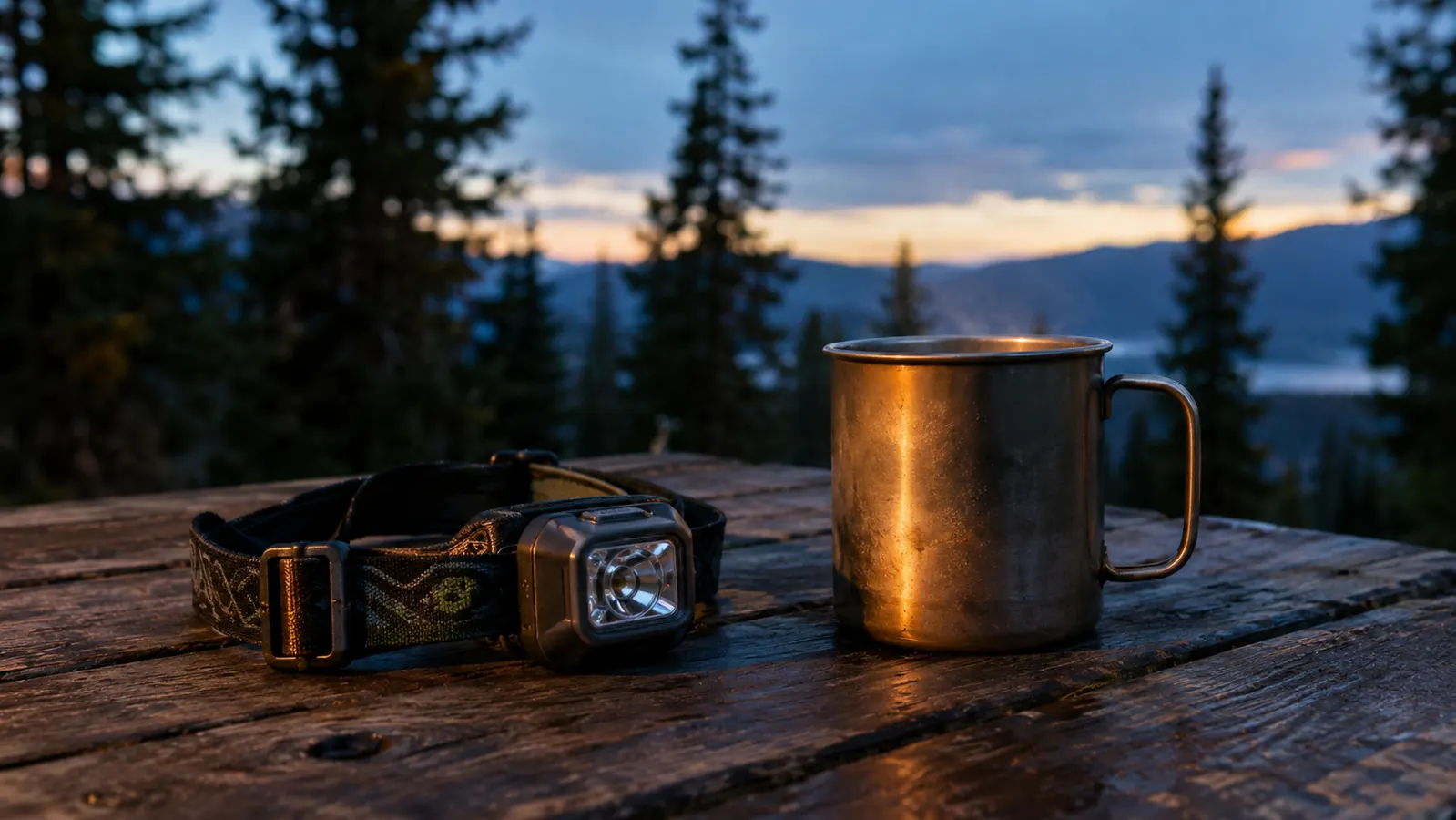
I own both of these headlamps, which makes this comparison easier than most. The Black Diamond Spot 400 was my first real headlamp, bought about a year ago after one too many night walks to the camp bathroom with my phone flashlight. The night that pushed me over the edge was in November at Garner State Park, when I walked the loop to the bathhouse with my phone held out like a candle and nearly stepped on a raccoon. I had tried the phone flashlight for months, telling myself it was fine, but it was not fine. It lit a narrow patch of gravel, left one hand useless, and died at 15 percent battery on the one night I actually needed it. The dogs, Biscuit and Pepper, were the real reason I needed both hands free, because a leash and a flashlight do not mix. I am not a gear tester. I am a mom who packs the snacks and the dog water, and I have strong opinions about which lamp makes 2 a.m. easier. The Cosmo 350 came later, after I realized the Spot 400 was overkill for most of what our family actually does. Same brand, same basic shape, same red mode, and a cost gap that makes you wonder what you are really paying for. After a year of weekend trips to Lost Maples and Garner, plus a longer week in the Smokies, here is the honest answer.
The short version: the Spot 400 is brighter, tougher, and has a better beam distance, but the Cosmo 350 is lighter, easier to use with gloved hands, and plenty bright for camp chores, tent setup, and the kind of night hiking our family actually does. I tested them back to back on the same loop at Lost Maples in March, swapping lamps night to night so the comparison was fair. Same batteries, same trail, same dogs pulling me toward the creek. I also tested them on a wet trail at Garner after a storm, where the difference in water resistance showed up fast. If you are a serious trail runner or a backcountry regular, the Spot 400 earns its place. If you are a parent packing for a state park weekend, the Cosmo 350 is the smarter buy. Here is the full breakdown.
| Black Diamond Spot 400 | Black Diamond Cosmo 350 | |
|---|---|---|
| Brightness | 400 lumens, with a max distance around 100 meters | 350 lumens, with a max distance around 80 meters |
| Weight | About 90 grams with batteries | About 58 grams with batteries, noticeably lighter on the forehead |
| Battery | Three AAA batteries | Three AAA batteries |
| Controls | Separate buttons for power and mode, easier to find by feel in the dark | One button cycles through modes, which is simpler but slower to navigate |
| Water resistance | IPX8, fully submersible | IPX4, splashproof but not submersible |
| Red light | Red mode for night vision, easy to find in the dark | Red mode for night vision, easy to find in the dark |
| Beam pattern | Defined hotspot with a wide flood, good for seeing far and near | Softer, wider beam, better for close work |
| Best for | Night hiking, trail running, rough weather, long backcountry trips | Camp chores, tent setup, reading, short night walks, kids and teens |
Where the Spot 400 Wins
The Spot 400 is the headlamp I grab when the plan involves actual darkness. The 400 lumens throw a clean beam about 100 meters, which meant I could see the trail markers at Lost Maples well before my teenage sons could. In June in the Smokies, we started the Schoolhouse Gap trail at 8:40 at night to catch the fireflies. Caleb sprinted ahead the way he always does, and he was fifty yards down the trail before I even got my strap tightened. With the Spot 400 on high, I could see his pack reflect in the beam from that distance, and I could pick out the white blazes on the trees a full minute before he reached them. We counted nine deer on the edge of the meadow, and the beam caught their eyes before they moved. The trail was rocky, with roots across the path every few feet, and I never once caught a toe. The beam has a defined hotspot with a soft flood around it, so I can see the rocks at my feet and the trail ahead without tilting my head. That kind of reach changes how safe a night hike feels, especially when you are the one responsible for getting everyone back to the tent.
It also shrugs off weather. The Spot 400 is rated IPX8, and it earned that rating in February at Garner when a cold front blew in and we set up the Coleman Sundome in a steady rain. The lamp sat on my head for the whole forty minutes, and the beam never flickered when water ran down the strap and onto the lens. I also dropped it into a puddle by the fire ring while carrying an armload of wood, dried it on my shirt, and it worked fine. The rain was coming down hard enough that Ray wanted to wait in the car, but the Spot 400 made the setup feel doable. I could see the grommets and the pole ends clearly, which is the whole job when you are threading a rain fly. The separate power and mode buttons are easier to find by feel when you are wearing gloves. At 6 a.m. in January, with Ray holding the tent pole and me fumbling for the right button, I could tell them apart without looking. And the dimming is smooth, all the way down to a night-vision setting that does not wake Wyatt when I crawl out of the tent to check on Biscuit and Pepper.
Battery life is another place the Spot 400 earns its keep. With three AAA batteries, it ran for a full month of weekend trips before I had to change them. I used it on high for the firefly hike, on medium for camp chores, and on the dim setting for middle-of-the-night dog checks, and it was still glowing on the drive home from the Smokies. The battery indicator on the side gave me a heads up before it faded, which is more than I can say for the cheap flashlight I used to carry. I keep a spare set of AAA batteries in the zippered pocket of my 4Monster pack, and I have only needed them once.
Where the Cosmo 350 Wins
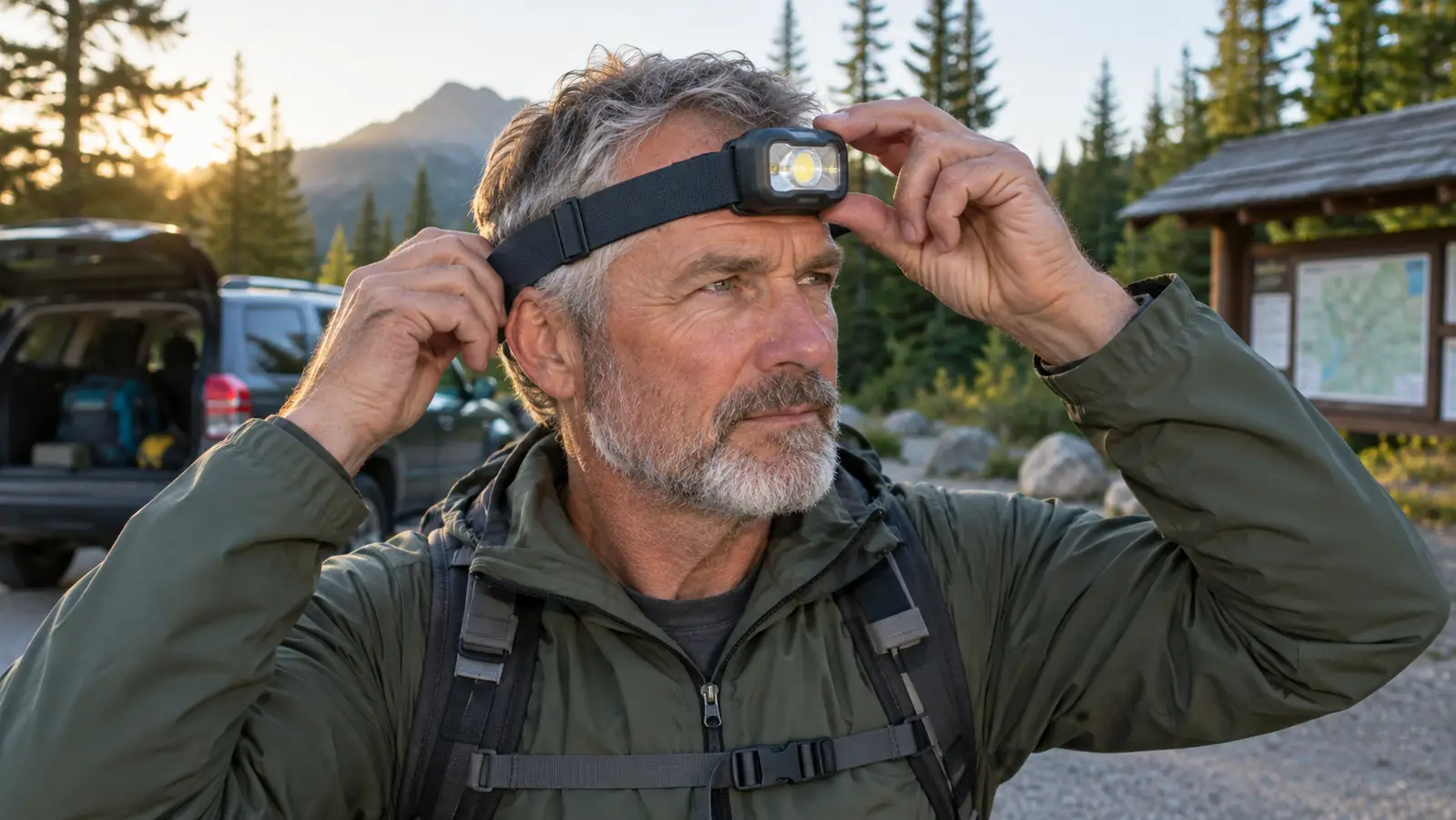
Here is what surprised me: the Cosmo 350 is the headlamp I actually reach for most weekends. At about 58 grams with batteries, it is light enough that I forget it is on my head. On a normal Saturday at Lost Maples, I wear it from 7 a.m. coffee to 9 p.m. bathroom run, and I forget it is there. The Spot 400 is not heavy by any standard, but after a few hours of camp chores, you feel the difference. The Cosmo also sits lower and closer to the forehead, so it does not bounce when I am bending over the cooler to dig out the hot dogs or leaning into the tent to sort sleeping bags. The strap is a simple elastic band that does not slip on my hair the way I expected it to. The elastic band is wide enough that it does not dig in, even after a full day of carrying it around camp.
The single-button control is simpler for everyone else in the family. Wyatt, who complains about his feet and also about buttons, can cycle through modes without a lesson. One night at Garner, he took the Cosmo to the bathhouse and came back with it still on, having figured out the dimming all by himself. Wyatt also figured out how to turn it off by holding the button, which he showed me with the pride of someone who just solved a puzzle. The Cosmo is splashproof, which has been enough for every trip we have taken. In April at Lost Maples, Caleb left his on a log near the fire ring, it rained overnight, and the lamp worked fine the next morning. Its 350 lumens are plenty for cooking dinner, finding the dog leash, and walking the loop to the bathroom. It is also cheaper, which matters when you are buying headlamps for two teenagers who will absolutely leave one on a picnic table in the rain. It also takes the same three AAA batteries, which means I do not have to sort them at home.
The Cosmo's beam is softer and wider, which sounds like a downgrade until you are reading a book in the tent. The Spot 400's hotspot is great on a trail, but it is almost too focused for close work. With the Cosmo, I can light up the whole camp stove and the cutting board at the same time, and the dimmer goes low enough that I can read next to Ray without waking him. On the last night of the Smokies trip, I read two chapters of my book while Ray finished the dishes, and the beam never bothered him. That is the kind of thing you do not notice in the store and you appreciate at 10 p.m. on the third night of a trip.
Need a headlamp that reaches the trail before you do?
The Spot 400 is the one I trust for real night hiking and rainy camp nights. It costs more, but the beam distance and waterproofing are where that money goes. If you are on the fence, think about the last time you actually needed to see fifty yards ahead in the dark.
Amazon Check Today's Price on Amazon →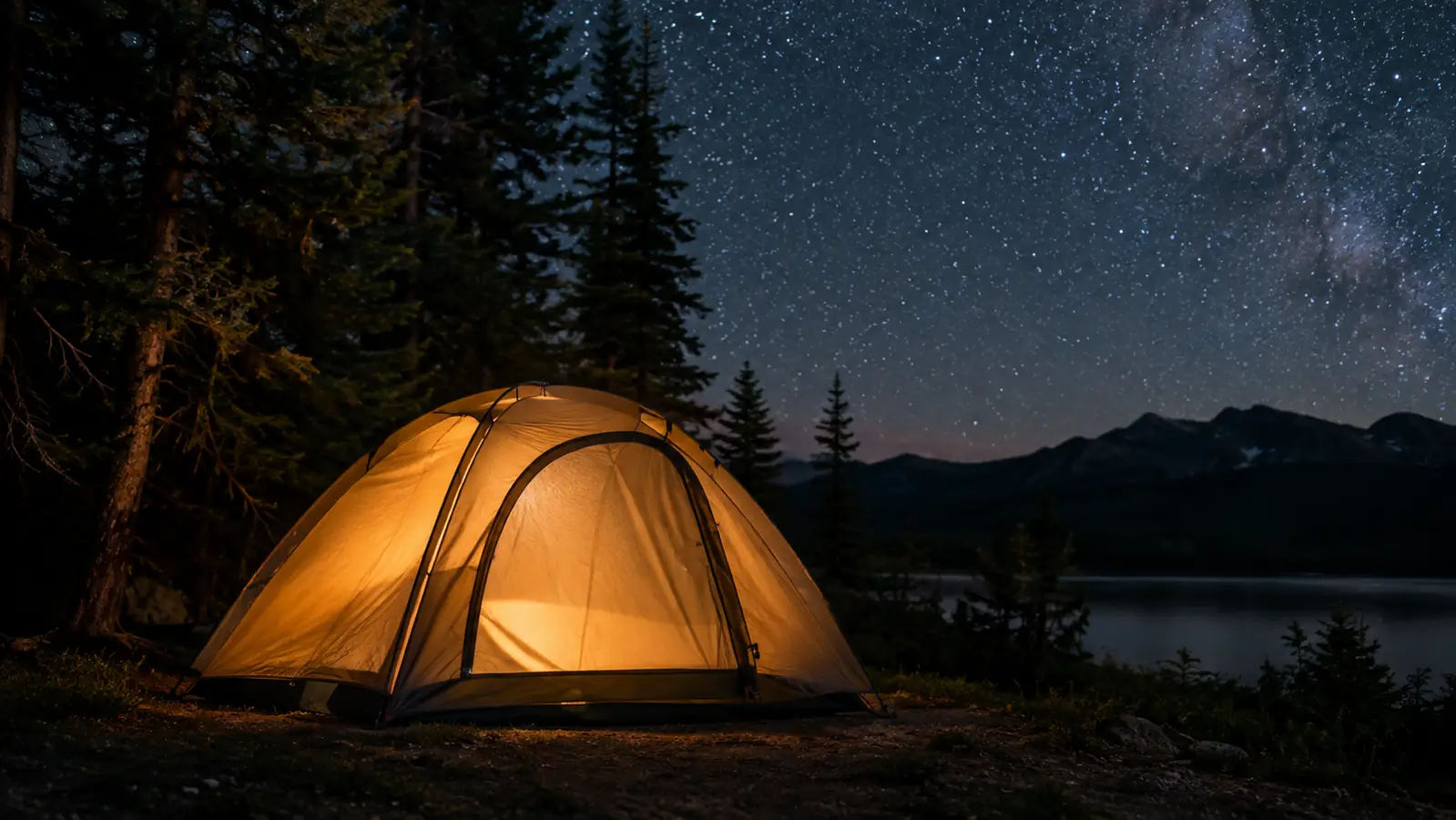
Who Should Buy Which
Buy the Black Diamond Spot 400 if you night hike regularly, if you run trails before sunrise, or if you spend real time in wet weather. If your idea of a good trip is a 7 p.m. start on a mountain trail, the Spot 400 is the one. I packed it for the Smokies in June, and I never once wished I had something brighter. The beam distance is the difference between seeing a trail sign and guessing where the switchback goes. It is the headlamp I pack for any trip where I know we will be walking out after dark. It survived being stuffed in the side pocket of my 4Monster pack more times than I can count. The extra money buys beam distance, waterproofing, and controls that work with gloves, and for those uses it is worth every penny. The Spot 400 has never let me down on a night when I needed it most.
Buy the Black Diamond Cosmo 350 if your nights are mostly camp chores, tent setup, bathroom walks, and reading in the tent. It is lighter on your head, easier for kids to figure out, and cheaper to replace when a teenager forgets it on a log. I bought one for Wyatt and one for Caleb after the Lost Maples rain incident, and both have survived a full summer of state park weekends. The Cosmo is the one I hand to a kid without a lecture, and that is worth more than any spec sheet. For a family that camps at state parks, the Cosmo is the headlamp that will actually get used. The Spot 400 stays in my pack for the trips where darkness is the whole point.
If you are still deciding, ask yourself one question: what are your nights actually like? If they involve trails after dark, buy the Spot 400. If they involve a camp chair, a cooler, and a dog that needs to go out one more time, buy the Cosmo 350. Both are Black Diamond lamps, so both will hold up. The difference is which one fits the job you actually have. That question has never steered me wrong, whether I am packing for a state park or a mountain week.
One more thing: neither lamp is a headlamp for running. I tried jogging the loop at Garner with the Spot 400, and it bounced more than I expected. If you run, look for something with a rear battery pack. For walking, camping, and hiking with kids and dogs, both of these are solid.
Still deciding? The Spot 400 is the one I pack for real night hikes.
If your trips include trails after dark or rain that will not quit, the Spot 400 is the safer bet. If you are mostly doing camp chores, the Cosmo saves you money and weight. The good news is you cannot go wrong with either. And if you end up with both, you will understand why I did not send either one back.
Amazon Check Today's Price on Amazon →