
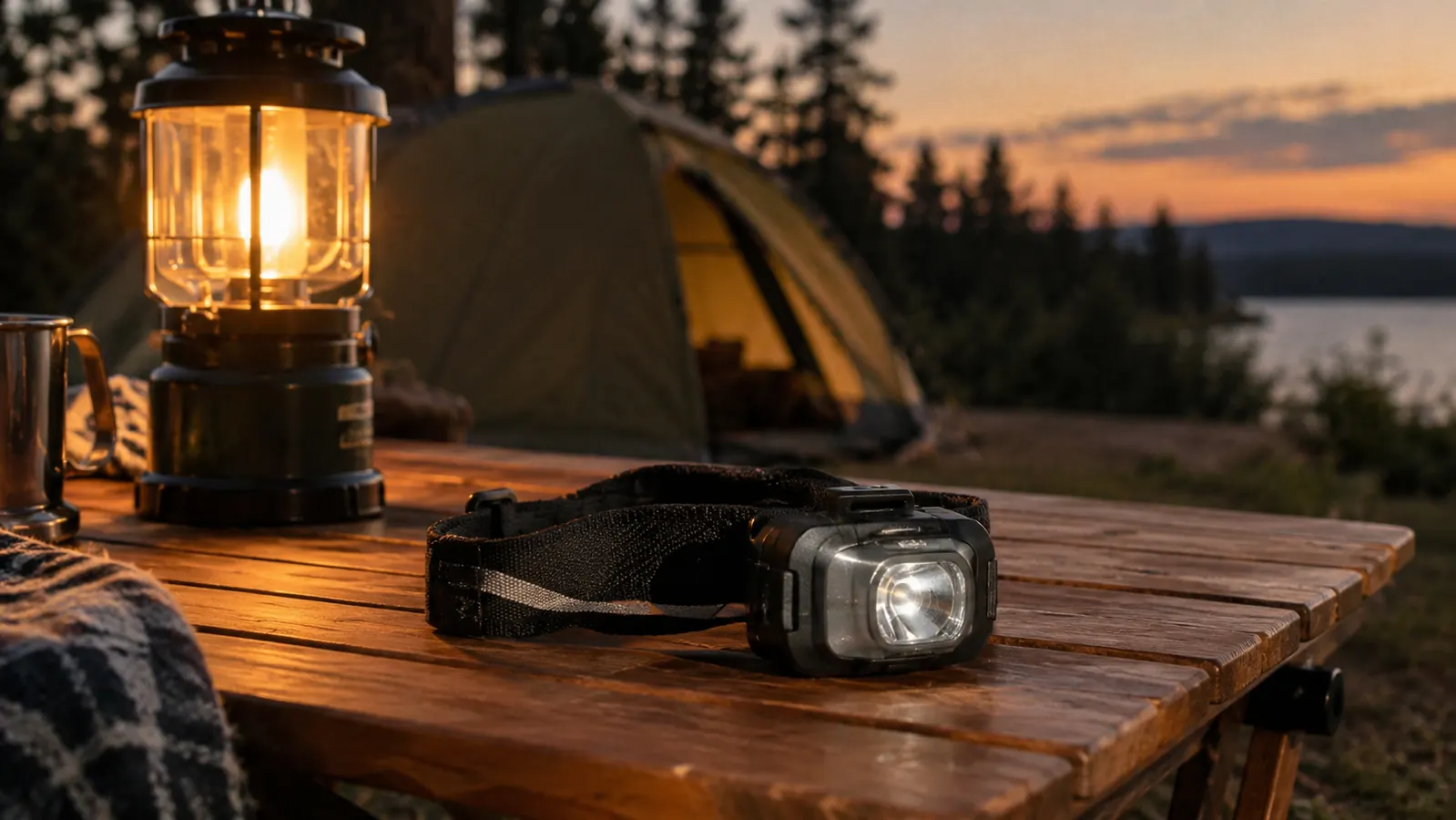
Somewhere around 2 AM at Lost Maples, Biscuit decided the tent was too warm and needed to investigate a rustling sound. I lay there holding my phone flashlight in one hand and the leash in the other, trying to light the tent zipper without waking Wyatt, who was sprawled across his sleeping bag. I dropped the phone twice. The leash once. The next morning I ordered a headlamp.
A year later, the Black Diamond Spot 400 is the piece of gear I grab before the coffee, before the kids' water bottles, before the dog leashes. It has done Texas state park weekends at Garner and Padre Island, one week in the Colorado mountains, and dozens of dark bathroom walks. It has been dropped, rained on, sat on, and handed to a 14-year-old who treats gear like it owes him money. I am not a gear reviewer. I am a mom who camps with two teenagers, two flat-faced dogs, and one husband who would rather sleep in a cabin than a tent. This is what a year of real use looks like.
The Quick Verdict
The Black Diamond Spot 400 is the headlamp I reach for every single trip. Bright enough for night trails, dim enough for a tent at 2 AM, and simple enough that my kids actually use it. It is not the lightest or the cheapest, but it is the one I trust.
Amazon Check Today's Price →The headlamp that ended my phone-flashlight years
After a year of camping with the Black Diamond Spot 400, it is the first thing in my gear bag. See today's price and current deals on Amazon.
Amazon Check Today's Price on Amazon →How I've Used It
I bought the Spot 400 about a year ago, before a spring break trip to Garner State Park. My old system was my phone flashlight, which meant every night trip to the bathroom involved holding the phone between my ear and shoulder while trying to zip a jacket. The headlamp changed that in one night. You put it on, it stays on, and both hands are free for leashes, zippers, and coffee.
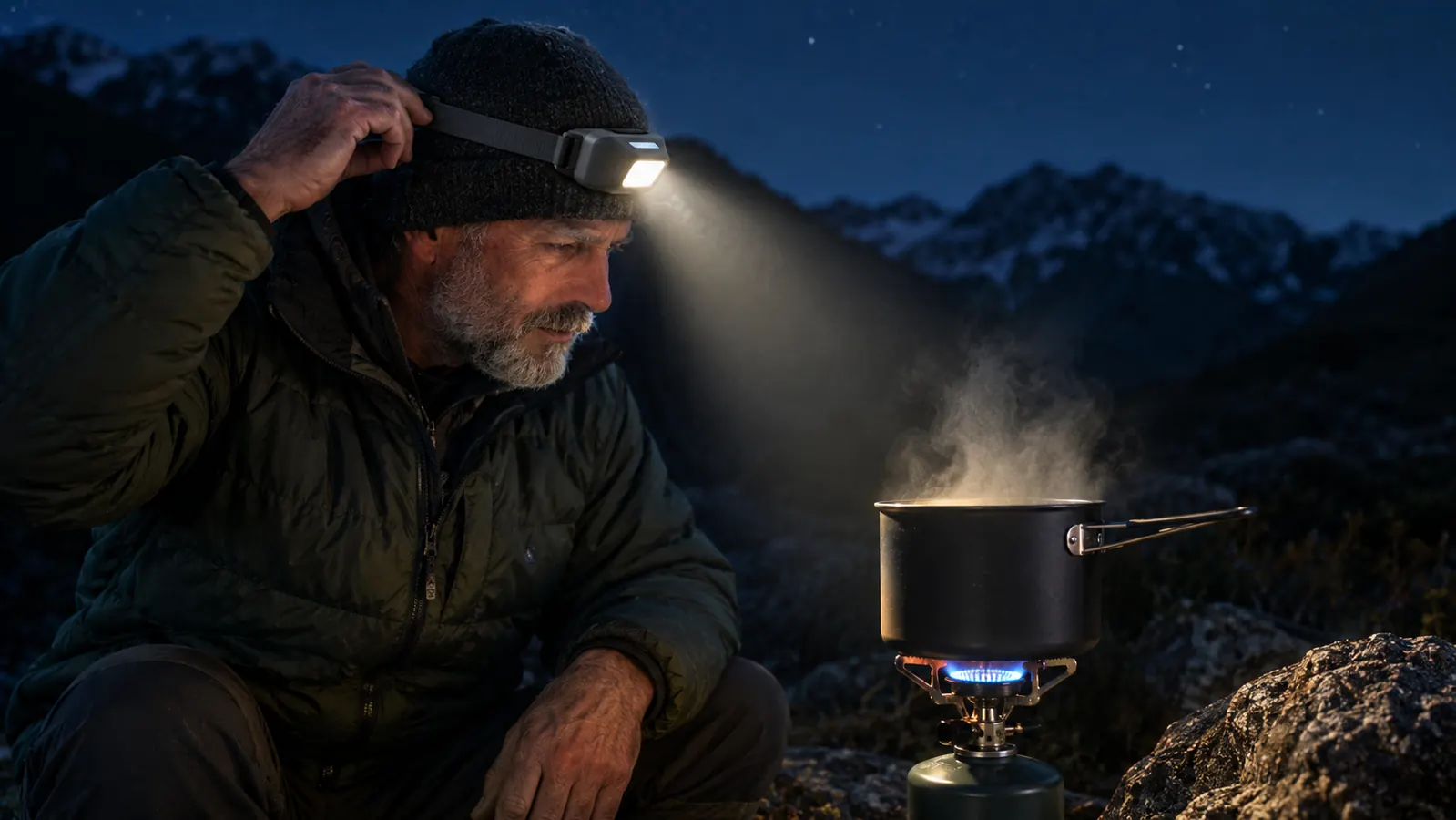
The way I actually use it: early morning starts when we hike before the Texas heat, night walks with Biscuit and Pepper around the campground loop, cooking dinner after dark, and reading in the tent when the kids fall asleep first. Wyatt uses it for his feet complaints on the trail. Caleb uses it to sprint ahead and wait in the dark like a goblin, which is apparently a 16-year-old thing.
It also lives on my head for the dog bathroom walks. Both French bulldogs need short, shaded hikes in the heat, so we do a lot of early mornings and late evenings. At Garner, that meant a 6:15 AM lap around loop C before the sun topped the hills, Biscuit pulling toward the river and Pepper stopping to inspect every picnic table like it owed her something. The Spot 400 is the reason I can see the leash, the dogs, and the trail all at once, with both hands free for the poop bags.
The Brightness Settings That Actually Matter
The Spot 400 puts out 400 lumens at full power, which is plenty for a dark trail. But the number that matters more to me is the lowest setting. In a tent at 2 AM, you do not want 400 lumens. You want just enough light to find the water bottle without blinding everyone. The dimming dial goes down to a single lumen, and that range is the whole reason this headlamp works for a family.
The dimming is a continuous dial, not preset steps, which sounds like a small thing until you are trying to read a map at arm's length or find a dropped contact lens. You can match the light to the moment. There is also a red light mode for preserving night vision, which I used more than I expected on the Colorado trip when we were night hiking to see stars.
The beam itself has a mix of flood and spot. The flood lights up the ground right in front of you, and the spot reaches out for trail signs. For a family hiking with dogs, the flood is the setting I live in. The spot is for when Caleb gets too far ahead and I need to confirm he still exists.
The first real test was Garner State Park in March. We left the campsite at 6:40 AM, before the sun cleared the hills, and took the Old Baldy trail down to the river. The Spot 400 lit up the limestone steps in a way my phone flashlight never could, throwing a wide enough pool of light that I could watch the dogs and the trail at the same time. Both hands stayed free for the leashes, which mattered because the trail had a drop-off on one side. Wyatt stopped complaining about his feet for a full ten minutes, which I am counting as a win. That morning alone justified the purchase.
How It Handles Weather, Drops, and Dog Leashes
The Black Diamond Spot 400 is rated IPX8, which means it survived being submerged. I have not dunked it, but it has been rained on at Padre Island, left out in a drizzle at Lost Maples, and dropped on rocks more times than I can count. The worst drop was at Lost Maples in October, when it bounced off the picnic table onto a limestone shelf and skittered into the leaf litter. I fished it out with a stick, wiped the lens on my shirt, and it fired up like nothing had happened. The battery compartment stays dry, and the lens has not scratched in a way that matters.
The strap is the part I did not expect to care about. Most headlamp straps are thin elastic that slides around on a hat. The Spot 400's strap has a grippy band that stays put, even over a fleece hat in the mountains and even on Wyatt's head when he wears it backward for reasons I do not ask about.
One honest note: the headlamp is not tiny. It is a bit bulkier than the ultralight options, and if you are a runner who cares about every ounce, you will notice it. For camping and dog walks, I never think about the weight. It lives in the front pocket of my daypack and comes out at dusk.
Padre Island was the sand test. Sand gets into everything, and the headlamp spent a week in a beach bag with sunscreen, shells, and a very sandy leash. The hinge on the tilting head still clicks into place, the batteries stayed dry, and the lens cleaned up with a quick wipe. I was not expecting that level of forgiveness.
Battery Life and the AAA Question
The Spot 400 runs on three AAA batteries, which feels old-fashioned in a world of rechargeables. There is a rechargeable version, and I will get to that in a second. But the AAA design has one real advantage for a family: when the light dies at 10 PM at a campground, I can buy batteries at the gas station instead of waiting for a USB port.
In practice, I change the batteries every few trips, not every trip. The dimming settings stretch the battery life a lot, because most of the time we are not at full power. On the Colorado trip, the sun set before we finished dinner, so the headlamp ran for a couple of hours every evening, cooking, washing dishes, and walking the dogs around the loop. Nights dropped below freezing, and I expected to swap batteries midweek. Instead, one set of AAA batteries carried the whole trip, and the low-battery warning never once lit up. I packed six spares and brought home five of them.
The low battery indicator is a nice touch. The light dims gradually and the power button glows when it is running low, so you get a warning instead of sudden darkness in the middle of a dog walk. That is the kind of detail you only appreciate at the exact moment it happens.
If you are comparing the AAA version to the rechargeable one, here is the honest math from a year of use. The rechargeable version costs more up front and saves you the battery run later. For us, the AAA version wins because the kids lose chargers, not because the batteries are cheaper. Your family may be different, and that is fine.

The Red Light and the Details I Almost Missed
The red light mode is the feature I almost never use in the store and use constantly in real life. After the kids fall asleep, red light is the difference between finding the water bottle and waking everyone up. It also keeps your night vision, which matters when you are walking back from the bathroom and the moon is the only other light source.
The lock mode is the other detail that earns its keep. Headlamps turn on in packs. It is a law of nature. The Spot 400 locks with a long press, and I have learned to do it out of habit before I drop it in the front pocket of my daypack. The one time I forgot, I found it glowing at the bottom of the bag three hours later, and the batteries were noticeably lower. The worst case was the drive home from Padre Island, when it turned on inside Ray's duffel and we pulled over at a rest stop to find it glowing against a wet towel. The towel was warm, nothing more, but I have locked it every single time since.
There is also a brightness memory. The headlamp remembers the last setting you used, so when you turn it on at 2 AM, it does not blast you with full power. It comes on at the dim level you set before bed. That single detail made the 2 AM dog walks a lot less annoying for Ray and me.
What I'd Change
If I am being honest, the power button placement took me a week to learn. It is on the top of the housing, and I kept hitting it with my thumb when I adjusted the strap. The lock mode helps: you hold the button down and it locks the light so it does not turn on in your pack. That has saved the batteries more than once.
I also wish the red light could be turned on without cycling through the white settings. It is not hard to do, but in a tent, at night, half asleep, simple is better. And while the IPX8 rating is impressive on paper, I would trade some of that waterproofing for a lighter housing if I were buying again for purely summer camping.
None of these are dealbreakers. They are the difference between a 10 and a 9. The Spot 400 is still the headlamp I would buy again, and I have already bought one as a gift for my brother-in-law, who camps with his own leaky tent and his own opinions about gear.
One last thing: the headlamp does not come with batteries in the box. That is standard for AAA lights, but it caught me on the first night when I opened the package at the campsite and had to borrow batteries from the smoke detector. That one is on me, not the headlamp. I keep a spare set in the daypack now.
What I Liked
- Brightness dial with a real range, from one lumen for the tent to 400 for the trail
- Grippy strap that stays put on hats and teenage heads
- IPX8 waterproofing that has survived rain and drops
- Lock mode so it does not turn on in your pack
- AAA batteries you can replace anywhere
Where It Falls Short
- A little bulkier and heavier than ultralight options
- Power button placement takes getting used to
- Red light requires cycling through settings
- Three AAA batteries to keep on hand
One set of AAA batteries lasted a full week of Colorado nights, and I never once hit the low-battery warning.
Who This Is For
If you camp with kids, dogs, or both, the Spot 400 is for you. It is for the parent who needs both hands for a leash and a zipper. It is for the family that hikes early to beat the heat and walks back to the tent after dark. It is for anyone who has ever tried to cook dinner with a phone in their mouth.
It is also for the teenager who will absolutely lose a dedicated charger. AAA batteries are not exciting, but they are everywhere, and that matters when you are three hours from home. If you want one headlamp that the whole family can share without a fight over cords, this is a strong pick.
And if you are the one who always ends up carrying the light, the Spot 400 is light enough that you will not resent it. It rides in the front pocket of my daypack from the trailhead to the tent, and I forget it is there until I need it. That is exactly what I want from a piece of gear.
Who Should Skip It
If you are a trail runner who counts grams, get something ultralight instead. If you want a built-in rechargeable battery and never want to think about AAA again, the rechargeable version of this same headlamp is worth a look. And if you only camp once a year in the summer, you can probably get away with a cheaper light.
Honestly, if you are happy with your phone flashlight and you never leave the tent after dark, you do not need this. But if you have ever stood in the dark holding a leash and a zipper and a phone, you know exactly who this is for.
One headlamp, a year of dark trails, zero regrets
The Black Diamond Spot 400 is still the first thing in my gear bag. Check today's price on Amazon and see if it is in stock.
Amazon Check Today's Price on Amazon →