

I bought the Black Diamond Spot 400 about a year ago, mostly because I was tired of holding my phone up to find the bathroom at 2 a.m. What I did not expect was how much of our family's outdoor life would end up running on this one little lamp. I also did not expect to spend the first week wondering if I had made a mistake. This is the honest version, the one I would give another parent at the trailhead: what I love, what annoys me, and the two things I wish somebody had told me before I bought it.
A quick note on how we actually use it. I am 44, I live near Corpus Christi, Texas, and I hike and camp with my husband Ray, our teenage sons Caleb and Wyatt, and our two French bulldogs, Biscuit and Pepper. Our trips are mostly Texas state parks like Lost Maples and Garner, plus one longer mountain trip a year. That means the Black Diamond Spot 400 gets used for early starts, late bathroom walks, cooking dinner in the dark, and the occasional night hike with two flat-faced dogs who need to be watched closely. It is not a climbing helmet light in my world. It is a family camp light, and I have strong opinions about what that requires.
The Quick Verdict
The Black Diamond Spot 400 is the headlamp I reach for every single trip. It is bright enough for night hiking, dim enough for reading in the tent, and the battery life is honest. It is not perfect: the buttons take practice, the beam is floodier than I expected, and the strap can slide on a smaller head. For a family that camps and hikes, it is the right tool for the job.
Amazon Check Today's Price →The headlamp that ended my phone-flashlight era
After a year of early starts, midnight bathroom walks, and one very dark trail in the Smokies, the Black Diamond Spot 400 is the piece of gear I grab first. It is bright when you need bright and dim when you need dim, and it has never let me down.
Amazon Check Today's Price on Amazon →How I've Used It
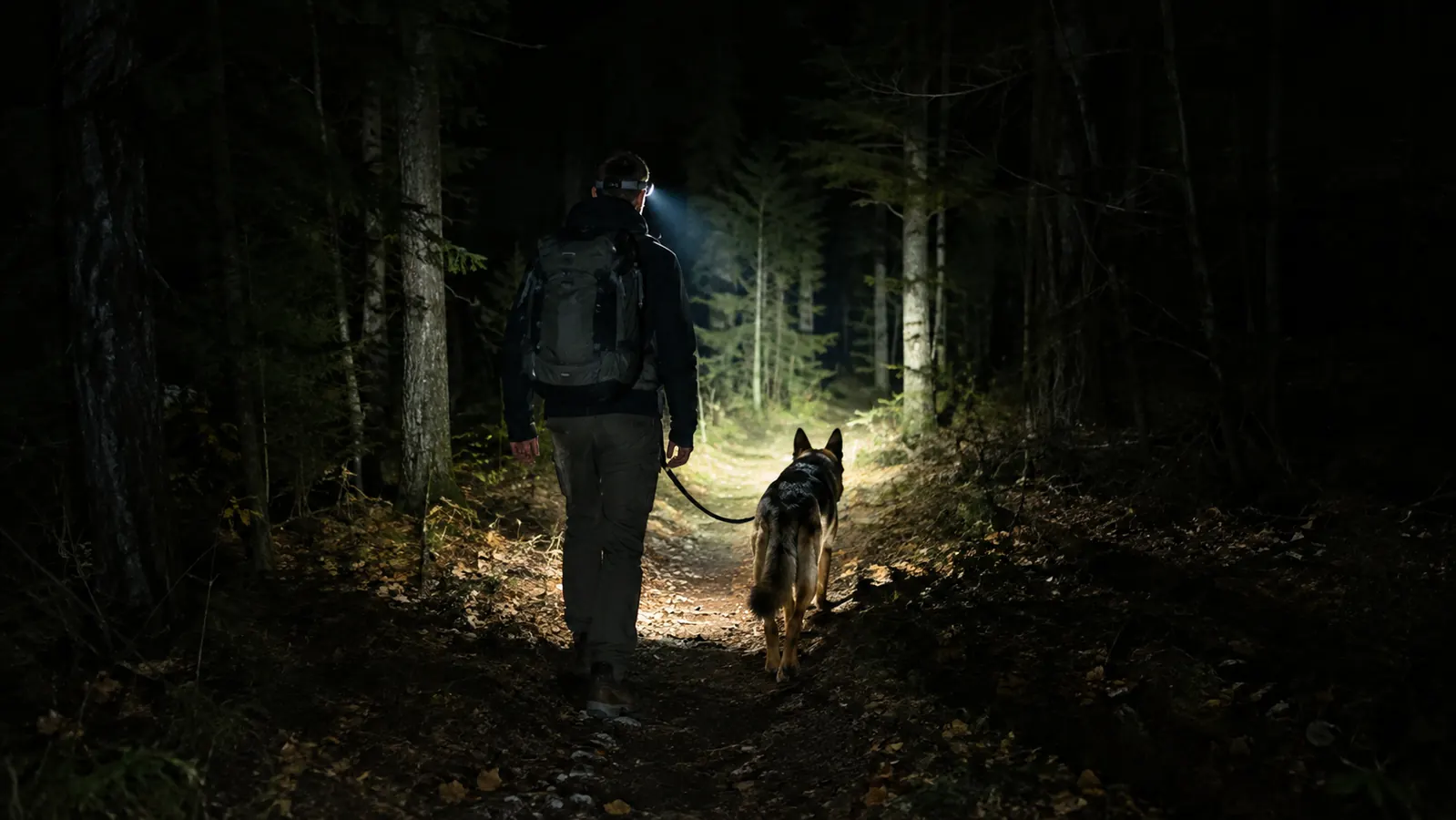
I have used the Black Diamond Spot 400 on at least fifteen trips since I bought it. That includes a week in the Smokies last fall, three nights at Garner State Park in the spring, and a lot of single nights at Lost Maples. It has been rained on, dropped on rocks, stuffed into a pack pocket with car keys and dog treats, and left on the kitchen counter for three weeks between trips. It still works like the day I bought it. The trip that sold me on it was the Smokies in October. We hiked a loop that I badly misjudged, and what should have been a twenty minute walk back to the tent in daylight turned into nearly an hour in full dark, with two tired French bulldogs and a teenager who had left his own lamp in the car. The Spot 400 lit the rocky path well enough that nobody tripped, and the batteries did not even blink. That was the night I stopped calling it a camp convenience and started calling it a piece of safety gear.
My typical pattern: I set it to the lowest setting to read in the tent while the boys fall asleep. I bump it to medium to cook dinner. I use the highest setting only when we are actually walking in the dark, which is maybe twice a trip. That pattern matters, because it means my batteries last a lot longer than the box suggests. The Black Diamond Spot 400 runs on three AAA batteries, which I did not fully appreciate until I compared it to rechargeable lamps that need a cable and a wall outlet.
The other thing I did not expect: how often I hand it to someone else. Caleb borrows it to walk ahead on the trail. Wyatt borrows it when he needs to find something in the tent. Ray has grabbed it more times than I can count. The Black Diamond Spot 400 has become the family lamp, which is the highest compliment I can give a piece of gear.
The Brightness: What 400 Lumens Actually Looks Like
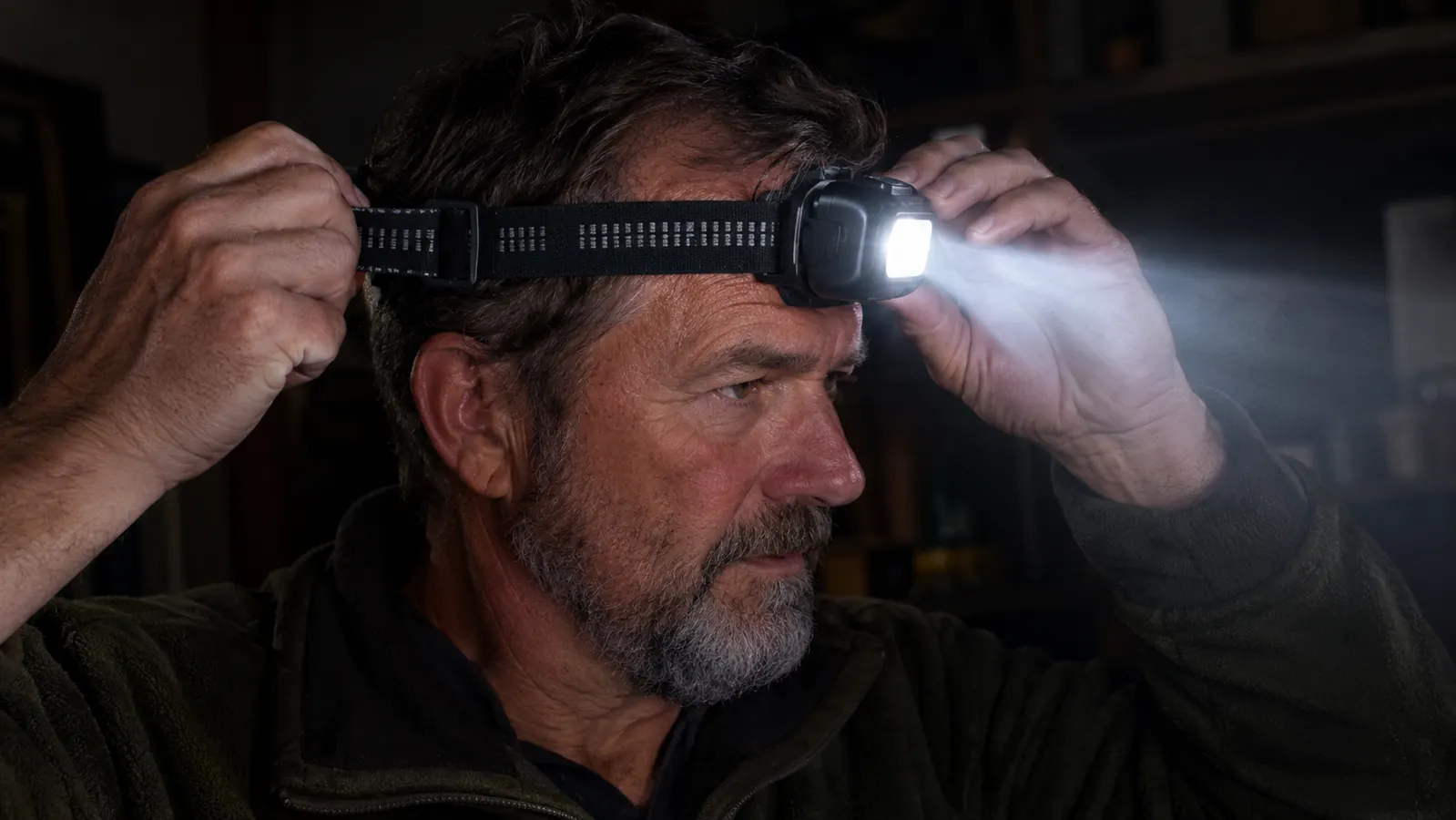
Here is what nobody tells you about 400 lumens. It is not a wall of light. The Black Diamond Spot 400 has a beam that is wide and fairly floody, which is great for seeing the trail right in front of you and terrible for trying to see something across a dark field. My first night with it, I pointed it at a treeline about fifty yards away and felt vaguely disappointed. I expected to light up the whole forest. I lit up about the first thirty feet of it, beautifully, and the rest stayed dark. The spec sheet says the beam reaches about a hundred meters on high, and I believe that number. What the spec sheet does not say is that the useful light, the part that shows you where to put your feet, is much closer. For a family walking a rocky trail with two dogs on leashes, that is the honest truth.
Once I stopped expecting a spotlight, I started liking it more. A floody beam is actually the right choice for family camping. It lights up the ground where the dogs are walking, the picnic table where I am cooking, and the tent interior without blasting the boys awake. The Black Diamond Spot 400 also has a dimming function, not just preset modes, so I can dial it to exactly the level I want. On the lowest white setting, it puts out barely more than a candle flame, which is perfect for reading in the tent while the boys fall asleep. On the highest setting, it lights the whole picnic table and the ground around it. Because it is a continuous dimmer, not three fixed steps, I can find the exact level for whatever I am doing. I have not once wished for a second lamp, dimmer or brighter, since I bought it.
There is also a red light mode, which I use more than I expected. It keeps your night vision intact and it does not attract every bug in Texas. I use the red light to walk Biscuit and Pepper around the campsite after dark, and I use the white light only when we are actually moving on a trail. The Black Diamond Spot 400 makes that switch easy, which is more than I can say for some lamps I have tried.
Battery Life: The Math That Actually Matters
The Black Diamond Spot 400 runs on three AAA batteries. I have seen people complain about this, and I get it. Rechargeable lamps feel more modern. But here is the tradeoff that nobody talks about: AAA batteries are everywhere. When the lamp dies at 10 p.m. at a campground, I can buy batteries at the camp store. When a rechargeable lamp dies, I need a wall outlet and an hour of patience.
In practice, I get a full season out of one set of batteries on the Black Diamond Spot 400. That is roughly fifteen trips, using low and medium settings most of the time and the high setting only for actual night hiking. The box says the lamp will run for about 200 hours on the lowest setting, and I believe it. I have never actually drained a set of batteries in the field. I did the math once out of curiosity: fifteen trips, maybe forty hours of real use, and the original batteries were still going strong when I swapped them for fresh ones before the Smokies trip. That is not the kind of battery life I am used to from anything else in my pack.
The one battery complaint I have: the lamp does not tell you how much power is left. There is no fuel gauge, no blinking warning light. When it starts to dim, you have maybe an hour before it gives up. I learned this the hard way on a night hike at Lost Maples in late January. We had walked about half a mile down the East Trail when I noticed the beam had gone from bright to a warm, weak yellow. By the time we reached the car, it was barely lighting the ground at my feet, and I spent the last ten minutes walking by moonlight and memory. I now keep a spare set of AAA batteries in the mesh pocket of my pack, wrapped in a rubber band so they do not rattle. That one habit fixed the problem completely.
The Fit: What Nobody Tells You About the Strap
The Black Diamond Spot 400 fits me fine, but I have a small head and a lot of hair, and the strap needs a real tug to stay put. The strap is a single band that goes over the top of your head, plus a horizontal band. On me, the top band slides back after about twenty minutes of hiking. On Ray, who has a bigger head, it stays put for hours. On the boys, it fits perfectly because their heads are somewhere in between. I figured out the sliding problem on a cold morning at Garner State Park. We were hiking the river trail before breakfast, and I must have pushed the lamp back on my head a dozen times in the first mile. The fix turned out to be simple, and I will get to it in a second.
The fix is simple: there is a small silicone strip on the inside of the strap that helps it grip. If I pull the strap snug and position the silicone strip against my forehead, it stays. The Black Diamond Spot 400 also tilts, so I can point the beam down at the trail without craning my neck. That tilt is the feature I did not know I needed until I had it.
One more fit note: the lamp is light enough that I forget I am wearing it. It is not the lightest headlamp on the market, but it is light enough for a full day of hiking. I have worn it for six hours on a long day and never felt the need to take it off. That six-hour day was a ridge hike in the Smokies where we started before sunrise and came back after dark. I wore the Spot 400 from the first mile, mostly switched off and pushed up on my head, and I only noticed it when I needed it. A heavier lamp would have been off my head by mile two.
The beam is floodier than I expected, the buttons take practice, and the strap slides on a smaller head. I still reach for it every single trip.
What Nobody Tells You About the Buttons
The Black Diamond Spot 400 has two buttons on top. One is for power and mode, one is for the dimmer. It sounds simple. It is not simple. The first three times I used it in the dark, I managed to turn it to the brightest setting, blind myself, and then struggle to turn it back down. There is a lock mode that prevents this, and I did not discover it until I read the manual on the second trip.
Once you learn the pattern, it is fine. Hold the power button to turn it on. Tap it to cycle through modes. Hold the other button to dim or brighten. The Black Diamond Spot 400 is not a lamp you can operate perfectly on the first try, which is a real criticism. But it is a lamp you can operate perfectly on the third try, and that is good enough for me.
The lock mode is worth learning. I now lock the lamp before I pack it, which means it never turns on in my pack and drains the batteries. That one habit has probably doubled my battery life.
What Broke, What Didn't, and What I'd Change
After a year of use, nothing on the Black Diamond Spot 400 has broken. The strap has not stretched. The buttons still click. The lamp has been rained on multiple times and it is still waterproof, which matters in a state where rain appears without warning.
What I would change, if I could: I would add a battery indicator. I would make the buttons slightly more forgiving. And I would make the strap grippier for smaller heads. None of those are dealbreakers. They are the difference between a four-star lamp and a five-star lamp, and the Black Diamond Spot 400 is honestly a four-and-a-half.
What I Liked
- Bright enough for real night hiking, dim enough for tent reading
- AAA batteries are easy to find anywhere, even at a camp store
- Genuinely waterproof, survived Texas rain and a pack pocket
- Red light mode preserves night vision and does not attract bugs
- Tilting head makes it easy to point the beam at the trail
- Light enough to forget you are wearing it
Where It Falls Short
- Buttons take real practice to use in the dark
- Strap slides on smaller heads unless you position the silicone strip carefully
- No battery indicator, so it can die without much warning
- Beam is floody rather than far-reaching
- Three AAA batteries are an ongoing cost
Who This Is For
The Black Diamond Spot 400 is for the family camper who wants one lamp that does everything. It is for the parent who cooks dinner in the dark, walks the dogs at midnight, and wants to read in the tent without waking the kids. It is for anyone who has ever stood in a dark campground holding a phone up like a candle and thought, there has to be a better way.
It is also for the hiker who wants a lamp that runs on batteries you can buy anywhere. If you are the kind of person who forgets to charge things, the Black Diamond Spot 400 forgives you. Three AAA batteries from the camp store and you are back in business.
Who Should Skip It
Skip the Black Diamond Spot 400 if you need a long, narrow spotlight for seeing across a field or down a trail at distance. This lamp is a flooder, not a spotter. It lights up the ground in front of you, which is exactly what I want for family camping, but it is not what a trail runner or a search-and-rescue person wants.
Skip it if you hate buying batteries. The ongoing cost of AAA batteries is small, but it is real, and a rechargeable lamp will eventually pay for itself. I keep a set of rechargeable AAA batteries in the drawer at home and swap them in for longer trips. The Black Diamond Spot 400 works fine with rechargeables, which is the best of both worlds.
And skip it if you want a lamp you can operate perfectly in the dark on the very first night. The buttons have a learning curve. It took me three trips to stop fumbling. If that sounds like a dealbreaker, there are simpler lamps out there. But give it a week, and I think you will feel the way I do: it is the lamp you reach for without thinking.
Still the first thing I pack
After a year of family trips, the Black Diamond Spot 400 has earned its spot in the top pocket of my pack. If you want one headlamp that does everything from tent reading to night hiking, this is the one.
Amazon Check Today's Price on Amazon →