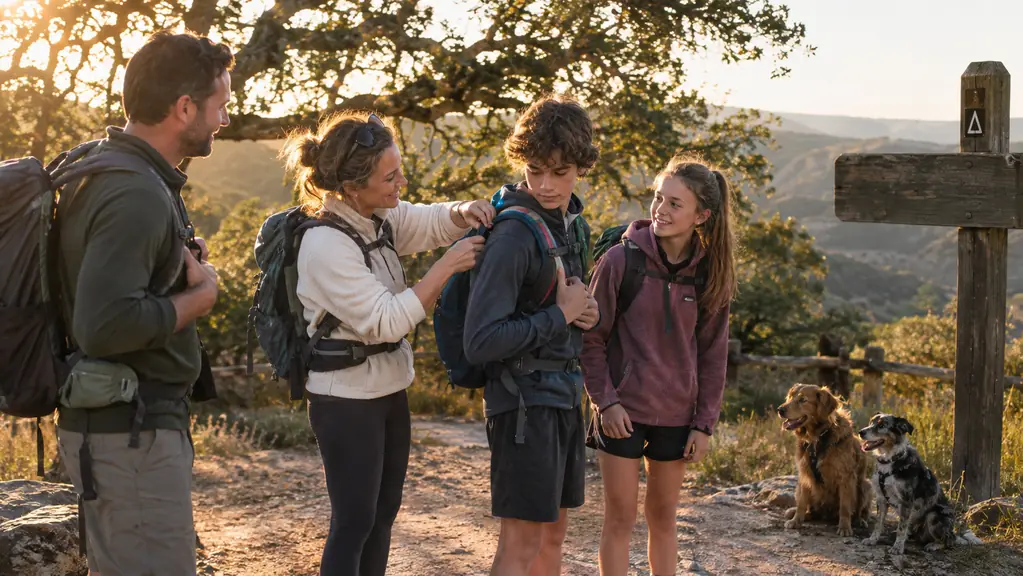
The first time I packed for a family day hike, I carried everything in an old school backpack of Caleb's. It dug into my shoulders by mile two, the water bottles clanked against my spine, and by the time we reached the overlook, I was done. The kids were fine. The dogs were fine. I was the one who needed a rescue. That was the day I started thinking about what actually belongs in a daypack, and what belongs in the trunk of the SUV.
I have been testing my system for about 18 months now, using the 4Monster 24L packable hiking daypack as my main bag. I bought a second one for Wyatt about a year ago, and between the two of us, the four people and two French bulldogs in this family get through most Texas state park trails without anybody crying. Here is exactly how I pack it, step by step, including the things I changed after the first few trips.
I should say up front what this guide is not. It is not a gear list for a thru-hike or a checklist for backcountry camping. This is the everyday system for a family that wants to get out the door before the parking lot fills up, hike a few miles, eat lunch on a rock, and still have energy for the drive home. If that sounds like your weekend, this is for you.
The daypack I grab for every family hike
The 4Monster folds into its own pocket, weighs almost nothing, and has carried 18 months of water, snacks, and dog gear on Texas trails. It is the first thing I reach for in the trunk.
Amazon Check Today's Price on Amazon →Step 1: Pack water first, against your back
Water is the heaviest thing in the pack, so it goes in first, and it goes in against your back, not buried under the snacks. I carry a Sawyer Squeeze filter on longer trips, the SP129 we bought before a Colorado trip two years ago, but the filter does not replace carrying water. It just means I can refill from a creek without panic when the trail runs longer than we planned. For a family day hike, I still start with two full bottles for me, and the kids each carry their own. The rule is simple: if you drink it, you carry it.
Here is the rule that saved us: nobody carries a water bottle in their hand. Everything goes in the pack or on a hip belt. Caleb sprints ahead on the trail and would happily drink his whole bottle in the first mile, so his goes in the side pocket of his own pack where he can grab it without stopping. Wyatt, who complains about his feet before he complains about thirst, keeps his in the same spot every time, because moving it around is how bottles end up forgotten on a log somewhere.
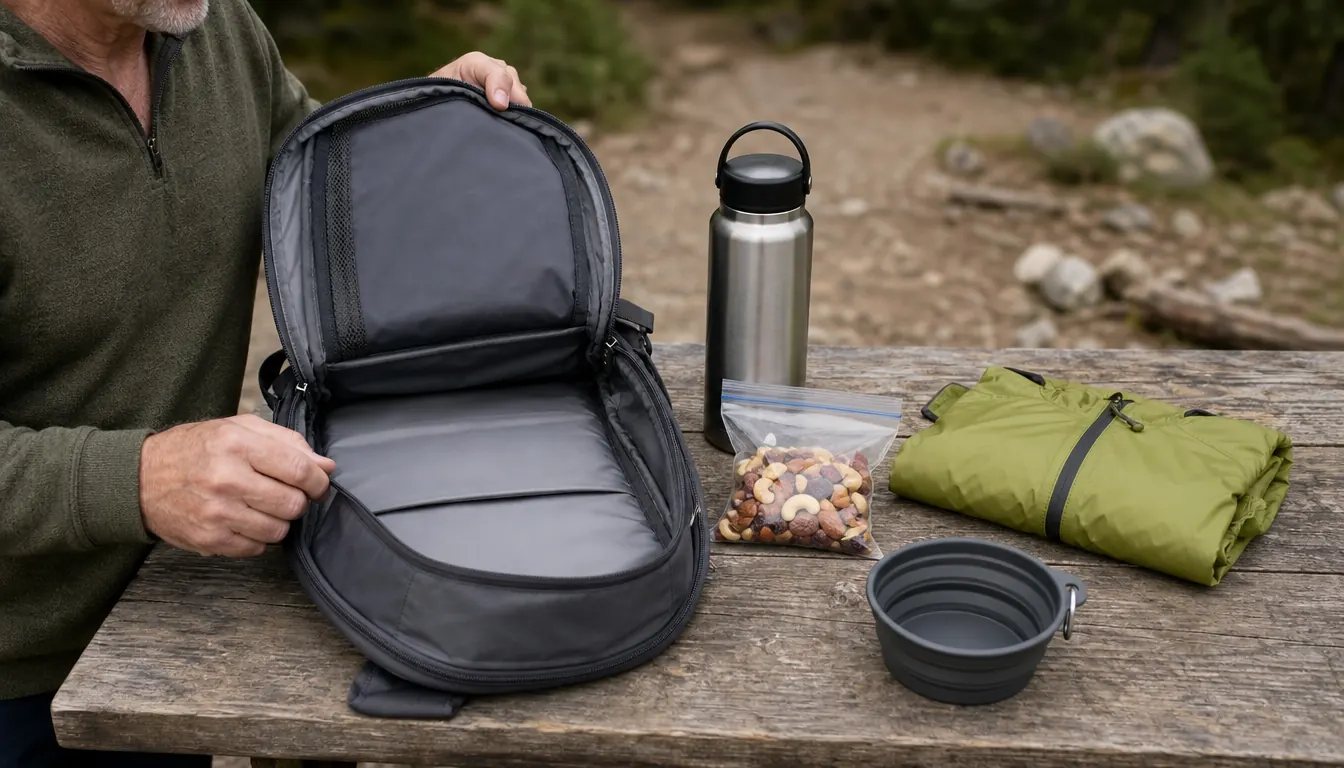
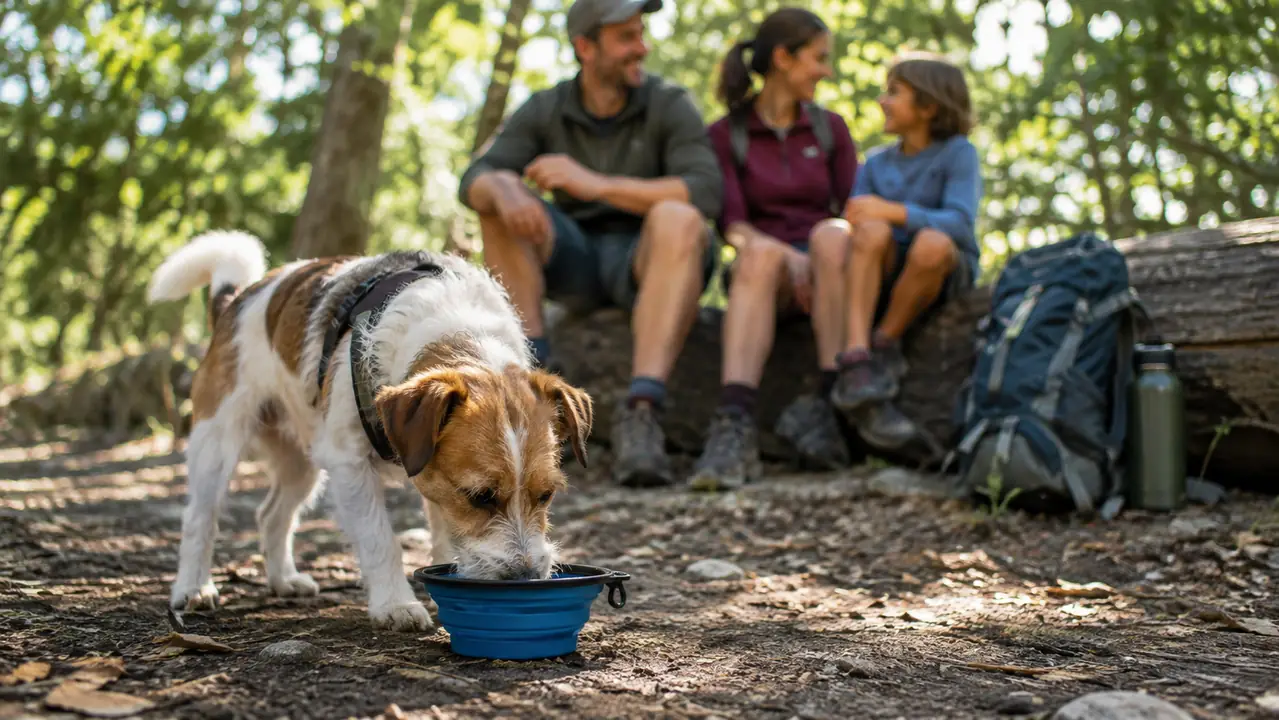
For the dogs, I add a collapsible bowl and an extra bottle that only comes out at rest stops. Biscuit and Pepper are flat-faced dogs, so they drink little and often, and they get carried when they are done. The bowl lives in the front pocket of my pack, not at the bottom, because digging it out while a dog is panting is harder than it sounds. By the time we stop, they are usually done walking for a bit, and that bowl needs to be in my hand within about ten seconds.
Step 2: Put the heavy stuff low and close to your back
The classic mistake is putting the heaviest items on top, which makes the whole pack want to fall backward and pulls on your shoulders all day. I load the water against my back first, then the lunch bag, then the layers. The things I will not need until we stop, like the rain shell and the spare socks, go at the bottom of the pack. When everything is packed this way, the bag feels heavier to lift than it does to wear, which is exactly what you want.
Wyatt's pack carries his own water and his own snack bag. That is the deal we made: if you are old enough to sprint ahead, you are old enough to carry your own stuff. It took one trip for him to realize that a lighter pack means he can move faster, and now he packs his own bag before I even ask. Caleb packs his own too, though I check it when he is not looking. He would pack nothing but trail mix if I let him, and then we would be the family carrying somebody else's trash out of the park.
The 4Monster is a packable bag, which means it folds into its own pocket when it is empty. That is the feature I did not expect to care about. It lives in the trunk of the SUV between trips, so we can decide at the trailhead that we want to go further, grab it, and go. Nothing about the way it carries changes when it is stuffed full, which is more than I can say for the old school backpack of Caleb's that I used before I bought this one about 18 months ago.
Step 3: Build a small just-in-case stack, not a survival kit
I used to pack for every possible disaster. Then I carried a pack that weighed too much for a four-mile loop and realized the real risk was my back giving out halfway. Now the emergency layer fits in one hand: a Black Diamond Spot 400 headlamp, a small first aid kit, a space blanket, and a lighter. The headlamp was the upgrade I made about a year ago, after using my phone flashlight on too many dark walks back to the car. It weighs almost nothing, and it is the difference between a slow walk out and a stressful one.
The first aid kit is the one thing I check before every trip. For a family of four plus two dogs, that means bandages, blister pads, tweezers, and a small roll of vet wrap. Wyatt gets blisters almost every hike, so the blister pads are non-negotiable. Caleb has never needed one, which is exactly why I keep packing them. The day I take them out because nobody has used them is the day someone will need them, and we will be a mile from the car.
Everything in this stack stays in a dry bag inside the pack. Texas weather is not subtle. A storm can roll in over the hill country in twenty minutes, and a dry bag means the headlamp still works when we are walking out in the dark. It also means the first aid kit stays clean and the space blanket stays dry enough to actually use. This whole stack costs nothing in weight and saves the trip when something goes sideways.
Step 4: Pack snacks the way you pack gear, by weight and by order
Snacks are not a treat, they are fuel, and they need to be packed like it. The heavy stuff goes at the bottom of the food bag, and the things we will eat first go on top. I pack one bag for the four of us, not four separate bags, because the boys will trade anyway and the dogs will get their share no matter what. A single bag is also easier to find in a hurry, and on a family hike, snack access speed matters more than snack variety.
The snack bag goes in the top of the pack, never buried. When Wyatt starts complaining about his feet, that is my cue that he needs a break and a snack, and I do not want to unpack the whole pack to find it. The same goes for dog treats. Pepper will walk past a snack bag on the trail without a word, but Biscuit acts like every rustle of the wrapper is a personal invitation. I keep the dog treats in the same outside pocket as the collapsible bowl, so one stop handles both.
On the trail, I follow a simple rhythm: a short break every forty-five minutes, water at every break, snacks at every other break. It sounds rigid, but it keeps the mood steady and stops anyone from hitting a wall two miles from the car. A hungry teenager is a bigger trail hazard than any rock I have met, and a dog that skipped her water break is not far behind. The rhythm is the part of the system that costs nothing and saves everything.
Step 5: Save room for the stuff you bring home
The last thing I pack is the smallest, and it is the one I used to forget: a small trash bag. Not just for trash, though that helps too. I mean the bag for the things the kids find on the trail. Rocks, pine cones, a feather that has to come home. If there is no room for it, it ends up in my hands for the last mile, and I have carried enough rocks for two teenagers to last a lifetime. The bag folds flat, weighs nothing, and saves my hands every single time.
I also leave a little room in the pack for layers that come off. The morning starts cool at Lost Maples, everyone starts in a fleece, and by ten the fleeces are coming off. If the pack is already stuffed, the fleeces go around waists, and then somebody needs the bathroom and the whole system falls apart. A little empty space at the top of the pack fixes all of it. I pack for the hike we will actually have by noon, not the one we are having at eight in the morning.
That is the whole system. Water against the back, heavy stuff low, the emergency stack dry, snacks on top, and a little room left over for the day to happen. It took me a few tries to get here, and the 4Monster made it easier because it is light enough to start with and simple enough to pack the same way every time. When the pack is the same every trip, packing it takes five minutes, and the five minutes are the difference between getting out the door and staying home.
What Else Helps
Two things that are not in the daypack but make every family hike better: trekking poles and a plan for the car. I bought a pair of Cascade Mountain Tech aluminum trekking poles about a year ago, after a steep descent at Lost Maples bothered my knees. They live in the SUV, not in the pack, and they come out on any trail with real elevation change. The poles do not make me faster, but they make the downhill part of the hike something I do not dread.
The car plan is simpler: everybody changes shoes before they get in, the dog towels stay in the back, and the daypacks get hung up to dry when we get home. The 4Monster packs down small enough that two of them fit in the trunk cubby without a fight, which means they are always there for the next trip. That is the whole point for us. The gear that is easy to grab is the gear that actually gets used.
One more thing I have learned the hard way: pack the night before, not the morning of. The morning of a hike is chaos. Someone cannot find a shoe, the dogs are spinning in circles, and the boys are arguing about who sits where in the SUV. If the daypacks are already packed and waiting by the door, none of that touches the gear. I pack ours the night before every trip, and it is the single best habit we have added.
Eighteen months in, the 4Monster still folds into its own pocket, still lives in the trunk, and still comes out for every trail day.
Pack it once, grab it all summer
The 4Monster daypack has been our family's go-to for 18 months of hikes. Water, snacks, dog gear, and room left over for the rocks the boys find.
Amazon Check Today's Price on Amazon →