
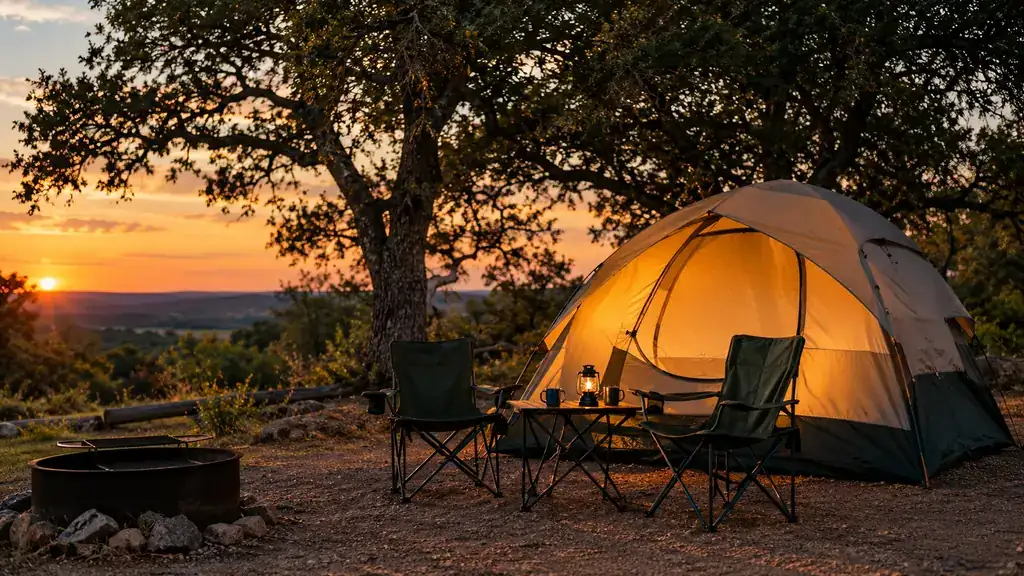
The Coleman Sundome was the first tent I bought with my own money after years of borrowing gear, and two years later it is still the one we grab for weekend trips. I am Kendra, and I camp with my husband Ray, our two teenage sons, and two French bulldogs who think every tent is a private nap cave. This is the honest review I wish I had read before I bought it: what the Coleman Sundome does well, what it does not, and the things nobody mentions in the product photos.
A quick confession: I did not buy this tent because I researched it for weeks. I bought it because the price was reasonable, the Coleman name was familiar from every campground I had ever visited, and I needed something that fit four people without a second mortgage. Two years and maybe thirty nights later, I have strong opinions about every inch of this thing.
The Quick Verdict
A straightforward, well-vented family tent that sets up fast and shrugs off normal rain. Not the tent for winter storms or tall teenagers, but for three-season family camping it is hard to beat at the price.
Amazon Check Today's Price →The tent we grabbed for thirty nights of family camping
If you want a tent that sets up in ten minutes and handles Texas spring storms without drama, this is the one we keep reaching for. See today's price on Amazon.
Amazon Check Today's Price on Amazon →How I've Used It
We camp at Texas state parks mostly: Lost Maples in the fall, Garner in the summer, Padre Island when the boys beg for the beach. The Coleman Sundome has been to all of them. It has been set up on gravel, packed sand, pine needles, and one regrettable patch of ground that turned out to be an ant bed. It has been rained on, baked in 95-degree afternoons, and once whipped around in a windstorm at Garner that had me seriously considering sleeping in the car.
That windstorm night is the one I keep coming back to when people ask how the tent holds up. It was late April, the forecast said scattered showers, and by midnight the gusts were strong enough that the rainfly was slapping the mesh ceiling. I lay there doing the math on how far the car was and whether I could carry both dogs and my pillow at the same time. The poles flexed and the whole tent leaned a few inches, but nothing snapped and nothing came loose. I did not sleep much, but the Coleman did its job.
The tent is a 4-person Coleman Sundome, which in tent math means it fits our family of four with the dogs squeezed in at our feet. Caleb, our sixteen-year-old, is already pushing six feet, and he sleeps diagonally. Wyatt, fourteen, curls up like a shrimp and complains about his feet every single morning. We use two double-wide sleeping pads and it works, but only just. If your kids are tall, read that sentence twice before you buy.
Setup: Ten Minutes Is Real, With One Caveat
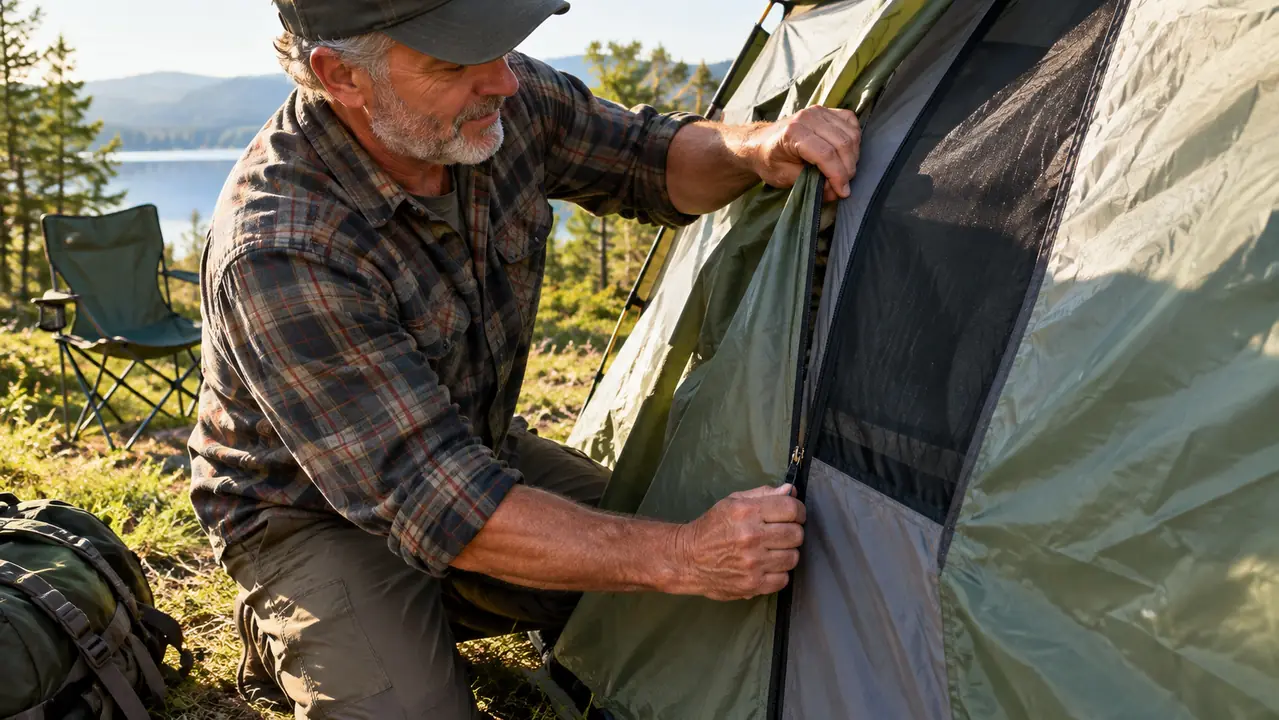
The product title says this tent sets up in ten minutes, and that is honestly about right once you have done it a few times. The poles are continuous sleeves with a shock-corded design, so you feed them through, click the ends into the corner pins, and the tent basically stands itself up. The first time took us closer to twenty because Ray and I argued about which end of the pole went where. By the third trip, we had a system and could do it in under ten with the boys holding the corners.
The system we landed on: Ray feeds the long pole through the top sleeve while I hold the tent body down with one knee, then we each take a corner and click the pins in at the same time. The second pole goes through the same way, and by then the tent is standing and the boys are already throwing sleeping bags inside. On our last trip to Lost Maples, we timed it from the back of the SUV to fully clipped and staked at nine minutes and change, and that included Wyatt stopping to complain about a rock in his shoe.
The caveat is the rainfly. It is a simple tarp-style fly that drapes over the top and clips to the frame, and it is the most awkward part of the whole setup. In calm weather it takes two minutes. In wind, it flaps around like a bedsheet and you will want a second pair of hands. I have learned to lay the fly out flat on the ground first, clip the front, then walk around clipping the rest. It still beats the borrowed cabin tent we used before, which leaked at the seams and took forty-five minutes to assemble.
Space: The Real Story
Here is what nobody tells you about a 4-person tent: the floor is 9 feet by 7 feet, and that number sounds bigger than it is. Four adults would be miserable in this tent. Four people where two of them are smallish teenagers and two are French bulldogs? That works, but barely. We lay our pads side by side with a narrow aisle down the middle, and every piece of gear that comes inside has to have a designated spot or the tent turns into a disaster zone by midnight.
The designated spots took us a while to figure out. The boys each get a corner for their backpack and shoes, Ray gets the foot-of-the-tent spot for the cooler we keep for midnight water, and I get the strip by the door for the dogs' bowl and the headlamp. The first few trips, everything just landed wherever it fell, and by 2 a.m. somebody was always lying on somebody else's sweatshirt. Once we assigned corners, the tent got noticeably more livable. It is still tight, but it is organized tight.
The center height is 4 feet 11 inches, which is the other number that matters. I am 5 foot 4 and I can stand up straight in the middle, but only in the exact center. Ray is 5 foot 11 and he changes clothes sitting down, because there is no chance of him standing up in here. Wyatt spent one rainy afternoon stuck inside it and reported that it was 'fine for sleeping, weird for existing.' That is the Coleman Sundome in one sentence.
The floor is 9 by 7 feet and the center height is 4 foot 11. Both numbers matter more than the '4-person' label.
Weather: What It Handles and What It Does Not
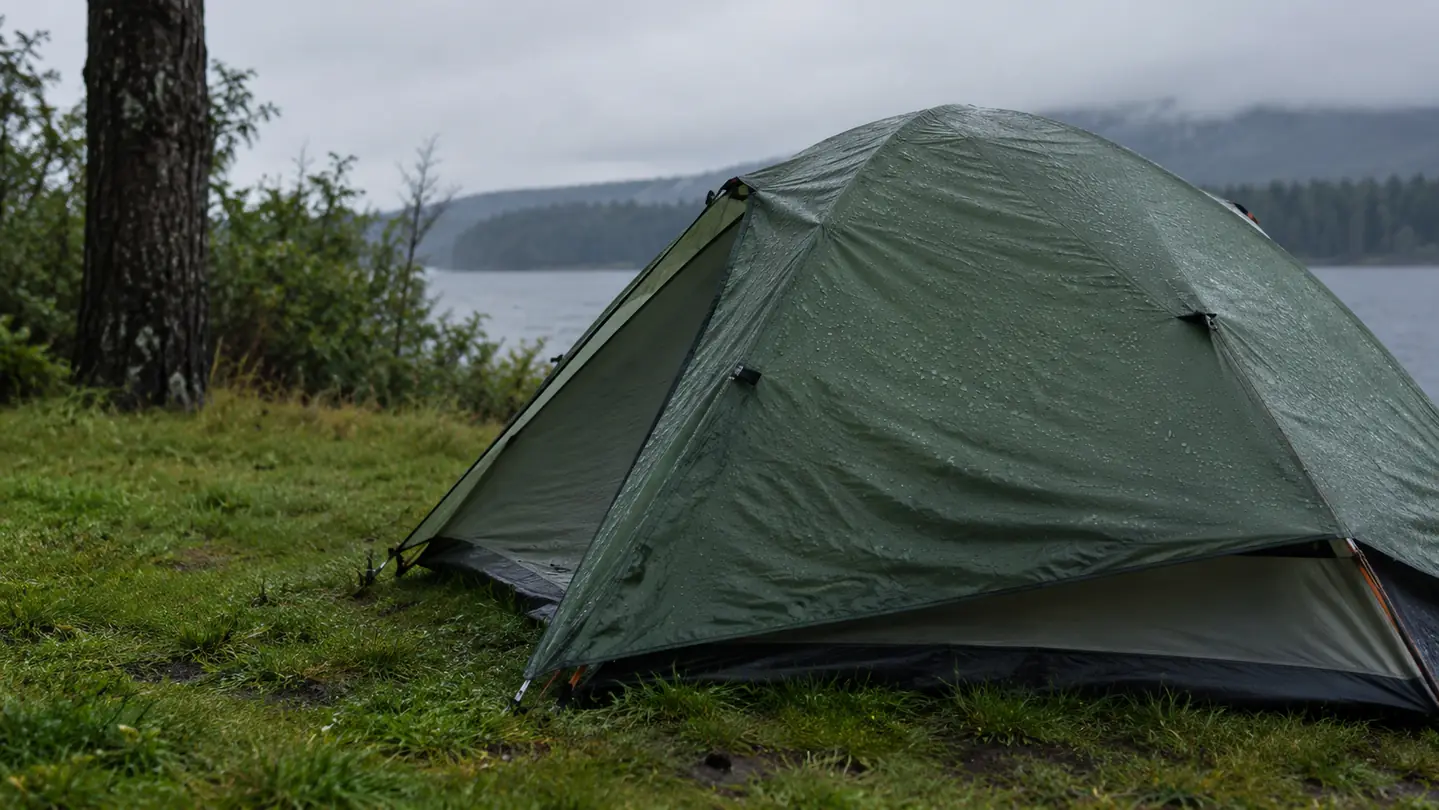
The Coleman Sundome is a three-season tent, and I mean that seriously. We have been through two solid Texas thunderstorms in it, the kind where the rain comes sideways and the lightning has you counting seconds. The rainfly sheds water well, the bathtub floor kept the sleeping bags dry, and the seams have never leaked on us. That is the good news and it is genuinely good.
The first of those storms hit us at Garner in early June. It rolled in fast, the kind of sky that goes green-gray and drops the temperature ten degrees in a minute. We had about ninety seconds to get everything inside before the rain started, and I remember standing in the dark holding a flashlight while the boys zipped the door. The fly beaded water the whole night, and when we packed up the next morning the floor was dry and so were all four sleeping bags. I have owned tents that leaked in a light drizzle, so I know how good that is.
The honest limits: this is not a winter tent and it is not a wind fortress. At Garner one night, a front blew through and the tent walls flexed hard enough to wake me up. The poles held, nothing broke, but I did not sleep great. And because the fly is a partial coverage design, the top of the tent gets wet in heavy rain even though the interior stays dry. You learn to not touch the ceiling with your sleeping bag.
Heat is the bigger issue for us. Texas in the summer is brutal, and the Coleman Sundome has good ventilation on paper: a ground vent, a rear window, and that big mesh ceiling. In practice, the mesh ceiling is the tent's best feature because it lets hot air escape at night. We have camped in 85-degree nights with the fly off and the windows open and slept fine. With the fly on, it gets stuffy. On hot nights, we leave the fly off unless rain is forecast, and that has worked well.
One thing I want to be straight about: the ground vent helps more in theory than in practice. It is a small flap near the floor that is supposed to pull cool air in, but on a still night it mostly just lets in the smell of whatever is outside. One night at Padre Island it let in a whiff of dead fish that had Wyatt gagging. We now keep it closed unless there is a breeze, and we rely on the ceiling mesh and the rear window instead.
The Things The Product Page Does Not Mention
First: the included stakes are fine for soft ground and useless in sand. At Padre Island, we had to anchor the corners with gallon jugs of water and our coolers because the stakes would not hold. I now carry a separate bag of heavier stakes for beach trips, and I recommend you do the same. It is a ten-dollar fix and it turns a frustrating night into a normal one.
Second: the carry bag is exactly big enough and no bigger. You have to roll the tent tight and stuff it just right to get it back in. The first time, I spent ten minutes wrestling it and lost my temper. Now I fold it the long way, roll it from the foot, and it slides in on the first try. It is a small thing, but it is the kind of small thing that makes you stand in a campground muttering at a bag.
Third: the door is a D-shaped zipper door on one side only. It is wide enough for two people to duck through at once, which is nice, but there is no second door. If you sleep on the far side, you crawl over someone at 2 a.m. for the bathroom. We solved it by putting the dogs on the far side, because they are the only ones who do not need to pee at 2 a.m. and they will happily crawl over everyone.
Fourth, and this one took me a full season to notice: the door zipper is not weather-sealed. Rain does not come in through it, but a hard wind can push a fine mist through the zipper track. We noticed it one night at Lost Maples when the wind shifted and my pillow felt damp. It is not a leak, it is more of a damp, and it only happened in that one specific wind direction. If you are a side sleeper, keep your head away from the door on windy nights.
Durability: What Broke and What Did Not
After thirty nights, the zippers still work smoothly, the poles are intact, and the floor has no holes. That is the honest durability report and it is better than I expected for a tent at this price point. The mesh ceiling has a small snag where a dog claw caught it, but it has not grown and it does not let bugs in.
What did break: the original stakes bent on the second trip, and the stuff sack stitching started to pull at the handle after about a year. Neither affects the tent's function. I replaced the stakes with better ones for about a ten-minute trip to the hardware store, and I am careful with the bag now. For the price, I consider that acceptable, but I would rather tell you now than have you discover it at a campsite.
The one thing I check before every trip now is the pole sleeves. The fabric around the pole ends takes a lot of strain when you click the pins in, and on our tent the stitching there is starting to look a little tired. It has not failed, and I do not expect it to fail soon, but it is the first place I would look if we started having setup trouble. A little seam sealer and some careful handling has kept everything going so far.
What I Liked
- Sets up in under ten minutes once you know the pole order
- Genuinely weatherproof in rain, with a bathtub floor that keeps sleeping bags dry
- Big mesh ceiling gives excellent airflow on hot nights
- Packs down small enough to fit in the back of our SUV with all the other gear
- Reasonable price for a tent that has survived thirty nights of family camping
Where It Falls Short
- 4-foot-11 center height means tall adults change clothes sitting down
- 9 by 7 foot floor fits four only if two of them are kids or small sleepers
- Included stakes are useless in sand and soft soil
- Rainfly is awkward to attach in wind and leaves the ceiling wet in heavy rain
- Single door means middle-of-the-night crawl-overs
Who This Is For
Buy the Coleman Sundome if you are a family of three or four with kids who are not yet full-grown, or a couple who wants extra room for gear and a dog. Buy it if you camp in the spring, summer, and fall, if you want a tent you can set up in the dark after a long drive, and if you would rather spend your money on campsites and gas than on a tent that costs four times as much. It is the tent I recommend to friends who are just starting to camp, because it does everything a first family tent needs to do and it does not punish you for learning.
Who Should Skip It
Skip it if your family is four adults, or if your teenagers are already taller than you. Skip it if you camp in winter, or if you camp in places where the wind regularly howls all night. And skip it if you want a tent you can stand up in, because the Coleman Sundome is a sit-down-and-sleep tent, not a stand-up-and-live tent. For those situations, look at a taller dome or a cabin-style tent. For everyone else, this is the tent that has carried our family through two years of Texas weekends, and I would buy it again.
Still the tent we grab first for a weekend trip
Two years in, the Coleman Sundome is still the first tent out of the garage when we head to a state park. If that sounds like your kind of camping, check today's price on Amazon.
Amazon Check Today's Price on Amazon →