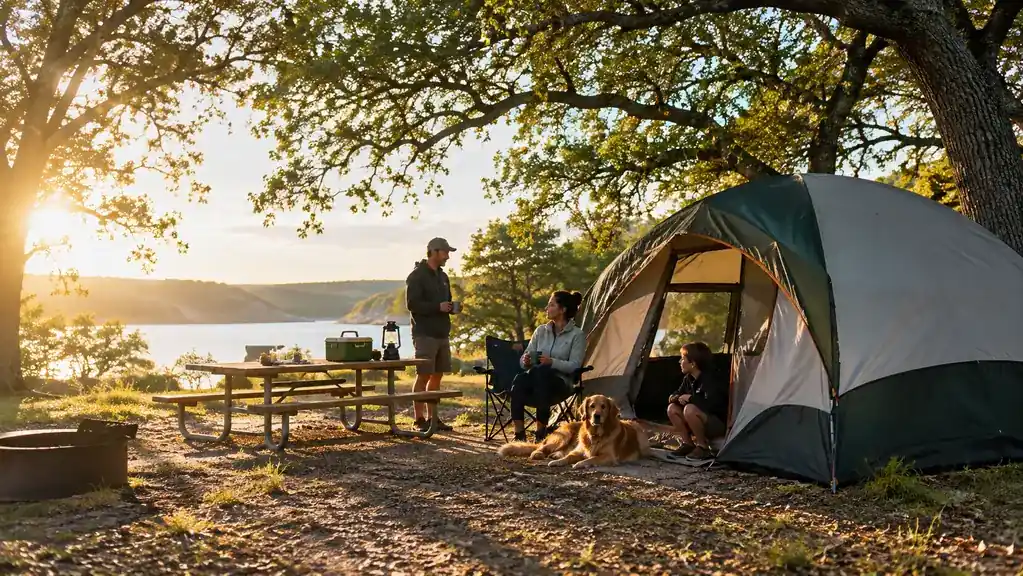
Our family tent situation used to be a running joke. For our first few trips to Garner State Park, we borrowed my brother-in-law's old cabin tent, and every single morning we woke up to puddles along the seams. The kids slept through it. The dogs did not. By the second year, I dreaded the part where we packed it back up, wet and heavy and smelling like a basement. So we bought the Coleman Sundome 4-Person tent, and this is my honest review after two years of weekend camping with two teenagers and two French bulldogs.
Quick context before the details: I'm Kendra, I live near Corpus Christi, and our weekend trips are mostly Texas state parks like Lost Maples, Garner, and Padre Island. My husband Ray does the driving. Caleb sprints ahead on the trail, Wyatt complains about his feet, and Biscuit and Pepper ride in the pack when they are done walking. The Sundome has now been on every one of those trips for two years, and it has earned a permanent spot in the back of our SUV.
The Quick Verdict
The Coleman Sundome 4-Person is the tent I recommend to any family starting weekend camping. It sets up in about 10 minutes, keeps the rain out, and fits two adults, two teens, and two small dogs without anyone losing their mind. It is not a mountain tent, and it will not survive a storm you should not be camping in anyway.
Amazon Check Today's Price →The tent that ended our leaky-morning streak
After two years of weekend trips, the Coleman Sundome is still the first thing I pack. Check today's price on Amazon and see if it fits your campout plans.
Amazon Check Today's Price on Amazon →How I've Used It
I bought the Sundome about two years ago, but this review covers the last year of regular use, which is when it became our default tent. That is roughly 14 weekend trips across three seasons: spring wildflower season at Lost Maples, summer nights at Garner where it hit 90 degrees at midnight, and fall trips to Padre Island where the wind never really stops.
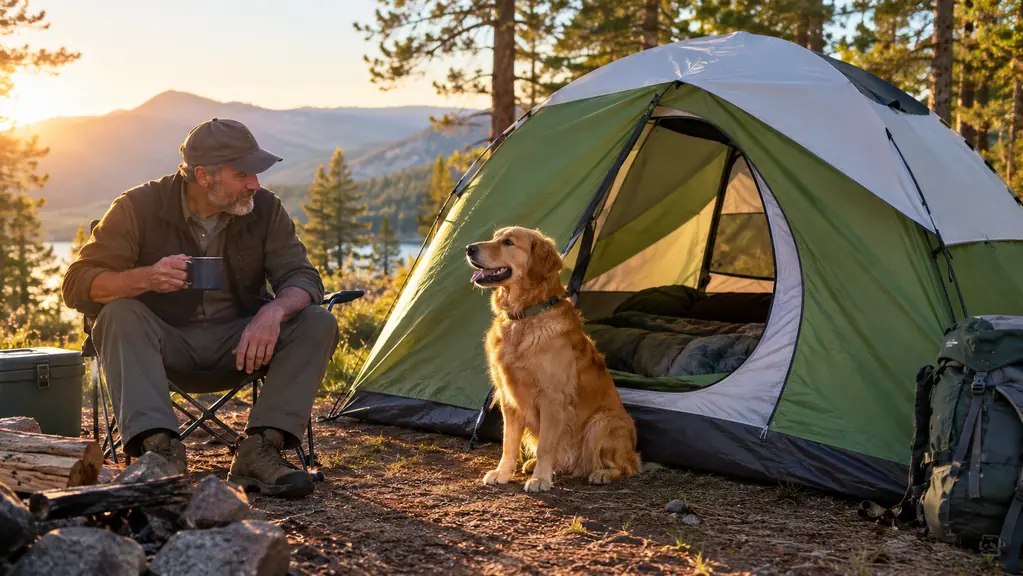
The setup routine is the same every time. Ray and I lay out the tent body, stake the corners, and push the poles through the sleeves. The rainfly goes on top and clips down at three points. The first time, it took us maybe 15 minutes. By the third trip, we were down to about 10, which matches the claim on the box. Caleb can do the whole thing himself now, which is a sentence I never thought I would write about a teenager.
Our dogs sleep inside with us. Biscuit, our 6-year-old fawn French bulldog, claims the foot of my sleeping bag, and Pepper, the 4-year-old brindle, curls up between Wyatt's legs. The tent is not huge, but it is tall enough for me to kneel in and wide enough for the four of us to sleep without anyone rolling into anyone else. We have never once felt stacked on top of each other.
Setup: Two Poles and a Sleeve
The poles are the classic shock-corded design, which means they come in sections that snap together with a cord running through the middle. You push the whole thing through the sleeve on the tent body, bend it over the top, and seat the ends into the corner pins. The Sundome uses one continuous sleeve and a second pole that crosses it, so there are only two poles to deal with total. That is the whole trick.
The stakes that come with it are basic steel pins. They are fine in the sandy soil at Padre Island and the packed dirt at Garner. I replaced them with heavier stakes for the windy trips, but that is a personal preference, not a complaint. The guy lines at the corners are thin but they work, and the rainfly clips on in under a minute.
Packing it back up is the part most tents ruin. The Coleman Sundome folds into a bag about the size of a sleeping bag, and the instructions printed on the bag actually make sense. The one thing I will say: you have to dry it before you stuff it. We learned that the hard way once, and a tent that goes into the bag wet will smell like regret by the next trip.
The first trip with the Sundome was to Lost Maples in March. We set it up in the dark, which I do not recommend for any tent, and it still went together without a fight. The next morning, no puddles. I checked the seams twice because I did not trust it. That was the moment I stopped missing the old cabin tent.
Weather: Rain, Wind, and Texas Heat
The rainfly is the difference between a good night and a miserable one. It covers the top and drapes down the sides, and the bathtub floor comes up several inches so water does not seep in at ground level. We got caught in a proper central Texas downpour at Lost Maples in April, the kind where the trail turns to mud in minutes. We stayed dry. Not damp. Not mostly dry. Dry.
Wind is where you have to do your part. The Sundome is a dome, which means it sheds wind better than a cabin tent, but it is not a storm shelter. At Padre Island we staked every loop, ran the guy lines, and pointed the narrow end into the wind. The tent flexed and made noise all night, and it stayed put. I would not take it above treeline in the mountains, but for state park camping it has never let us down.
Heat is the honest weak spot. The walls are mostly mesh covered by the fly, so there is airflow, but on 90-degree nights at Garner we unzipped the fly on the low side and ran a small battery fan. The boys slept fine. Biscuit, being a flat-faced dog, got hot and spent part of the night on the cool floor instead of his pad. That is a dog thing, not a tent thing, but it is worth knowing the tent does not magically cool a Texas summer night.
Condensation is a thing with any tent, and the Sundome is no exception. On cool mornings, the inside of the fly collects droplets, and if you brush against it, you get a cold drip on the face. The fix is simple: leave the door unzipped a few inches at night and give the fly a shake before you pack it. Knowing that going in saves you a wet sleeping bag.
Space: Four People, Two Dogs, One Floor
The floor is roughly 9 by 7 feet, and the center height is just under 6 feet. I am 5 foot 4, so I can stand up in the middle. Ray is 6 foot 1, and he has to crouch. If you are tall, this is a crouch tent, and you should know that going in.
We lay out one double sleeping pad for Ray and me and two singles for the boys, longways, with the gear stacked at the foot and the dogs wherever they decide. The vestibule is basically nonexistent. There is a small covered area under the fly, but it is not a true vestibule where you can stash boots. We keep a dry bag just inside the door for shoes and let the wet stuff live under the fly.
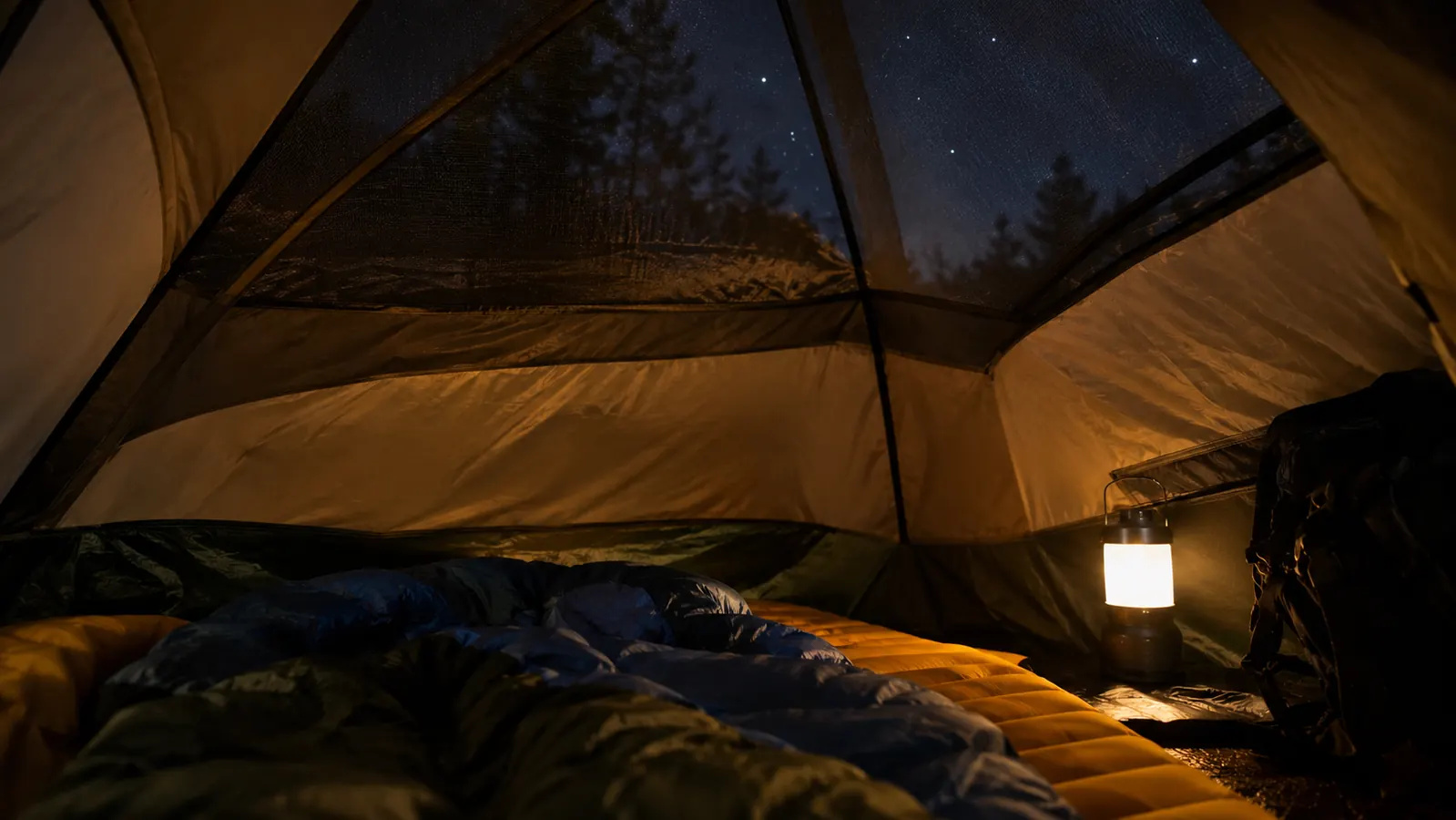
The door is a single D-shaped opening on one side. Getting out at night means stepping over whoever is sleeping nearest the door, which is usually Pepper. It is a small complaint. For what this tent costs, the space is fair, and the mesh ceiling means you can lie there and watch the stars if you leave the fly off.
We store the tent in the garage in its stuff sack, and it takes up about as much room as a rolled sleeping bag. That matters in our SUV, which already carries two teenagers, two dogs, a cooler, and everyone's duffels. The Sundome slides in along the side and leaves room for the camp chairs. A bigger tent would have meant leaving something else behind.
Durability: What Two Years of Use Did
After two years of regular use, the Coleman Sundome's poles are still intact, the zippers still run smooth, and the floor has no holes. The seams have not leaked, which is the thing I was most worried about after our leaky borrowed tent. The fabric is not ripstop, so I am careful with the stakes and I do not drag the bag across gravel. Treat it like gear rather than a disposable party tent, and it will treat you well.
The things that have worn: the original stakes are bent from the rocky ground at Lost Maples, and the stuff sack is starting to fray at the drawstring. Both are cheap to replace. The rainfly has a small rub mark where it touches the pole sleeve, but no tear. For the number of nights we have put on this tent, I consider that a solid result.
One more honest note: the tent is not a four-season shelter. We camped once in November when the temperature dropped to 40, and the inside matched the outside within an hour. That is normal for a three-season tent. We brought extra blankets, and the dogs became personal heaters. If you camp in snow, this is not the tent for you.
What I Liked
- Sets up in about 10 minutes once you have done it a couple of times, with only two poles and one continuous sleeve
- The bathtub floor and the rainfly kept us dry through a central Texas downpour
- Fits two adults, two teens, and two small dogs without anyone feeling crowded
- Center height under 6 feet is enough for a 5-foot-4 mom to stand upright
- Packs down to a manageable bag that slides into the back of a family SUV
Where It Falls Short
- No true vestibule, so muddy boots and wet gear live under the fly or just inside the door
- Campers 6 feet and taller will have to crouch in the center
- Not a four-season tent, so cold nights need extra blankets
- The stock stakes bend on rocky ground, so plan to upgrade them
- The single door means the person nearest the exit gets stepped over all night
After two years of weekend trips, the Sundome has never once leaked, and for a family that started with a borrowed tent that leaked every morning, that is the whole review.
Who This Is For
The Sundome is for the family that camps a dozen weekends a year at established campgrounds, the kind with a picnic table, a fire ring, and a bathroom a short walk away. It is for parents who want setup to be the easy part of the trip and for kids who need to be able to help without a degree in pole geometry. If you are a weekend state park family like ours, this tent is the right size, the right weight, and the right price.
It is also for people who camp with dogs. The floor has held up to two French bulldogs' worth of nails and midnight repositioning, and the mesh walls mean they can see out, which keeps them calmer. Biscuit and Pepper sleep better in this tent than they did in the borrowed cabin tent, and so do we.
If you are still deciding between a 4-person and a 6-person tent, here is our experience: the 4-person is right for us because we sleep close and keep the gear in the car. If your family spreads out or you want to change clothes inside, size up. We have never regretted the smaller footprint, especially in tight campsites.
Who Should Skip It
If you are tall, skip it or plan to crouch. If you camp in weather that involves snow, hail, or sustained mountain wind, skip it and get a four-season tent. If you need a true vestibule for gear, or if your family sleeps on four separate double pads, the floor is not big enough. And if you are planning a backpacking trip, this tent is too heavy. It is a car-camping tent and it knows it.
The other group I would point elsewhere: people who want a tent they never have to think about. The Sundome rewards a little care, drying it before you pack it, staking it properly, not dragging the bag across gravel. If that sounds like a chore, a more expensive tent will not save you from it.
The Bottom Line
Here is the honest math after two years: the Sundome is not the fanciest tent we have ever owned, and it is not the lightest or the tallest. It is the tent we reach for every single time, because it does the job without drama. It sets up fast, keeps the rain out, and gives four people and two dogs a dry place to sleep. For a weekend camping family, that is the whole job.
Still the first thing I pack for a weekend trip
The Coleman Sundome has earned its spot in the back of our SUV. If you are shopping for a family tent, check today's price on Amazon and read the recent reviews before you decide.
Amazon Check Today's Price on Amazon →