
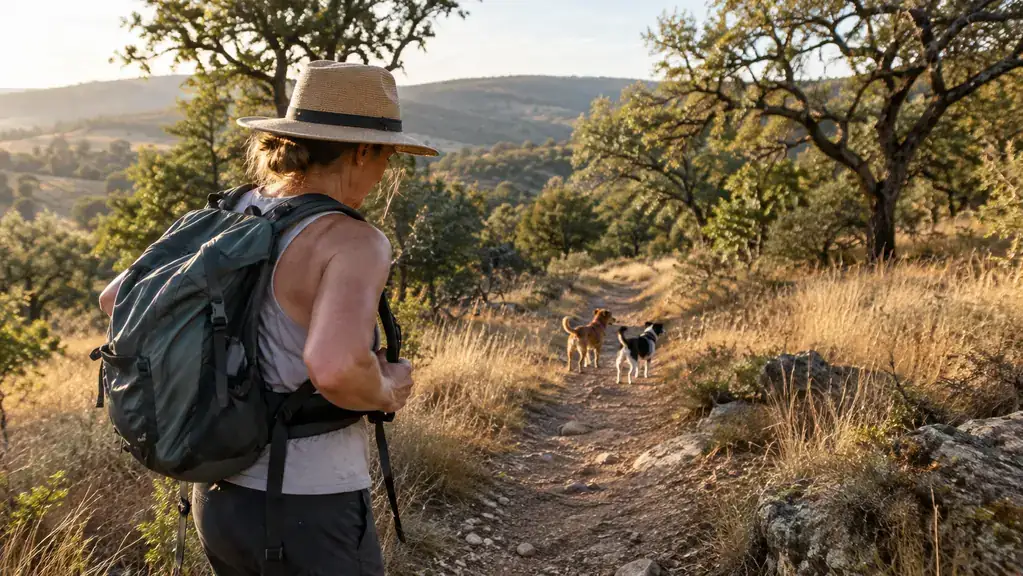
I bought the 4Monster daypack about eighteen months ago because I was tired of carrying Caleb's old school backpack on every hike. It dug into my shoulders, it had no water bottle pockets that actually held a bottle, and by mile two I was already thinking about the parking lot. So I ordered the 4Monster, took it to Lost Maples the next weekend, and have used it on nearly every trip since. This is the honest review I wish someone had written before I bought it: what held up, what did not, and what I would do differently.
The short version is that the 4Monster is still the pack I reach for most weekends. It is also not the pack the product listing makes it sound like. It is a light, packable, good-enough daypack for family hikes, not a technical backpack, and knowing the difference before you buy saves a lot of disappointment.
The Quick Verdict
A genuinely useful packable daypack for family day hikes, with real limits: the straps are thin, the padding is modest, and it is not the right pack for a heavy load or a long rocky trail. For what it costs and what it does, I would buy it again.
Amazon Check Today's Price →The packable daypack that still rides in my trunk after 18 months
If you want one light pack for trailhead walks, theme park days, and keeping in the car for unexpected stops, this is the one I keep reaching for. Check today's price on Amazon and see if it fits your family's hikes.
Amazon Check Today's Price on Amazon →How I Have Used It
I am not a gear reviewer and I do not pretend to be one. I am a mom near Corpus Christi who hikes Texas state parks most weekends with my husband Ray, our sons Caleb (16) and Wyatt (14), and our two French bulldogs, Biscuit and Pepper. Flat-faced dogs do not do well in heat, so our hikes are usually short, shaded, and early, and the pack carries the dog water, the collapsible bowls, the first aid kit, the snacks, and whatever the boys decide they cannot live without.
In eighteen months the 4Monster has been to Lost Maples twice, Garner State Park three times, Padre Island once, and the Smokies for a week. It has been rained on, dropped on rocks, stuffed under a picnic table, and used as a pillow by Biscuit on the drive home. It has also been folded into its own pocket and shoved into the bottom of the family suitcase more times than I can count.
I bought a second one for Wyatt about a year ago, mostly so he would stop asking to use mine. His has been through the same routine, and it has held up the same way.
Take a typical Saturday at Garner. We park at the base of the trail by 8:30 so the dogs get some cool air before the heat builds. Into the 4Monster goes a liter bottle for each of us, the collapsible bowl, a half gallon of dog water, the Sawyer Squeeze, the first aid kit, sunscreen, and a bag of trail mix. That is somewhere around eight or nine pounds all in, and at that weight the pack is fine. The boys each carry their own water, Wyatt in his 4Monster and Caleb in whatever he grabbed that morning, so I am not hauling for everyone. That division of labor is the only reason the thin straps have never really bothered me on a normal day.
What Nobody Tells You Before You Buy It
The first thing nobody tells you is that the 4Monster is not a hiking backpack. It is a packable daypack that happens to be fine for hiking. There is a difference. A real hiking pack has a frame, a load-bearing hip belt, and suspension that keeps the weight off your shoulders. The 4Monster has none of those things. It is a lightweight sack with shoulder straps and a sternum strap, and it works best when you keep the load reasonable.
The second thing nobody tells you is that the shoulder straps are thin. They are padded, but only lightly, and after a few miles with a heavy load, you feel it. I learned this the hard way on a Garner loop in early June. The boys had drained their bottles before we even left the car, so I was carrying four bottles of water in the main compartment, plus the dog bowl, the first aid kit, and Wyatt's hoodie because he got hot and handed it to me. That load was probably eleven or twelve pounds, which does not sound like much. By mile three my shoulders were telling me otherwise, and my traps were sore for two days. Ray offered to carry the pack on the way down, and I let him. A framed pack spreads that same weight across your hips. The 4Monster puts it all on two thin strips of padding.
The third thing is that the 24L size is smaller than it sounds. I measured the main compartment once out of curiosity: it is about 17 inches tall and maybe 11 inches wide at the opening. That sounds fine until you realize a framed pack carries that same volume higher up and closer to your back. The 4Monster is a soft bag, so a full load sits lower and sags a little, which makes it feel heavier than it is. It is perfect for a day hike where you are carrying water, snacks, a filter, and a jacket. It is not big enough for a family of four's worth of gear, and it is not a substitute for a real pack on an all-day trek.
The fourth thing is that the water bottle pockets are not as secure as I would like. They hold a standard bottle fine on flat ground, but on a rocky descent, a tall bottle can work its way out. I have learned to use a bottle with a clip or to keep the bottle in the main compartment on rough terrain. It is a small thing, but it is the kind of small thing that decides whether a hike is pleasant or a scavenger hunt.
By mile three my shoulders were telling me otherwise, and my traps were sore for two days.
What Held Up
The main compartment has held up to eighteen months of abuse. The zippers still run smooth, the stitches have not pulled anywhere, and the fabric has resisted scrapes against limestone and granite without tearing. I have washed it twice, once by hand and once in a garment bag on gentle, and it came out looking the same as it went in.
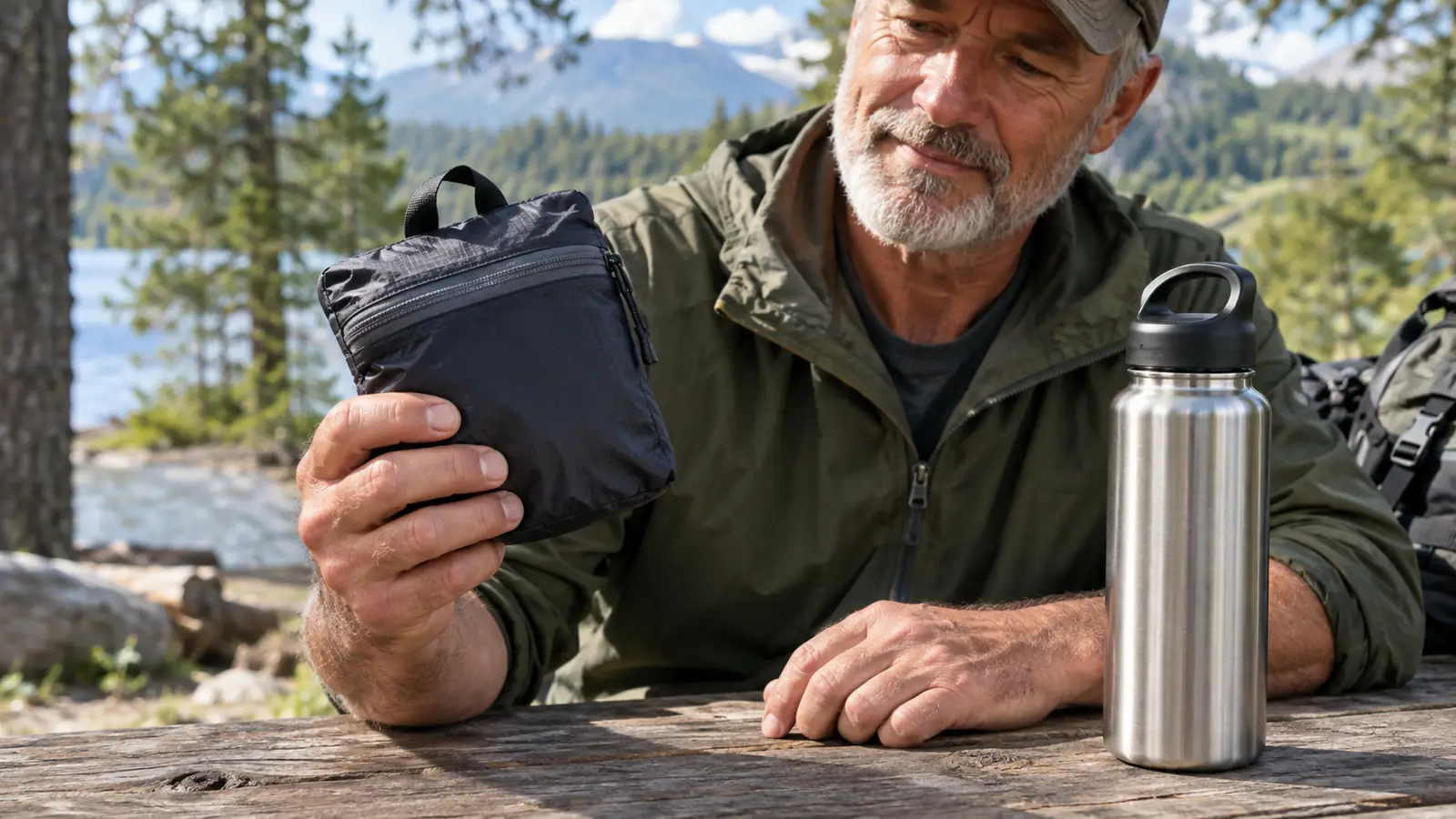
The packable feature is the reason I keep buying 4Monster. The whole pack folds into its own pocket and ends up about the size of a folded rain jacket. I timed myself once while the boys argued in the driveway: 43 seconds from full pack to folded into the cargo bin. It lives in the trunk of our family SUV, which means we are never caught without a pack when the boys spot a trailhead sign and beg to stop. That alone has made it worth the purchase price several times over.
The sternum strap is adjustable and stays where I put it, which sounds like a small thing until you have used a pack where the strap slides up to your neck on every climb. The main pocket is deep enough for a Sawyer Squeeze filter, a small first aid kit, and a layer, and the front pocket holds the small stuff without turning into a black hole.
The water resistance has also been better than I expected. It is not waterproof, and I would not trust it in a downpour, but a light rain or a surprise sprinkle has not soaked the contents. The clearest test came on the Smokies trip last spring. We were on a trail when a shower rolled in, the kind that starts as a sprinkle and turns serious in about four minutes. I did not have time to dig out a cover, so I pulled the 4Monster under my rain jacket and kept moving. When we got back to the cabin, the outside was damp but the inside was dry. My phone, the map, and the dog treats all came out fine.
What Did Not Hold Up
The thin shoulder straps are the biggest weakness. They have not broken, but they are the reason I reach for a different pack when I know the day will be long or the load will be heavy. For a short family hike with a light load, they are fine. For a six mile ridge walk with four liters of water, they are not.
The chest strap clip is my second complaint. It works, but it is a thin plastic buckle, the standard kind you see on a hundred packs. It has not broken in eighteen months, but it flexes when I pull the strap tight, and I can feel it give. I treat it like the thing that will eventually need replacing, and I keep a spare buckle in the first aid kit. That is not a knock on the pack. It is just the truth about a lightweight buckle on a lightweight pack.
The lack of a real hip belt is the third thing. The 4Monster has a webbing hip strap, but it is not load-bearing the way a framed pack's hip belt is. It keeps the pack from swinging, but it does not transfer weight off your shoulders, which is the whole point of a hip belt on a real hiking pack.
And the water bottle pockets, as I said, are not trustworthy on rough ground. The bottle incident happened on the East Trail at Lost Maples, the rocky section right before the overlook. I had a tall insulated bottle in the left pocket, the kind with a loop on the lid. We stopped to let Biscuit drink, I bent over to fill his bowl, and when I stood up the bottle was gone. It had bounced out somewhere in the twenty feet behind us. Caleb found it wedged between two rocks, dented but alive. That was the day I stopped trusting the side pockets on rough ground. Now I either use a shorter bottle or clip the loop to the front of the pack. It is a design compromise that makes sense for a packable pack, but it is still a compromise.
What I Liked
- Packs down small enough to live in the trunk or a suitcase, so we always have a pack when we need one
- Zippers, stitching, and fabric have survived eighteen months of Texas state parks without a single failure
- Sternum strap stays put, and the front pocket keeps the small stuff findable
- Water resistance handled a real Smokies shower without soaking the contents
- Cheap enough that buying a second one for Wyatt did not hurt
Where It Falls Short
- Thin shoulder straps get uncomfortable past a few miles with a heavy load
- Side bottle pockets let a tall bottle bounce out on rocky descents
- Chest strap clip feels like the first thing that will break
- No load-bearing hip belt, so all the weight lands on your shoulders
- 24L is smaller than it sounds once you add water for four people and two dogs
How It Compares to the Alternatives I Tried
Before the 4Monster, I used Caleb's old school backpack, which had better straps but no water bottle pockets that worked, no sternum strap, and no way to pack it down. The 4Monster beats it on every count except strap padding.
Between the school backpack and the 4Monster, I tried a free drawstring bag from a 5K race, the kind with one pocket and no structure. It lasted exactly one hike. The straps were strings, the bag slapped against my back on every step, and by the time we reached the car I had a raw spot on my collarbone. That failure is what pushed me to look for something with actual shoulder straps and a sternum strap, which is how I ended up on the 4Monster page in the first place.
I have also borrowed a friend's Osprey Daylite on a longer hike, and it is a better hiking pack. The straps are more comfortable, the hip belt actually helps, and the build feels more durable. It also costs more, does not pack down as small, and my friend was not about to lend it to me for the whole season. If you hike every weekend with heavy loads, the Osprey is the better investment. If you want one cheap, packable pack for family outings, the 4Monster is the better value.
I have not tried every packable daypack on the market, so I cannot tell you the 4Monster is the best one. I can tell you it is the one I have used for eighteen months, the one I bought a second time for my son, and the one that still lives in the trunk.
Who This Is For
Buy the 4Monster if you want a light, packable daypack for family hikes, theme park days, travel, or keeping in the car for spontaneous stops. It is ideal for a mom who needs to carry water, snacks, a first aid kit, and a dog bowl without hauling a full hiking pack. It is also great for kids and teens who need a real pack without the weight or the price of a technical one. Wyatt has used his for a year, and he has stopped asking to borrow mine.
Who Should Skip It
Skip it if you are planning long, heavy, technical hikes. If you are carrying four liters of water, a camera, a puffy jacket, and a rope, or if you are hiking ten miles with a loaded pack, you want a framed pack with real suspension. The 4Monster is not that pack, and no amount of wishing will make the thin straps comfortable under a heavy load. Skip it too if you need a pack that will survive being checked as luggage or dragged over granite for years. This is a light pack built for light duty, and it is honest about that.
The pack I have bought twice and still keep in the trunk
Eighteen months in, the 4Monster is the pack I reach for on family hikes, and the one I bought again for Wyatt. If that sounds like your kind of day out, check today's price on Amazon.
Amazon Check Today's Price on Amazon →