
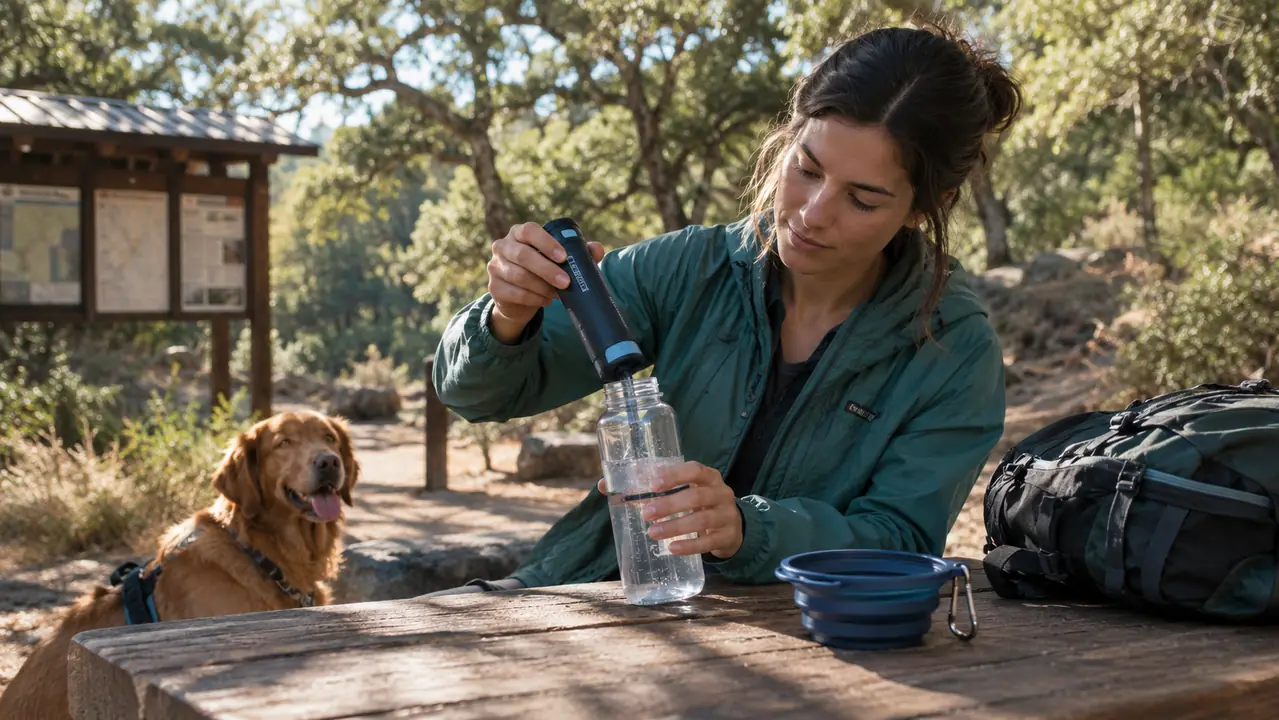
Last April I stood at the Lost Maples trailhead with two teenagers, two French bulldogs, and a backpack that weighed more than Pepper. We had carried every drop of water in from the car, the way we always had, and by the second mile Wyatt was already asking whose idea this was. By the third mile, so was I.
That is the trip that finally pushed me to buy a Sawyer Squeeze. I had read the reviews, I had seen the grams shaved off other people's packs, but what sold me was simpler: I was tired of rationing water for dogs who cannot tell me they are thirsty. Two years and about forty trail miles later, here is the honest long-term report.
The Quick Verdict
The Sawyer Squeeze has filtered every sip my family has taken on trail for two full seasons, and it has never once made anyone sick. It is slow, it takes a little muscle, and you have to backwash it on schedule, but for a family that hikes with dogs it is the best weight-to-water trade we have found.
Amazon Check Today's Price →Stop hauling every drop of water in from the car
One filter, two squeeze pouches, and a drinking straw that turns any creek into a refill station. This is the exact kit that has been in my pack for two seasons.
Amazon Check Today's Price on Amazon →How I've Used It
For the record, I am not a thru-hiker and I do not pretend to be one. I am a 44-year-old mom from Corpus Christi who packs the snacks, the first-aid kit, and the dog water for everyone. My testing ground is weekend trips to Texas state parks, plus one longer family trip a year to the mountains. The Sawyer Squeeze has done all of it: Lost Maples in April, Garner in June, Padre Island in October, and a week in Colorado last summer.
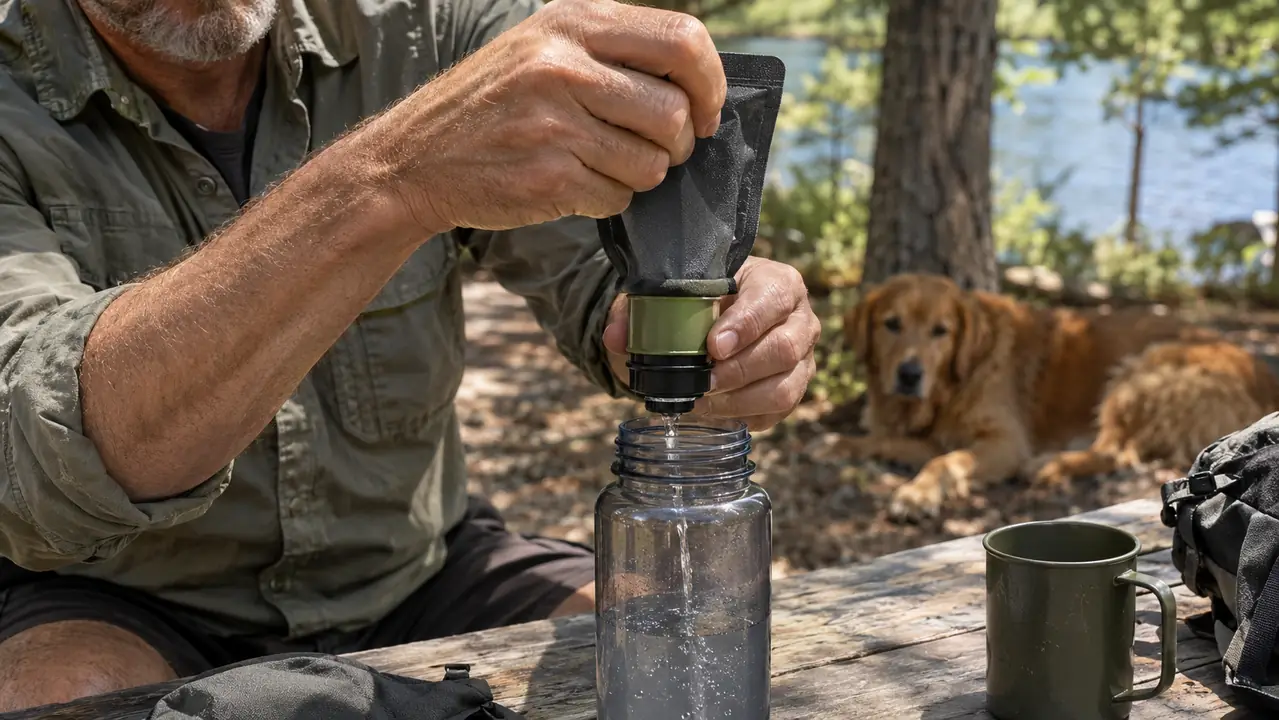
My setup is the standard one. The filter screws onto the included 32-ounce squeeze pouch, you fill the pouch from the creek, screw on the filter, and squeeze it into a bottle or straight into a mouth. I also use the straw that came in the box, which lets the dogs drink straight from a bowl I fill with filtered water, and I have the hydration pack adapter stored in the stuff sack for the day we finally buy bladders for the boys. On a typical day hike I carry one full pouch and one empty one, and that is enough for four humans and two bulldogs on a three-mile loop.
The Colorado trip is where the filter earned its place. We drove up in the family SUV with the Coleman Sundome in the back and eleven liters of water in jugs, because that is what we had always done. By day two I realized we were hauling water we did not need. The stream behind our campsite ran clear and cold, and with the Sawyer Squeeze I could fill the two pouches in about three minutes and have four bottles ready for the trail. We stopped carrying the jugs on day hikes after that. I weighed our old setup once, out of curiosity: three liters per person for four people plus a bottle for the dogs came to more than twenty-six pounds before we added a single snack. The filter, two pouches, and the syringe weigh about six ounces together. That trade is the whole story. Caleb, who sprints ahead on every trail, carried one full pouch in his 4Monster pack and learned to refill it himself by the second day. Wyatt, who complains about his feet, complained about the squeezing instead, which I took as progress. By the end of the week both boys could work the filter without me hovering, and that alone was worth it.
The routine is boring, which is exactly what I want from a water filter. Fill, squeeze, drink, repeat. The only real chore is backwashing: every few trips I use the little syringe that comes with it to push clean water backward through the filter, and that keeps the flow honest. I keep the syringe in the mesh pocket of my 4Monster daypack and I have never once regretted the extra two ounces.
What the Sawyer Squeeze Actually Filters
The headline number on the box is 0.1 micron absolute filtration, which means it removes bacteria and protozoa, including the things that cause giardia and cryptosporidium. I cannot test that in my kitchen and I am not going to pretend I did. What I can tell you is the practical result: my family has drunk from slow Texas creeks, mountain streams, and the occasional questionable puddle that Biscuit found first, and nobody has ever been sick. Not once, in two seasons.
The Sawyer Squeeze is not a purifier, and that distinction matters. It filters water, it does not kill viruses, so it is not the right tool for international travel or for water with obvious chemical contamination. For the state parks we visit, where the risk is livestock runoff and wildlife, it is exactly the right tool. I check the park warnings before we go, and if a creek is posted as unsafe for any reason, we skip it and carry extra water instead. The filter is a tool, not a guarantee.
The moment I trusted it completely was at Garner in June. We were on the Frio River trail at noon, the kind of Texas heat that makes the air wobble, and Pepper was done. She is four and built for air conditioning, not river rock. I filled the pouch from a slow stretch of the Frio, filtered a full bowl for her, and watched her drink until she walked away. Two hours later she was trotting ahead of me like nothing had happened. I am not a vet and I am not going to make a medical claim, but that was the day I stopped rationing dog water and started treating the filter as the answer to a question I had been carrying for years. The Frio is the kind of water I worry about, too. It runs through ranch country and picks up whatever the cows leave behind, which is exactly the bacteria and protozoa load the 0.1 micron rating is designed to handle. I still check the park's water advisory before we go, and I still skip any creek that is posted, but knowing what the filter is rated for and why has made me a lot calmer at the trailhead.
One detail that surprised me: the filter is hollow fiber, so it cleans itself as you squeeze. The dirty stuff stays on the outside of the fibers and the clean water passes through the middle. That is why backwashing works, and it is also why the filter does not need chemicals or batteries. There is nothing to charge, nothing to replace, and nothing to time. That simplicity is the whole reason I reach for it instead of the pump filter we borrowed from my brother-in-law once and never again.
How It Held Up Over a Full Season
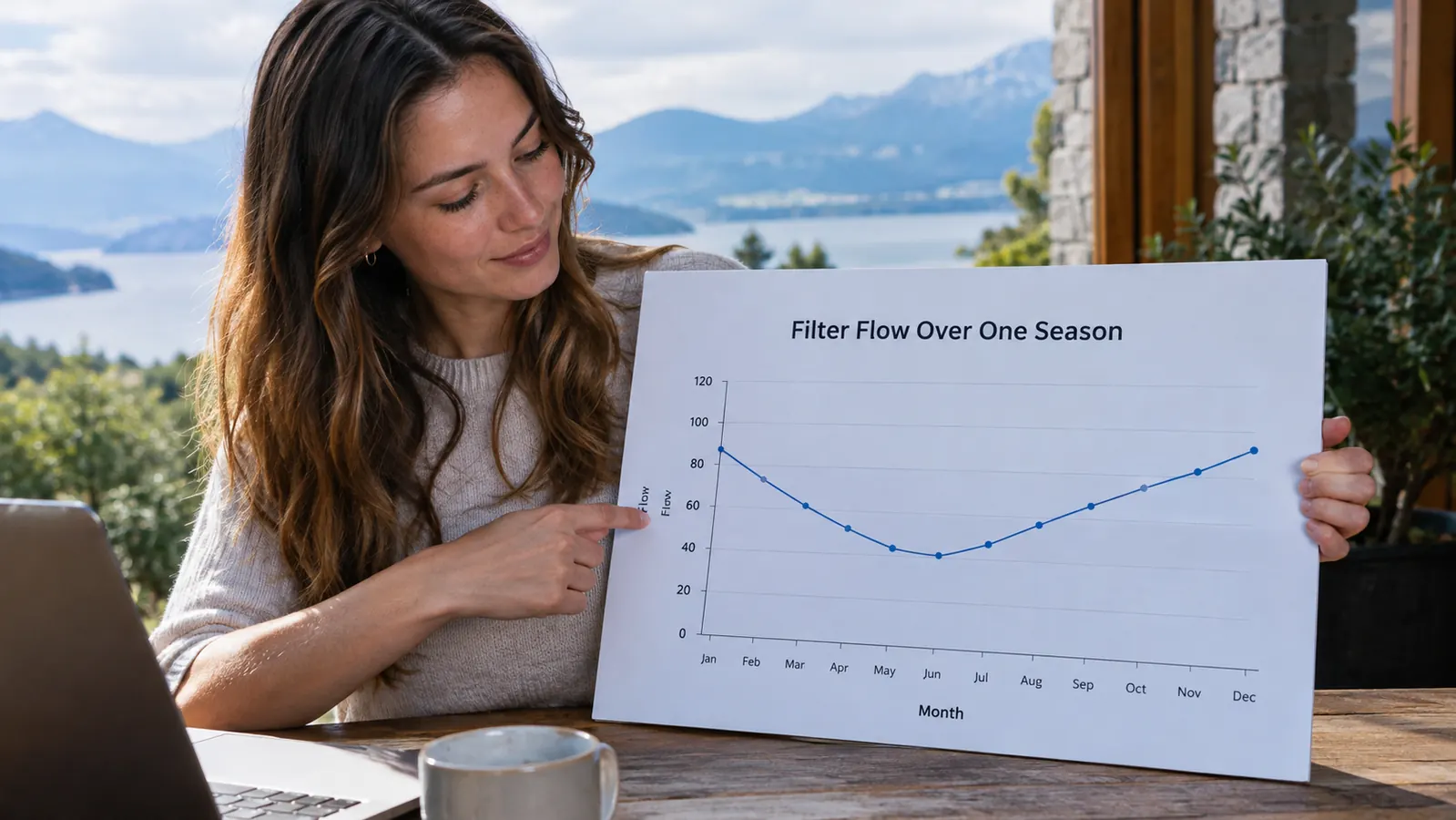
I am going to be honest about the part every review skips: the flow rate. A brand new Sawyer Squeeze is quick, maybe a minute and a half to fill a 32-ounce bottle with a firm squeeze. By the end of a dusty summer, with Texas silt in the water, that same bottle took closer to three minutes. The filter was not broken, it was dirty, and a proper backwash with the syringe brought most of the speed back. I have learned to backwash before a big trip instead of after, and the flow has stayed consistent.
I keep a rough log of flow because I am that kind of person. In April, fresh out of the box, a full squeeze filled the 32-ounce bottle in about ninety seconds. In August, after a summer of silty Texas creeks, the same bottle took two minutes and forty seconds, and the stream from the filter looked thin. A backwash with the syringe, three full plunges of clean water pushed backward through the filter, brought it back to about a minute and fifty seconds. Not brand new, but close enough that I stopped timing it. I have learned to do the backwash at home before a big trip, using the tap, because doing it at the trailhead wastes drinking water and makes the boys impatient. The whole routine takes maybe four minutes and it has kept the filter honest for two seasons. The syringe lives in the mesh pocket of my 4Monster pack, right next to the first-aid kit, and I have never once regretted the extra two ounces. I also learned to fill the pouch only three-quarters full. A completely full pouch is harder to grip, and the last few squeezes do nothing but wear out your hands. Three quarters gives you a firm grip and a steady stream, and the boys can manage it without stopping to switch hands.
The pouches are the weak point, and I will not pretend otherwise. The included 32-ounce squeeze pouches have a seam that I have learned to treat gently. I have not torn one, but I have read enough reports from people who have, and I can see why: the plastic is thin, and if you overstuff the pouch or squeeze too hard with the cap on, you are asking for trouble. I rinse mine after every trip, dry them with the cap off, and store them unrolled. That routine has kept both pouches alive for two years.
The filter itself has been bulletproof. I have dropped it on gravel, left it in a hot car for a weekend, frozen it by accident in the back of the SUV one January night, and it still filters clean, fast water. Sawyer says not to freeze it, and I believe them, so I now carry it inside my pack instead of the trunk. But the fact that it survived my mistake tells me the build quality is real.
Two seasons, roughly forty trail miles, four humans and two flat-faced dogs, and the Sawyer Squeeze has never once made anyone sick. That is the only test that matters to me.
The Dogs Changed How I Think About Water
Biscuit and Pepper are French bulldogs, which means they overheat fast and they cannot tell me when they need a break. Before the Sawyer Squeeze, I carried a separate bottle of tap water for them on every hike, and I rationed it. That is a miserable way to hike with a dog in Texas heat. Now I fill the squeeze pouch from the creek, filter it into their collapsible bowl, and let them drink until they walk away. It has genuinely changed which trails we can do in the summer.
Padre Island in October was the surprise. There is no creek on the beach, so I carried a full pouch of tap water from the car, and I still ended up rationing the dogs by the third mile of sand. What saved us was the filter working in reverse: I had brought the second pouch empty, filled it at the beach shower near the parking lot, and used the filter to make sure the water was clean before it went into their bowl. It felt strange to filter water that came out of a pipe, but the beach shower is not something I trust, and the filter turned it into something I did. The dogs drank, we finished the walk, and nobody spent the ride home looking sorry. That is the thing about hiking with flat-faced dogs in Texas: the water is not optional, it is the whole plan. Biscuit is six and gets hot just watching the sun come up. I have learned to filter a bowl before we leave the trailhead, even if the hike is short, because by the time he needs it I do not want to be standing on a hot trail fumbling with a pouch. The routine is the same every time: fill, squeeze, bowl, drink, and then we all keep walking.
The straw adapter that comes in the box is the piece I did not expect to use. It screws into the filter outlet, and you can drink directly from the pouch like a big straw. I use it on short loops when I do not want to stop and fill a bottle. Wyatt uses it constantly because it feels like a toy. It is a small thing, but it means the filter is not just emergency gear, it is part of how we drink water now.
The Tradeoffs Nobody Mentions
What I Liked
- Filters down to 0.1 micron, which covers bacteria and protozoa, and it has kept our whole family healthy for two seasons
- Weighs almost nothing, about three ounces, so it lives in my daypack full time
- No chemicals, no batteries, no pumping, and the included syringe makes backwashing simple
- The straw and pouch setup works for dogs, kids, and adults without any extra cups
- Sawyer's reputation for durability is earned, mine survived a freeze I caused
Where It Falls Short
- Flow slows noticeably by the end of a dusty season and only a real backwash fixes it
- The squeeze pouches are thin and need gentle handling to avoid seam leaks
- It filters, it does not purify, so it is not the right tool for every water source
- Squeezing a full pouch takes more grip strength than my 14-year-old has after two miles
Who This Is For
Buy the Sawyer Squeeze if you are a weekend family hiker who is tired of carrying three liters per person. Buy it if you hike with dogs and want to stop rationing their water. Buy it if you want one piece of gear that works for day hikes, camp mornings, and the occasional mountain trip, without charging, priming, or fussing. It is the filter I recommend to every parent at the trailhead who asks what is in my pack.
Who Should Skip It
Skip it if you mostly hike in places with no surface water at all, because the weight of the pouches is dead weight you will never use. Skip it if you need to treat sketchy international water, because you want a purifier that handles viruses. And skip it if you want the fastest possible fill, because a gravity system or a pump will beat the squeeze on speed every time. The Sawyer Squeeze is the right tool for a specific job, and for that job it is excellent.
The filter that has been in my pack for two seasons
If you hike with kids or dogs and you are still carrying every drop in from the car, this is the upgrade that pays for itself in one trip. Same kit I use, same routine, same boring reliability.
Amazon Check Today's Price on Amazon →